
Reptile · GBIF taxon 2441396
Cuvier's Dwarf Caiman
Paleosuchus palpebrosusAlso known as Dwarf Caiman, Musky Caiman, Cuvier's Caiman, Wedge-head Caiman
Cuvier's dwarf caimans are the smallest living crocodilian species, heavily armored with thick bony scutes that protect them during overland treks between forest waterways. Unusually tolerant of cold, fast-flowing water, they spend their days sheltering in burrows or under fallen logs before emerging at night to hunt along stream banks. Females lay small clutches of eggs in mound nests constructed from soil and leaf litter, fiercely guarding their hatchlings.
NocturnalReptileAquatic
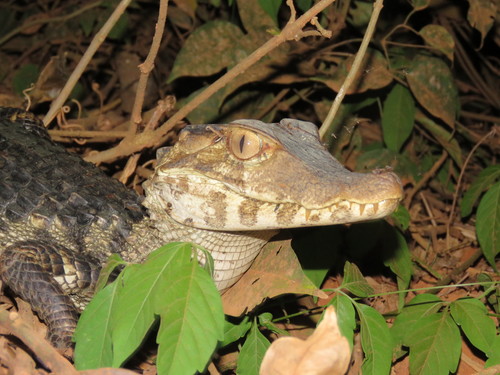
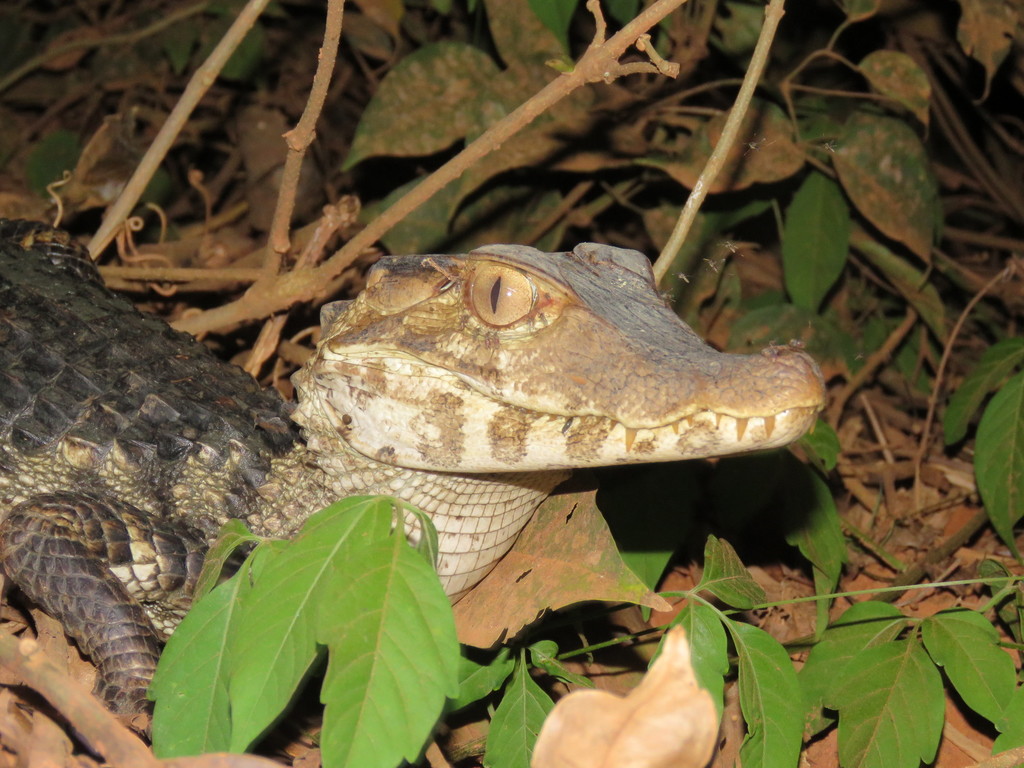 1 / 7
1 / 7—observations
—countries
—peak records
Least ConcernConservation statusIUCN Red List categoriesLCNTVUENCREWEXLeast ConcernRed List categories, explained →
Diet & prey
- Crabs
- Fish
- Terrestrial insects
Predators
- Jaguars
- Anacondas
- Large crocodilians
ThreatsHabitat destruction, water pollution, illegal collection for the pet trade
HabitatsRiverine forests, fast-flowing streams, flooded woodlands, temporary forest pools
Life span20–40 years
Size / weightNot available
Classification
- FamilyAlligatoridae
- GenusPaleosuchus
- SpeciesPaleosuchus palpebrosus
Range data is not available yet.
Interaction riskHigh
- Low
- Moderate
- High
- Very high
- Why interaction risk is high
- Capable of delivering a severe bite if cornered or handled; observe safely from a respectful distance.
- Why it is dangerous
- Possesses strong jaws lined with sharp teeth capable of crushing shells and inflicting severe lacerations.
- How to recognize a risky encounter
- Recognizable by its small stature, dark reddish-brown body, high-domed forehead, and dark tail bands.
- What to do
- Never approach, handle, or corner wild individuals; maintain a safe distance along riverbanks at night.
Responsible observation
- Night Spotting: Look for bright orange-red eye shine when scanning forest streams with a flashlight after dusk.
- Habitat Search: Check shallow, cool, fast-moving streams and flooded woodland floors rather than open lakes.
- Maintain Distance: Avoid reaching into undercut banks or root tangles where individuals rest during the day.
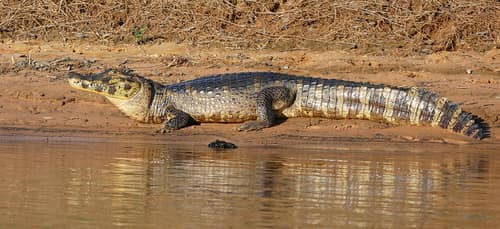
Competitor Bernard DUPONT from FRANCE / CC BY-SA 2.0 · cc-by-sa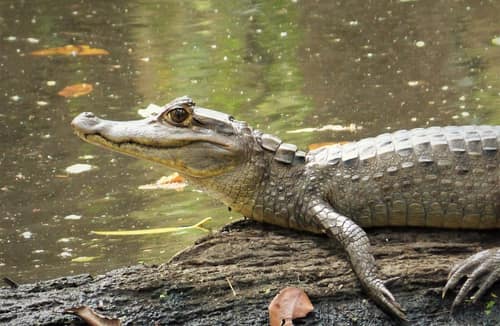
Competitor (c) gailhampshire, some rights reserved (CC BY) · cc-by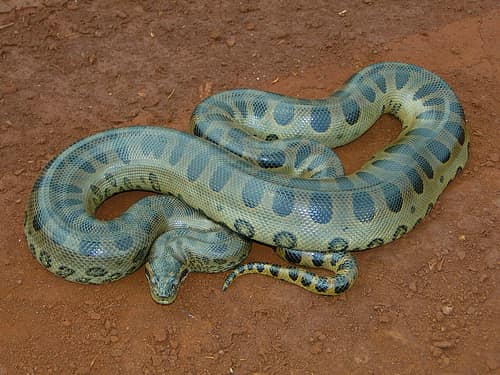
Predator MKAMPIS / CC BY-SA 4.0 · cc-by-sa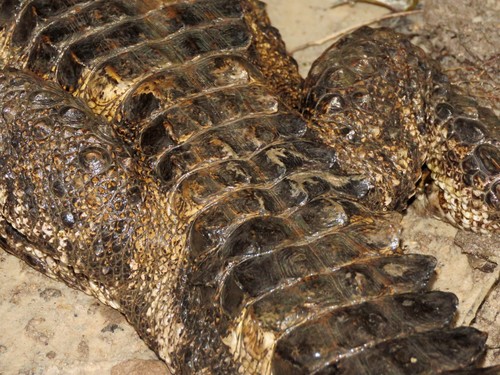
Close Relative (c) Sidnei Dantas, some rights reserved (CC BY-SA), uploaded by Sidnei Dantas · cc-by-sa
Help improve the field guideSomething wrong?
Checking your Fauna account…Report a name, category, or profile issue for review.