
Fish
West Indian Ocean Coelacanth
Latimeria chalumnaeAlso known as Gombessa, African Coelacanth
West Indian Ocean coelacanths spend daylight hours resting in clustered groups inside steep volcanic caves, emerging at dusk to drift along oceanic drop-offs. Their paired, fleshy lobed fins synchronize diagonally in the same alternating rhythm that four-limbed land animals use to walk. Electroreceptive organs clustered in the snout detect the faint nerve signals of resting fish in total darkness, allowing these slow-moving predators to strike with a sudden hinge-like jaw expansion.
Deep SeaNocturnalLobed Fins
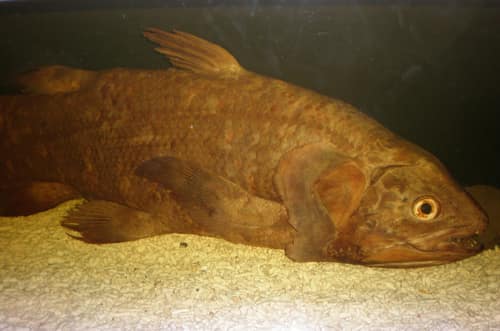
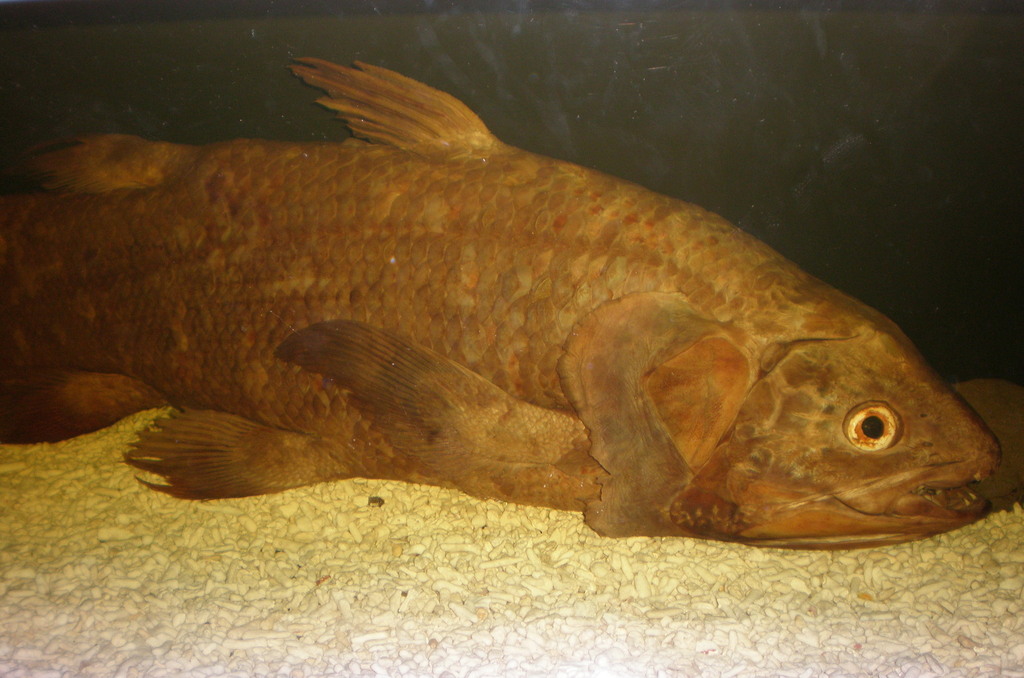
—observations
—countries
—peak records
Critically EndangeredConservation statusIUCN Red List categoriesLCNTVUENCREWEXCritically EndangeredRed List categories, explained →
Diet & preyLanternfish, Deep-sea cuttlefish, Cardinalfish
Predators
- Bluntnose sixgill shark
- Tiger shark
ThreatsBycatch in deep-set gillnets and shark longlines, commercial trawling, and habitat disturbance
HabitatsSteep volcanic slopes and submarine caves at depths of 150 to 400 meters
Life span60 to 100 years
Classification
- OrderCoelacanthiformes
- FamilyLatimeriidae
- GenusLatimeria
- SpeciesLatimeria chalumnae
Range data is not available yet.
Interaction riskLow
- Low
- Moderate
- High
- Very high
- Why interaction risk is low
- Safe to observe at a normal distance.
- What to notice
- Recognizable by thick, fleshy lobed fins, dark blue armor-like scales with white flecks, and a three-lobed tail fin.
- Support conservation
- Maintain strict non-invasive protocols during submersible surveys, never attempt collection, and safeguard known cave roost locations.
Responsible observation
- Submersible etiquette: Avoid powerful continuous spotlights, which can blind deep-adapted eyes.
- Bycatch reporting: Report any accidental deep-line catches immediately to local marine authorities.
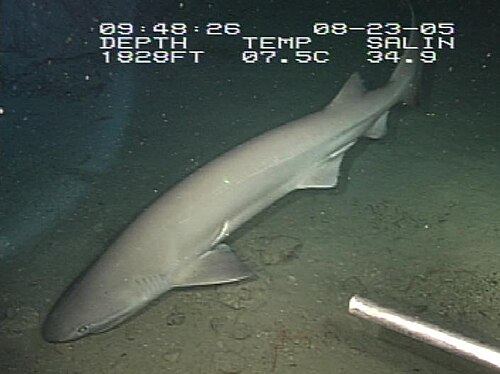
Predator Operation Deep Scope 2005 Expedition: NOAA Office of Ocean Exploration; Harbor Branch Oceanographic Institution / Public domain · cc0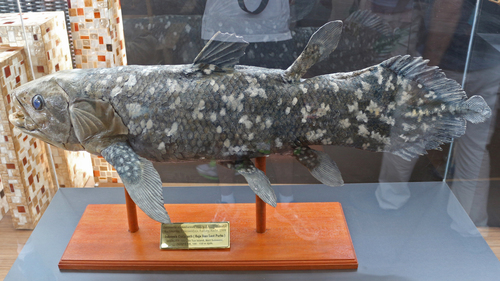
Close Relative (c) Claudio Martino, some rights reserved (CC BY-SA) · cc-by-sa
Help improve the field guideSomething wrong?
Checking your Fauna account…Report a name, category, or profile issue for review.