
Mammal · GBIF taxon 2441142
Cape Grysbok
Raphicerus melanotisAlso known as Southern Grysbok
Cape grysbok are solitary, nocturnal dwarf antelopes that navigate dense coastal thickets and fynbos with remarkable stealth. Their coarse reddish coats are speckled with white hairs, creating a grizzled appearance that provides superb camouflage against scrubland shadows. When startled, individuals freeze motionless in dense brush before darting away in an erratic, zigzag flight path close to the ground.
NocturnalEndemicHerbivore
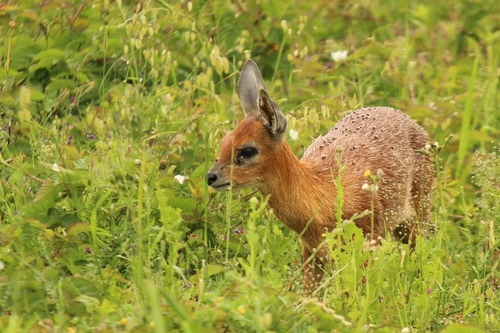
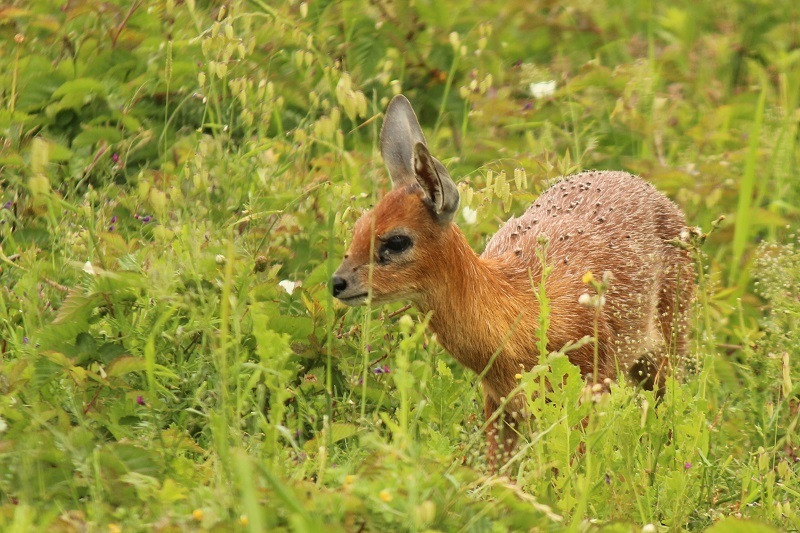 1 / 7
1 / 7—observations
—countries
—peak records
Least ConcernConservation statusIUCN Red List categoriesLCNTVUENCREWEXLeast ConcernRed List categories, explained →
Diet & prey
- Fynbos browse
- Succulent leaves
- Wild fruits
Predators
- Caracal
- Leopard
- Black-backed Jackal
ThreatsHabitat fragmentation, urbanization, feral dog predation, and road mortality
HabitatsFynbos, renosterveld, and dense coastal scrub
Life span8–12 years
Size / weightNot available
Classification
- OrderArtiodactyla
- FamilyBovidae
- GenusRaphicerus
- SpeciesRaphicerus melanotis
Range data is not available yet.
Interaction riskLow
- Low
- Moderate
- High
- Very high
- Why interaction risk is low
- Safe to observe at a normal distance.
Responsible observation
- Time: Scan dense scrub margins at dusk and dawn when individuals forage in the open.
- Noise: Move quietly along trails, as snapping twigs triggers instant flight into thick brush.
- Distance: Use binoculars to view from paths without trampling sensitive fynbos vegetation.
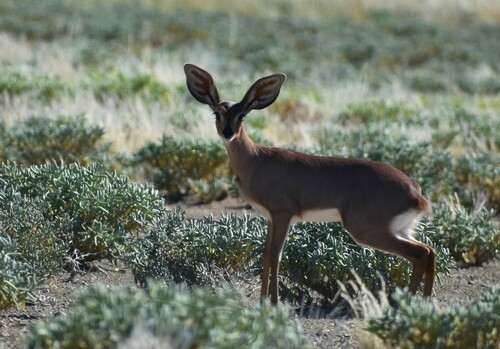
Same Genus (c) Justin Ponder, some rights reserved (CC BY) · cc-by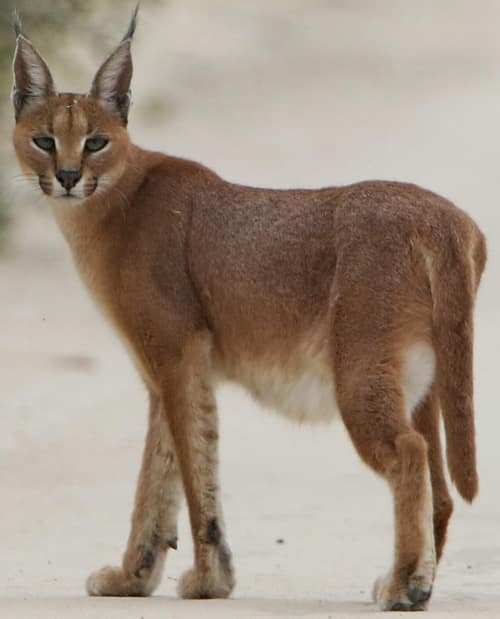
Predator Derek Keats / CC BY 2.0 · cc-by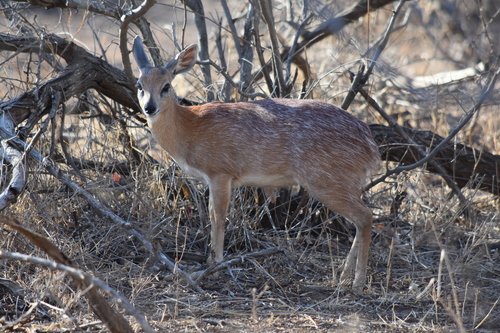
Close Relative (c) Mark Bolnik, some rights reserved (CC BY) · cc-by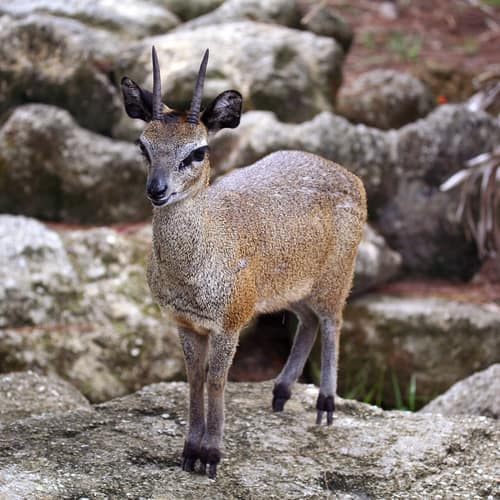
Same Family Munificent / CC BY 2.5 · cc-by
Help improve the field guideSomething wrong?
Checking your Fauna account…Report a name, category, or profile issue for review.