
Species · GBIF taxon 2441106
Black Wildebeest
Connochaetes gnouAlso known as White-tailed Gnu, Black Gnu
Black wildebeest roam the open highveld grasslands in highly structured social groups, where territorial bulls defend their patches with dramatic displays of head-shaking, bucking, and loud, metallic snorting. Unlike their migratory blue cousins, these compact antelopes are largely sedentary, grazing selectively on short grasses and low shrubs. Their distinctive white, horse-like tails contrast sharply against their dark coats as they gallop in tight, erratic circles when alarmed.
GrasslandHerd-dwellingGrazer
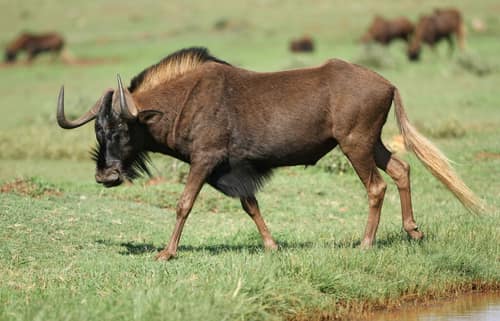
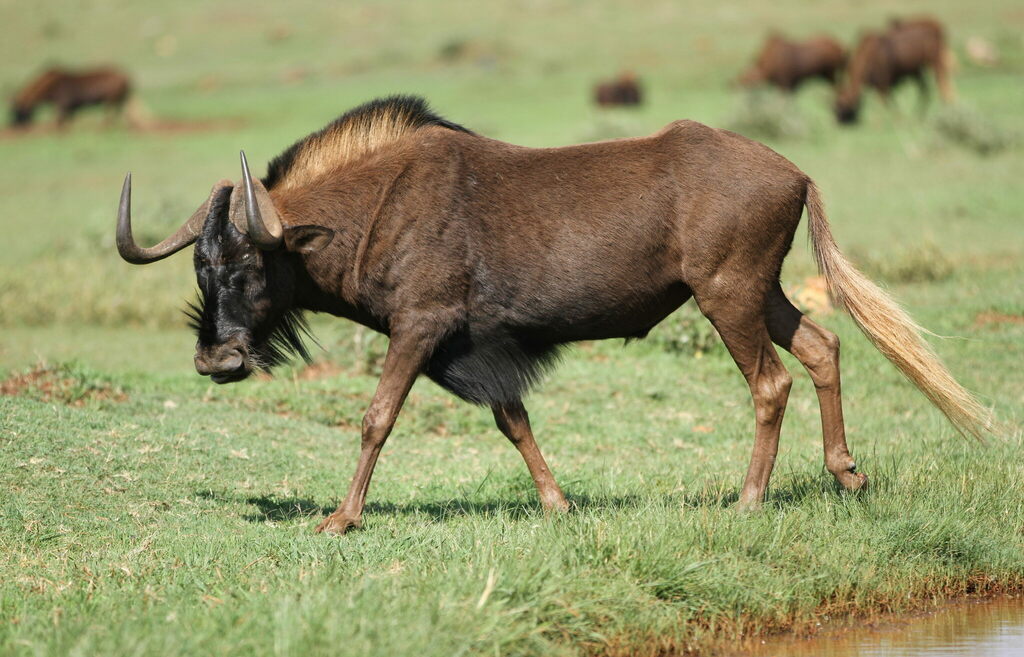
Licensed reference(c) Derek Keats, some rights reserved (CC BY) · cc-by
—observations
—countries
—peak records
Least ConcernConservation statusIUCN Red List categoriesLCNTVUENCREWEXLeast ConcernRed List categories, explained →
Diet & prey
- Short Grasses
- Karoo Shrubs
- Succulents
Predators
- Lion
- Spotted Hyena
- Leopard
ThreatsHybridization with blue wildebeest, habitat fragmentation, and fencing
HabitatsOpen grasslands, highveld, and semi-arid shrublands
Life span15 to 20 years
Size / weightNot available
Classification
- FamilyBovidae
- SpeciesConnochaetes gnou
Native Introduced
Native range in olive; established introduced range in rust.
Interaction riskHigh
- Low
- Moderate
- High
- Very high
- Why interaction risk is high
- Territorial bulls can charge if approached too closely; observe from a safe distance inside a vehicle.
- Why it is dangerous
- Territorial bulls are highly aggressive during the breeding season and can charge intruders with their sharp, forward-curving horns.
- How to recognize a risky encounter
- Look for solitary males standing on elevated mounds, shaking their heads and pawing the ground.
- What to do
- Never approach on foot; remain inside a safari vehicle and back away if a bull stares directly at.
Responsible observation
- Keep Your Distance: Maintain a respectful distance of at least 50 meters, especially during the autumn rutting season.
- Watch the Tail: A swishing white tail often signals excitement or alarm before the herd suddenly bolts.
- Listen for the Call: Listen for the loud, two-note call used by territorial males to assert dominance.
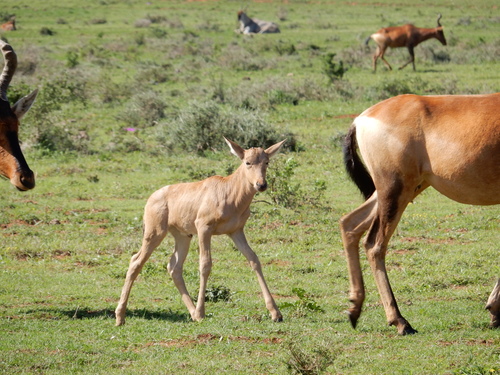
Frequent Companion (c) Henry de Lange, some rights reserved (CC BY), uploaded by Henry de Lange · cc-by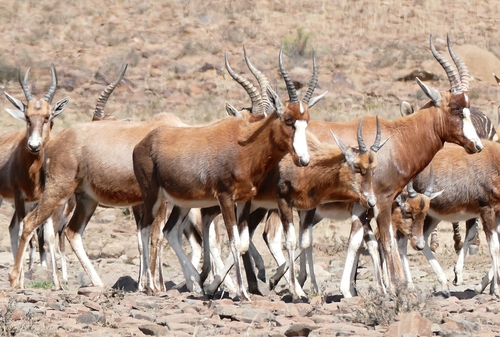
Frequent Companion (c) Bernard DUPONT, some rights reserved (CC BY-SA) · cc-by-sa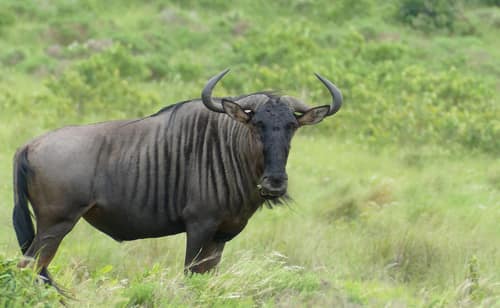
Close Relative Bernard Dupont / CC BY-SA 2.0 · CC BY-SA 2.0
Help improve the field guideSomething wrong?
Checking your Fauna account…Report a name, category, or profile issue for review.