
Walia Ibex
Capra walieAlso known as Abyssinian Ibex, Ethiopian Ibex, Simien Ibex
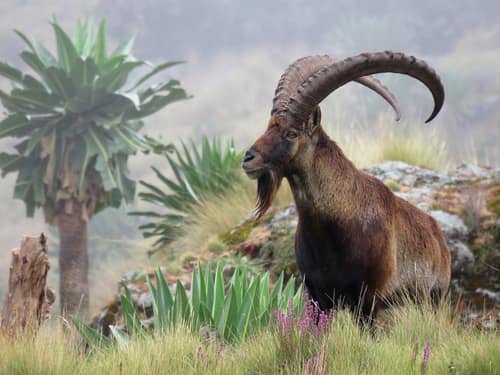
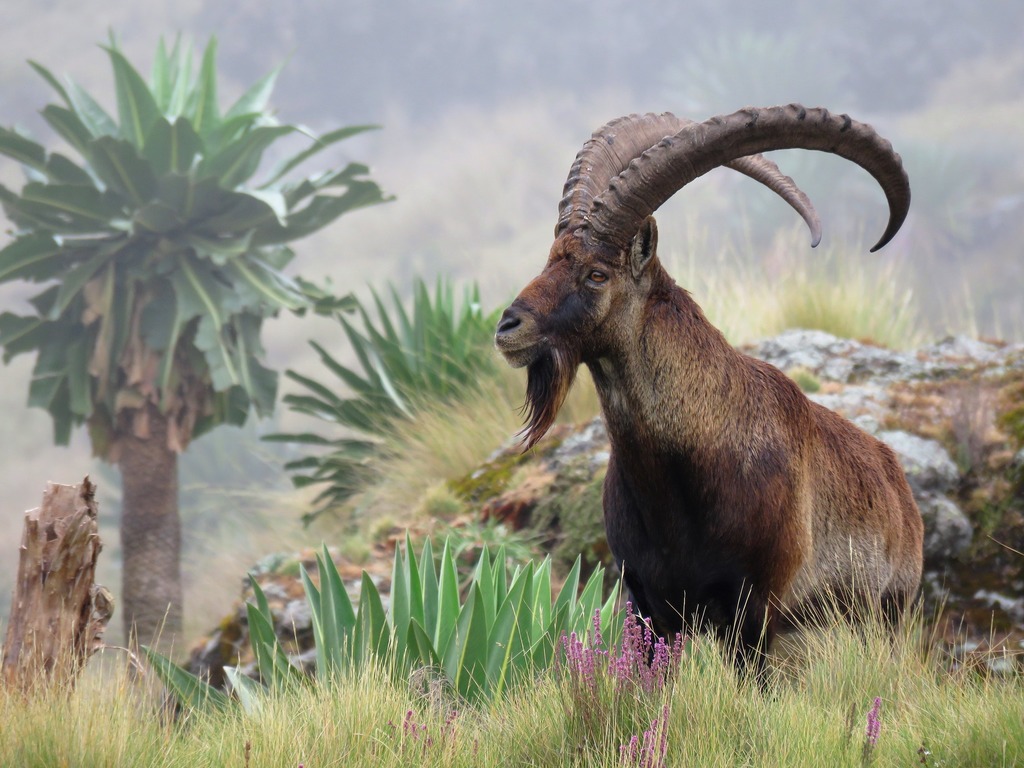
Walia ibex scale the near-vertical cliff faces of Ethiopia's Simien Mountains with remarkable agility, browsing on high-altitude shrubs, herbs, and grasses above three thousand meters elevation. Males carry dramatic, heavy ridged horns sweeping backward over their dark brown coats, using them in energetic head-butting duels during the rutting season. Strictly endemic to this single mountain system, small herds spend their days foraging along precipitous ledges before retreating to sheer rock walls at night.
- High-altitude shrubs
- Alpine grasses
- Lichen and herbs
- Spotted Hyena
- Leopard
- Ethiopian Wolf
- FamilyBovidae
- SpeciesCapra walie
- Low
- Moderate
- High
- Very high
- Why interaction risk is high
- Maintain a safe distance on steep trails, as large males possess heavy horns and can act defensively if cornered.
- Why it is dangerous
- Adult males can weigh over 100 kg and feature thick, backward-curving horns capable of inflicting blunt force trauma if threatened.
- How to recognize a risky encounter
- Recognizable by their massive ridged dark horns, stocky build, and dark brown coat with white chest patches.
- What to do
- Give herds a wide berth on narrow ledge trails and never step between adults and young kids.
- What to notice
- Look for large horned goats clinging to sheer rock cliffs in Simien Mountains National Park.
- Support conservation
- Observe only alongside licensed park scouts, avoiding any action that flushes herds down steep drop-offs.
- Trail Distance: Remain on established trekking paths and keep at least 30 meters away from resting or feeding herds.
- Local Guides: Always travel with official park rangers who know how to spot herds without disrupting their routines.
- Quiet Approach: Keep noise levels low when reaching ridge crests where animals frequently rest during midday.
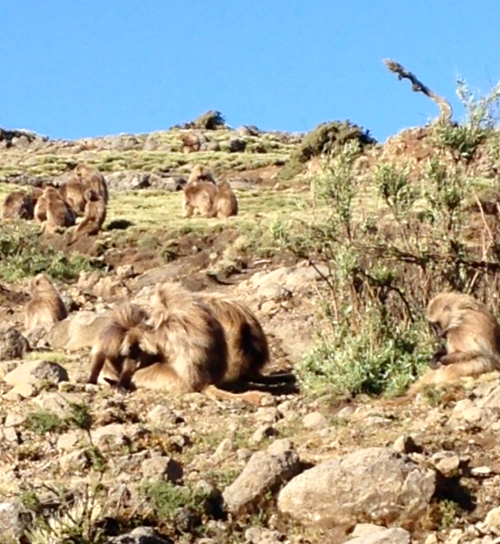
Frequent Companion (c) Ty Creelan, some rights reserved (CC BY-SA) · cc-by-sa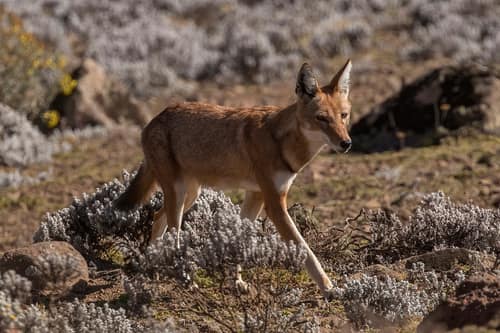
Competitor Charles J. Sharp / CC BY-SA 4.0 · cc-by-sa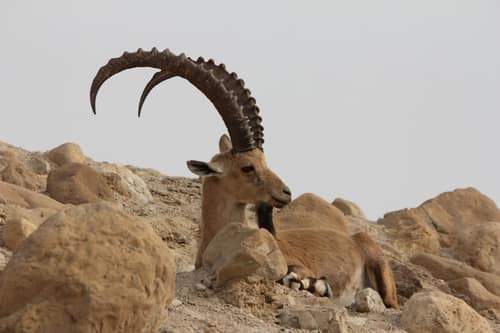
Close Relative (c) Thomas Galewski, some rights reserved (CC BY), uploaded by Thomas Galewski · cc-by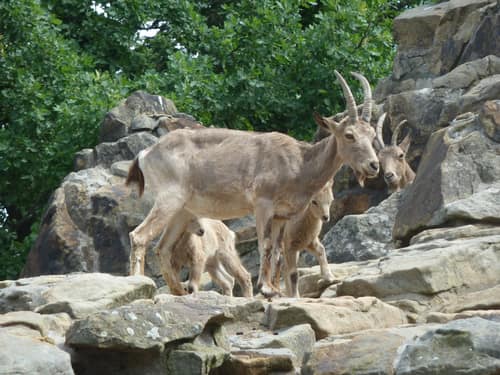
Close Relative (c) Paul Morris, some rights reserved (CC BY-SA) · cc-by-sa
Found in Collections
Alpine Heights
Walia Ibex is found in this collection. Identify it in Fauna to fill this slot and continue your progress.
Unlock to track progress
Report a name, category, or profile issue for review.