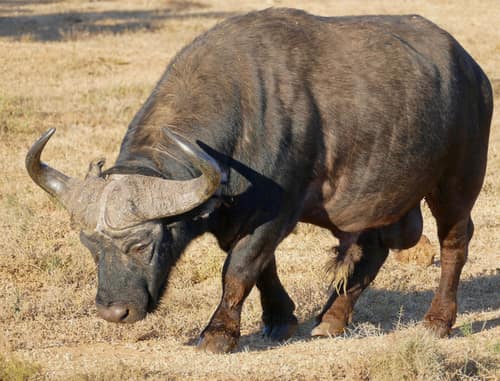
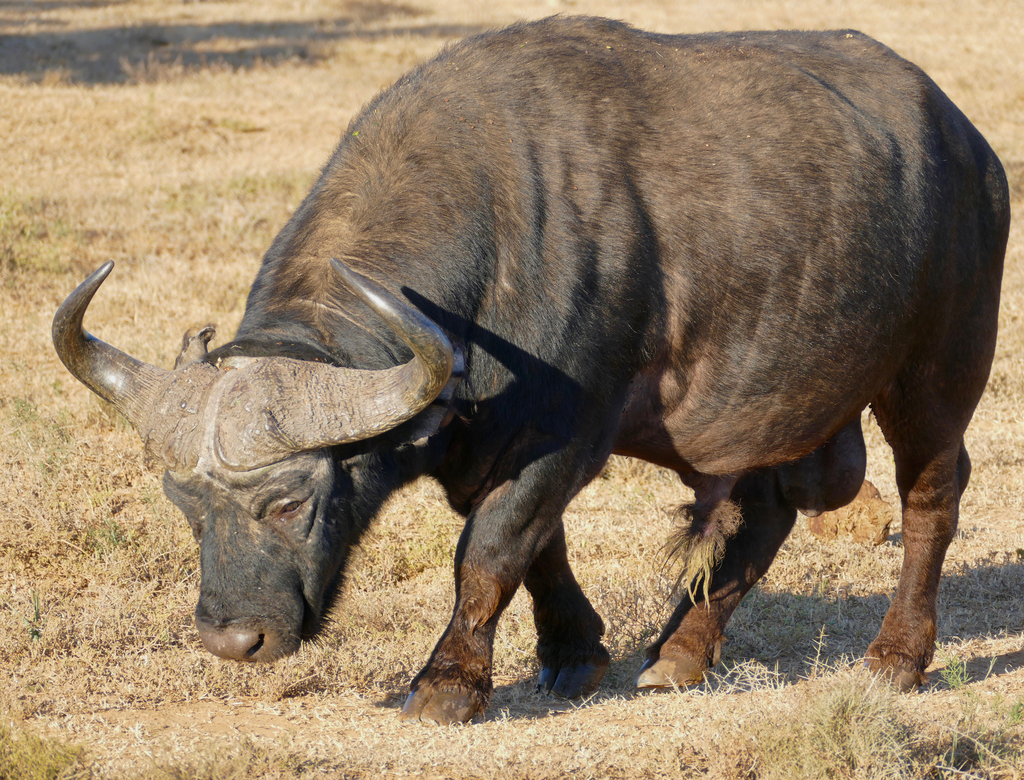
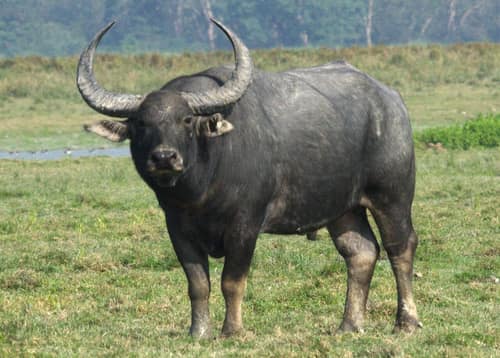
African buffaloes are formidable grazers known for immense collective solidarity, often rallying en masse to rescue herd members from attacking predators. Herds follow complex democratic voting behaviors when deciding which direction to move, with adult females standing, looking in a preferred direction, and lying back down to indicate their choice. Famous for an unpredictable temperament and exceptional memory, older solitary bulls frequently ambush perceived threats rather than flee.
ThreatsHabitat fragmentation, poaching, drought, and transmission of livestock diseases like bovine tuberculosis
HabitatsSavannahs, swamps, floodplains, montane grasslands, and lowland rainforests
Life span18–25 years in the wild
Size / weightNot available
Classification
OrderArtiodactyla
FamilyBovidae
GenusSyncerus
SpeciesSyncerus caffer
Range & activity
Range data is not available yet.
Safe observation
Interaction riskHigh
Low
Moderate
High
Very high
Why interaction risk is high
Highly unpredictable and aggressive when startled or cornered; observe strictly from inside a secure safari vehicle.
Why it is dangerous
Weighing up to 900 kilograms and armed with heavy fused horns, buffaloes can charge at 55 kilometers per hour, readily goring, trampling, and crushing perceived threats.
How to recognize a risky encounter
Look for massive curved horns that meet over the forehead to form a solid, helmet-like bony boss.
What to do
Maintain vast distances on foot, never block an escape route, and always retreat inside a sturdy vehicle if a buffalo turns to face you.
What to notice
Heavy-bodied, dark slate or black bovid found in substantial herds across protected African reserves.
Support conservation
Keep safari vehicles to designated park tracks to avoid disrupting herd grazing patterns and nursery groups.
Responsible observation
Vehicle Safety: Remain quietly inside closed or high-sided safari vehicles during wild encounters.
Distance Precautions: Never approach on foot, especially in thick brush where solitary bulls rest.
Mud Wallows: Watch waterholes in the heat of the day to see herds cooling off and coating their skin.