
Mammal · GBIF taxon 2440995
Collared Peccary
Pecari tajacuAlso known as Javelina, Musk Hog, Saino, Baquiro
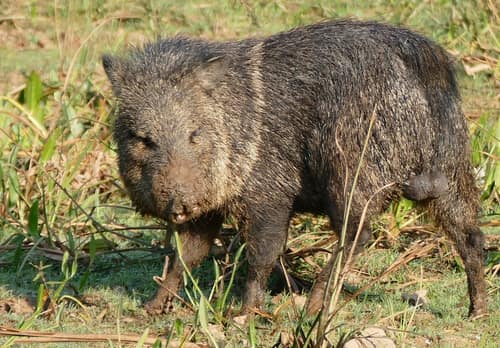
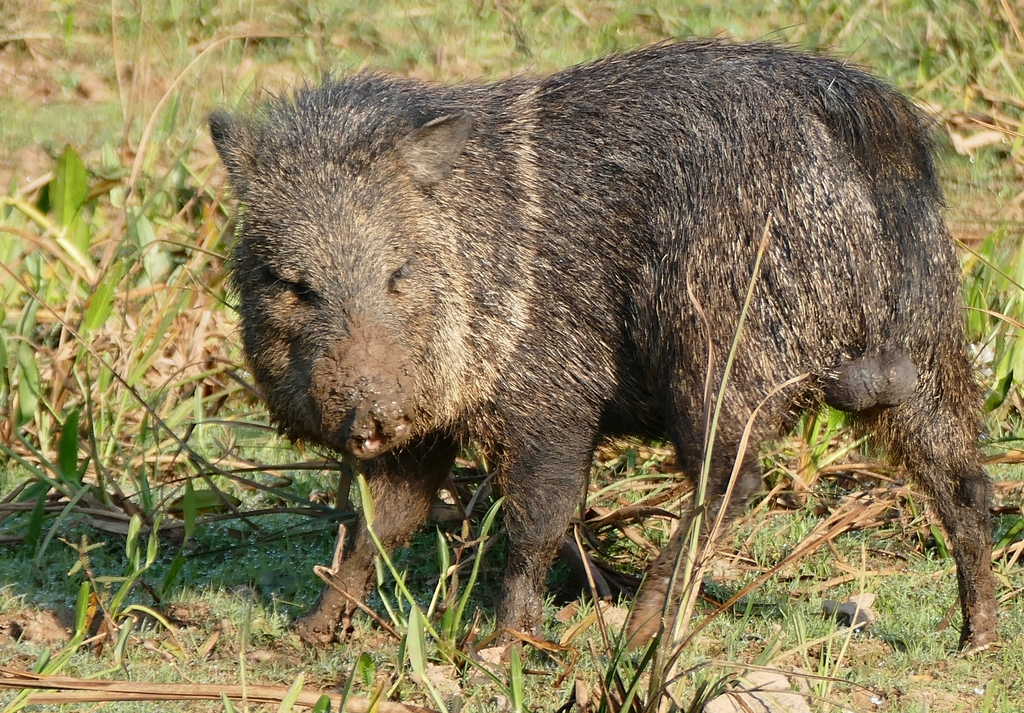
Collared peccaries roam arid scrublands, tropical forests, and desert canyons in close-knit family bands that communicate through low grunts and mutual scent-rubbing. Their specialized digestive systems allow them to thrive on tough prickly pear cactus, spines and all, supplying both essential nutrients and vital hydration. When alarmed, herd members erect dorsal bristles and release a pungent scent from a lumbar gland to alert the group to potential dangers.
SocialMammalDesert
—observations
—countries
—peak records
Least ConcernConservation statusIUCN Red List categoriesLCNTVUENCREWEXLeast ConcernRed List categories, explained →
Diet & prey
- Prickly Pear Cactus
- Roots and Tubers
- Invertebrates
Predators
- Jaguar
- Puma
- Coyote
ThreatsHabitat loss, hunting, road mortality, suburban encroachment
HabitatsDeserts, arid scrublands, oak woodlands, tropical rainforests
Life span10–15 years in the wild
Size / weightNot available
Classification
- OrderArtiodactyla
- FamilyTayassuidae
- GenusPecari
- SpeciesPecari tajacu
Range data is not available yet.
Interaction riskLow
- Low
- Moderate
- High
- Very high
- Why interaction risk is low
- Possesses sharp interlocking tusks that can inflict deep bites; keep a respectful distance and restrain dogs.
- Why it is dangerous
- Equipped with straight, razor-sharp tusks that self-sharpen when the jaws clack, capable of inflicting severe puncture wounds and lacerations.
- How to recognize a risky encounter
- Look for a coarse grizzled-grey coat, a faint yellowish collar across the shoulders, and an intense musky scent.
- What to do
- Back away slowly if a herd clicks its teeth or bristles its back hair, and never corner them or let pets approach.
Responsible observation
- Herd spacing: Maintain a safe distance of at least 15 meters, especially when young piglets are present.
- Pet management: Always keep domestic dogs on a short leash, as peccaries view dogs as coyotes and will aggressively defend themselves.
- Warning signs: Listen for sharp clacking teeth or low huffs, which signal that the herd feels threatened and may charge.
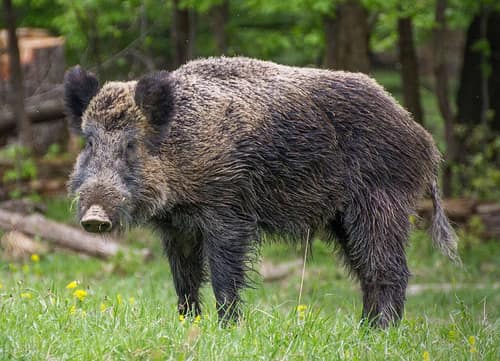
Ecological Competitor Valentin Panzirsch / CC BY-SA 3.0 at · cc-by-sa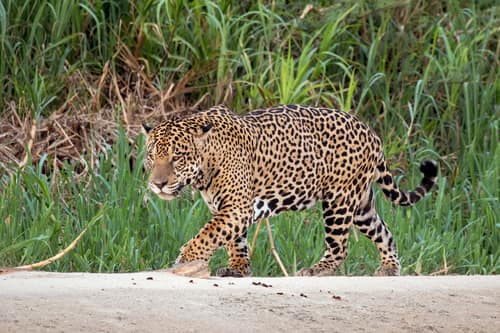
Predator (c) Charles J. Sharp , some rights reserved (CC BY-SA) · cc-by-sa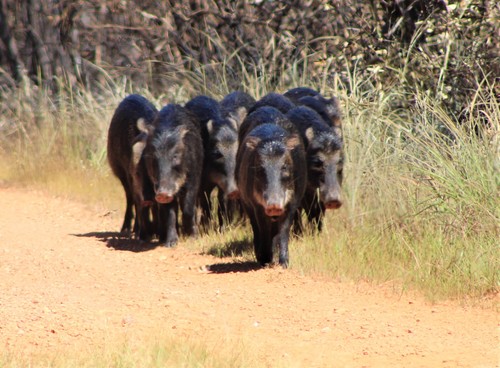
Close Relative (c) Pedro Sisnando Araújo dos Santos, some rights reserved (CC BY) · cc-by
Close Relative (c) Dave Pape, some rights reserved (CC BY) · cc-by
Help improve the field guideSomething wrong?
Checking your Fauna account…Report a name, category, or profile issue for review.