
Mammal · GBIF taxon 2440946
Chinese Muntjac
Muntiacus reevesiAlso known as Reeves's Muntjac, Barking Deer, Taiwan Muntjac
Chinese muntjac are small, stocky deer known for their distinctive dog-like alarm calls and prominent facial scent glands situated below the eyes. Males carry short antlers mounted on long furred pedicels along with elongated upper canine teeth that extend past the lips like small tusks. Native to dense subtropical forests in East Asia, introduced populations now thrive across European woodlands and suburban thickets.
CrepuscularWoodlandMammal
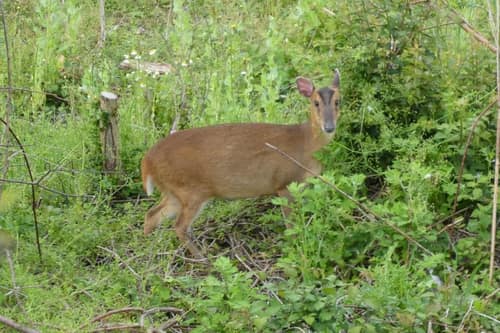
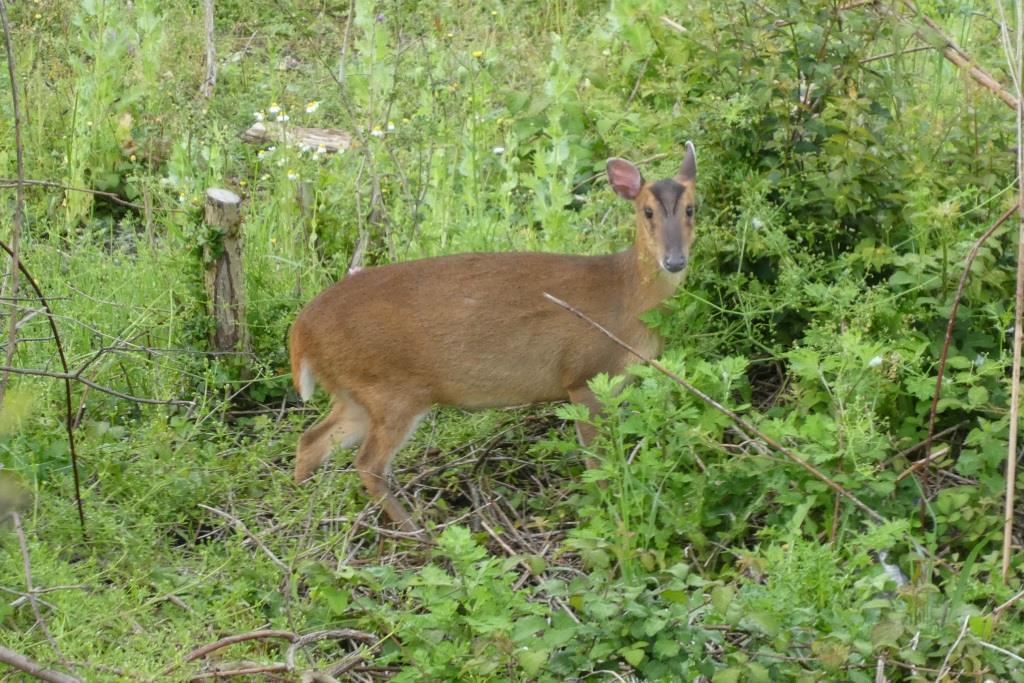
—observations
—countries
—peak records
Least ConcernConservation statusIUCN Red List categoriesLCNTVUENCREWEXLeast ConcernRed List categories, explained →
Diet & prey
- Fallen fruit
- Tree shoots
- Fungi
Predators
- Leopard
- Dhole
- Red Fox
ThreatsHabitat loss in native range; vehicle collisions and culling programs in introduced regions
HabitatsSubtropical broadleaf forests, temperate deciduous woodlands, dense scrub, suburban gardens
Life span10–15 years
Size / weightNot available
Classification
- FamilyCervidae
- SpeciesMuntiacus reevesi
Range data is not available yet.
Interaction riskLow
- Low
- Moderate
- High
- Very high
- Why interaction risk is low
- Males possess sharp upper canines and can inflict bites if cornered; observe quietly from a distance.
- Why it is dangerous
- Males possess sharp upper canine teeth extending up to two centimeters that can cause painful puncture wounds if cornered.
- How to recognize a risky encounter
- Recognizable as a tiny, reddish-brown deer with an arched back, low head carriage, and visible tusks on males.
- What to do
- Maintain a quiet distance along established paths and never attempt to handle wild individuals or fawns.
Responsible observation
- Listen for Calls: Pay attention for loud, repeated barking echoing through dense woodland during twilight hours.
- Look for Markings: Notice the black facial stripes forming a V shape on females or an X on males between their antlers.
- Check Low Vegetation: Watch for browsing damage on low shrubs and small paired hoofprints in soft soil.
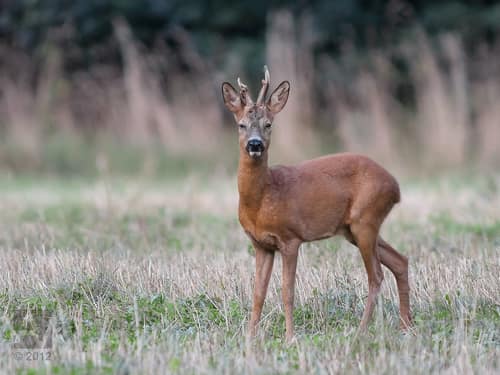
Competitor "Ree bok - Roe deer male" by Arend Vermazeren is licensed under CC BY 2.0. To view a copy of this license, visit https://creativecommons.org/licenses/by/2.0/. · cc-by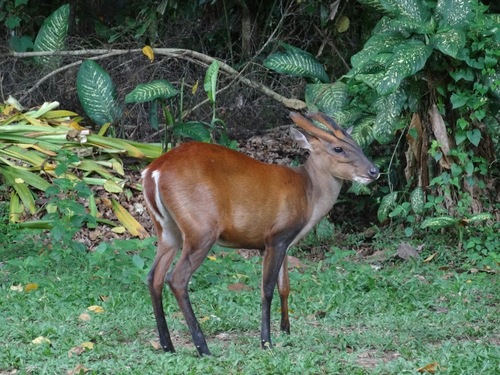
Close Relative (c) Mark Bolnik, some rights reserved (CC BY), uploaded by Mark Bolnik · cc-by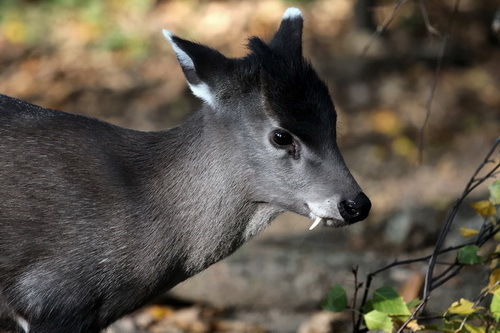
Close Relative (c) Николай Усик, some rights reserved (CC BY-SA) · cc-by-sa
Help improve the field guideSomething wrong?
Checking your Fauna account…Report a name, category, or profile issue for review.