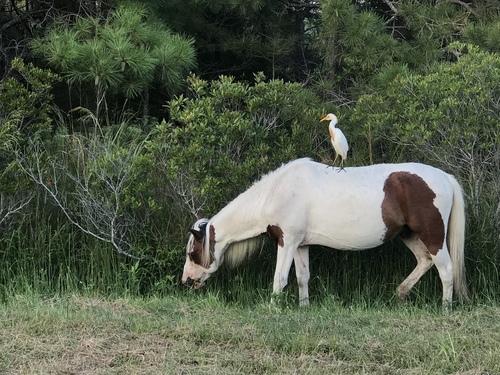
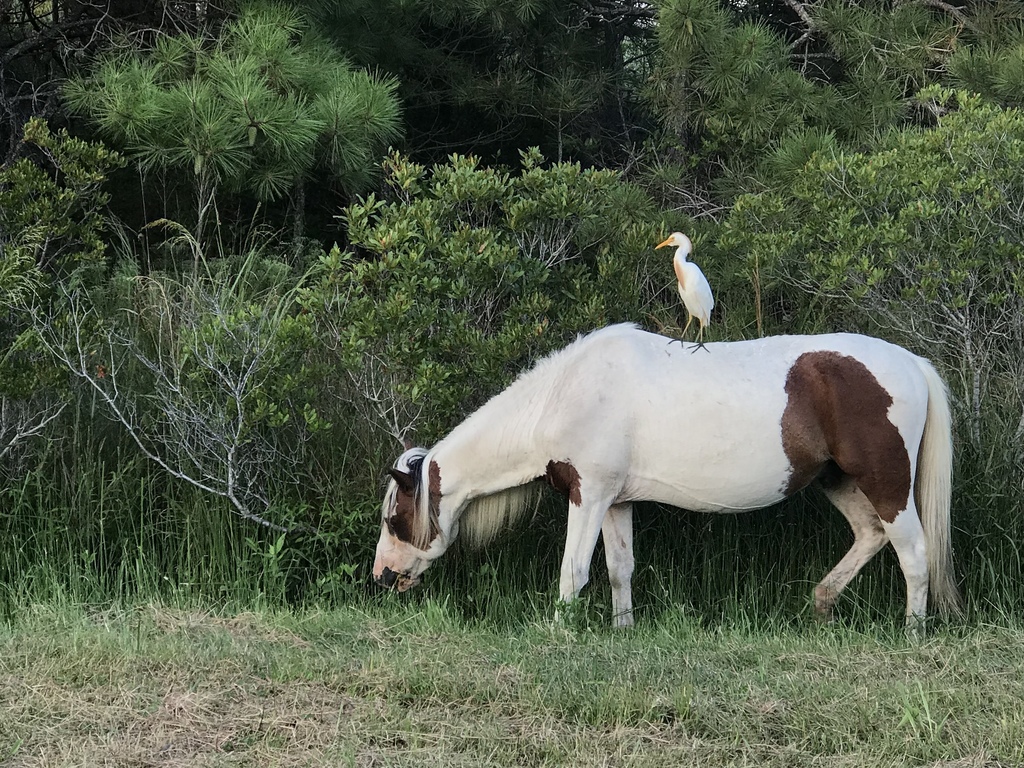
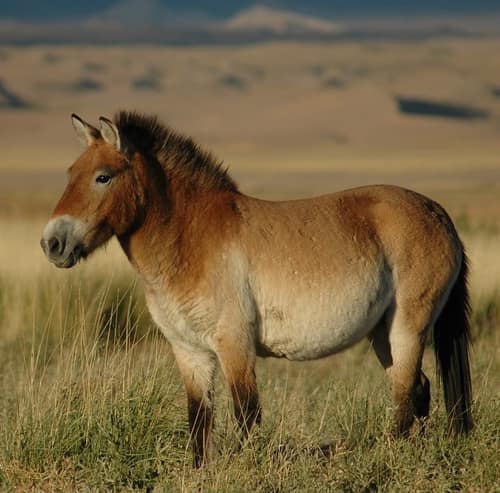
Domestic horses are social herd animals that maintain complex hierarchies governed by subtle ear positions, tail swishes, and facial expressions. Adapted for life on open grasslands, they possess wide-angle vision with panoramic blind spots directly in front of their nose and behind their hindquarters. Feral populations roam rangelands worldwide, shaping plant communities through continuous selective grazing and seed dispersal.
Not EvaluatedConservation statusIUCN Red List categoriesLCNTVUENCREWEXNot Evaluated — not placed on the risk ladderRed List categories, explained →
Key facts
Diet & prey
Pasture grasses
Clover
Forage herbs
Predators
Gray Wolf
Cougar
Brown Bear
ThreatsCulling of feral populations, pasture degradation, and vehicular collisions
HabitatsPastures, grasslands, open plains, and arid scrublands
Life span25–30 years
Size / weightNot available
Classification
OrderPerissodactyla
FamilyEquidae
GenusEquus
SpeciesEquus caballus
Range & activity
Range data is not available yet.
Safe observation
Interaction riskHigh
Low
Moderate
High
Very high
Why interaction risk is high
Can kick or bite forcefully if startled; never walk directly behind without speaking.
Why it is dangerous
Horses possess formidable hind leg strength capable of delivering kicks that cause broken bones, traumatic brain injury, or fatal blunt trauma.
How to recognize a risky encounter
Look for ears pinned flat against the neck, a raised head, rolling eyes, or a shifting hind end turned directly toward you.
What to do
Maintain a distance of at least two meters from unhandled or feral horses, announce your presence vocally, and never stand directly behind their hind hooves.
Responsible observation
Approach: Speak softly and approach at an angle toward the shoulder, avoiding blind spots directly behind or under the nose.
Body Language: Watch the ears; pinned-back ears signal irritation, fear, or readiness to kick or bite.
Feeding: Offer treats only with an entirely flat palm to avoid accidental finger bites.