
Mammal · GBIF taxon 2440825
Central Desert Marsupial Mole
Notoryctes typhlopsAlso known as Southern Marsupial Mole, Itjaritjari, Itjari-itjari
Itjaritjari spend almost their entire lives swimming through the subterranean red sands of central Australia. They leave behind no permanent tunnels, as loose sand collapses behind them while they push forward with massive, shovel-shaped foreclaws. Lacking functional eyes, external ears, and a visible tail, their golden, silky fur helps reduce friction in their desert environment.
SubterraneanMarsupialDesert
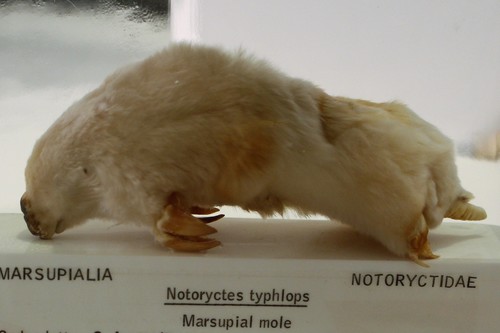
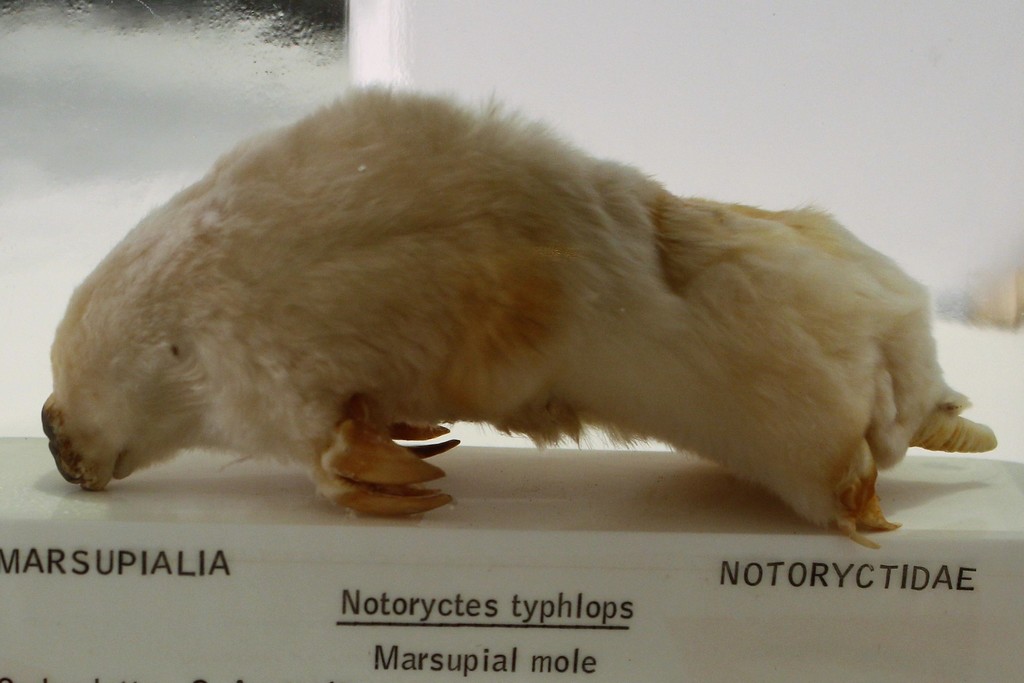
Licensed reference(c)
Emőke Dénes, some rights reserved (CC BY-SA) · cc-by-sa
—observations
—countries
—peak records
Least ConcernConservation statusIUCN Red List categoriesLCNTVUENCREWEXLeast ConcernRed List categories, explained →
Diet & prey
- Insect Larvae
- Beetles
- Earthworms
Predators
- Feral Cat
- Red Fox
- Dingo
ThreatsPredation by feral cats and foxes, soil compaction
HabitatsArid sand dunes, swales, desert sandplains
Life span3–5 years
Size / weightNot available
Classification
- OrderNotoryctemorphia
- FamilyNotoryctidae
- GenusNotoryctes
- SpeciesNotoryctes typhlops
Range data is not available yet.
Interaction riskLow
- Low
- Moderate
- High
- Very high
- Why interaction risk is low
- Safe to observe at a normal distance.
- What to notice
- Look for a small, golden-furred body with broad shovel-like front claws and no visible eyes.
- Support conservation
- Never attempt to dig up or handle this animal; report surface tracks to local indigenous rangers.
Responsible observation
- Track Identification: Look along dune crests after rain for faint surface tracks that disappear back into the sand.
- Habitat Protection: Avoid driving off-road vehicles across soft desert dunes to prevent crushing underground burrows.
- Sighting Reports: Record and share unexpected surface encounters with local ranger programs and wildlife databases.
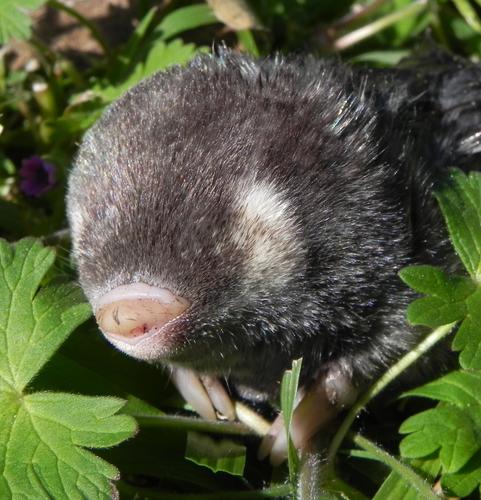
Ecological Counterpart (c) Henry de Lange, some rights reserved (CC BY), uploaded by Henry de Lange · cc-by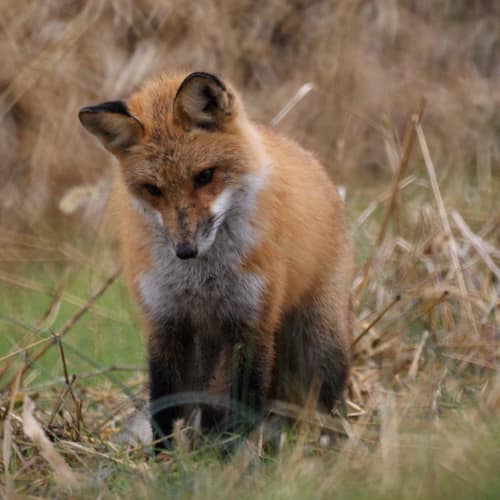
Predator "Red Fox" by Mike's Birds is licensed under CC BY-SA 2.0. To view a copy of this license, visit https://creativecommons.org/licenses/by-sa/2.0/. · cc-by-sa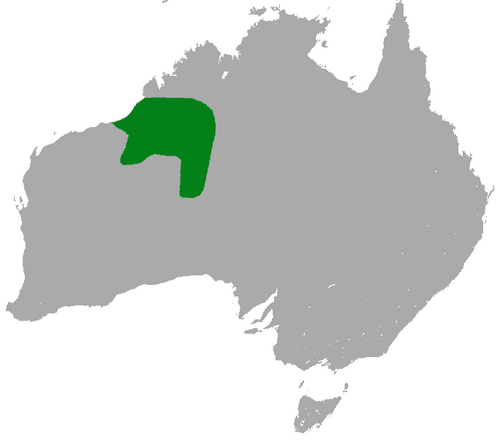
Close Relative Chermundy / CC BY-SA 3.0 · cc-by-sa
Help improve the field guideSomething wrong?
Checking your Fauna account…Report a name, category, or profile issue for review.