
Mammal
Brazilian Three-banded Armadillo
Tolypeutes tricinctusAlso known as Tatu-bola, Brazilian Ball Armadillo
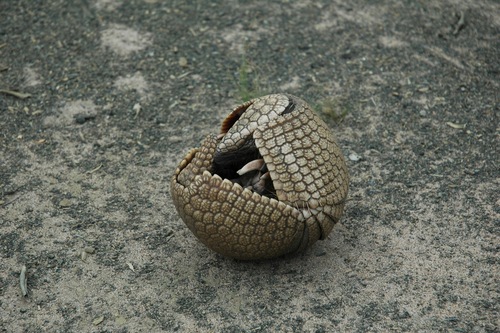
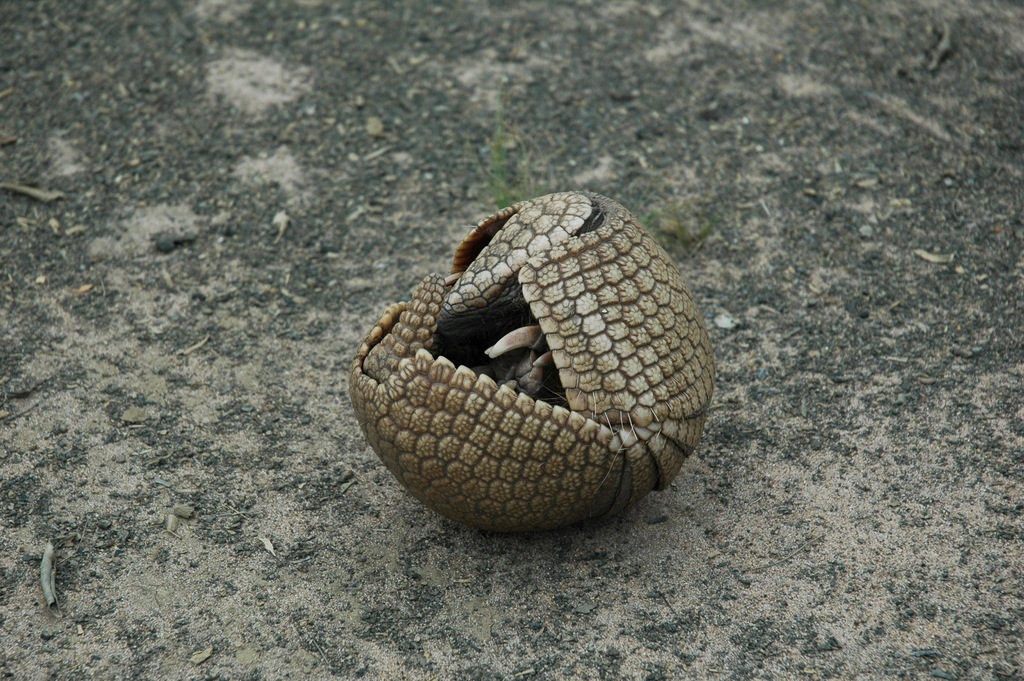
Brazilian three-banded armadillos specialize in living in the dry Caatinga scrublands and Cerrado savannas of eastern Brazil. When threatened, flexible skin connections between their armored plates allow them to tuck their head, legs, and tail together to form an airtight, impenetrable sphere. They use powerful claws to tear open termite mounds and dead wood, sweeping up insects with sticky tongues.
EndemicMammalInsectivore
—observations
—countries
—peak records
VulnerableConservation statusIUCN Red List categoriesLCNTVUENCREWEXVulnerableRed List categories, explained →
Diet & preyTermites, Ants, Beetle Larvae
Predators
- Puma
- Jaguar
- Maned Wolf
ThreatsHabitat destruction for agriculture and charcoal, hunting
HabitatsCaatinga dry scrublands and Cerrado savannas
Life span12–15 years
Classification
- FamilyDasypodidae
- SpeciesTolypeutes tricinctus
Range data is not available yet.
Interaction riskLow
- Low
- Moderate
- High
- Very high
- Why interaction risk is low
- Safe to observe at a normal distance.
- What to notice
- Recognized by its yellowish-brown armor, three flexible midbody bands, and compact dome silhouette.
- Support conservation
- Keep a quiet distance without attempting to pick up or trigger its defensive rolling reaction.
Responsible observation
- Keep Distance: Give foraging individuals space to move freely, as sudden noises cause them to instantly curl into a defensive sphere.
- Stay on Trails: Stick to established footpaths in dry scrub habitats to avoid disturbing fragile vegetation or underground burrows.
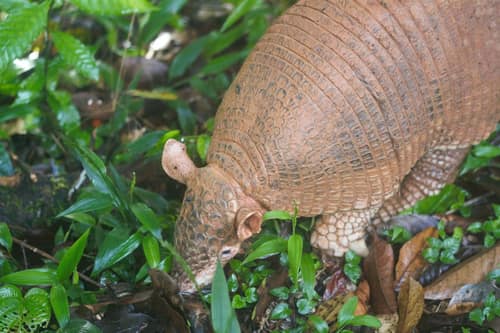
Related Xenarthran Guillaume Delaitre / CC BY 4.0 · cc-by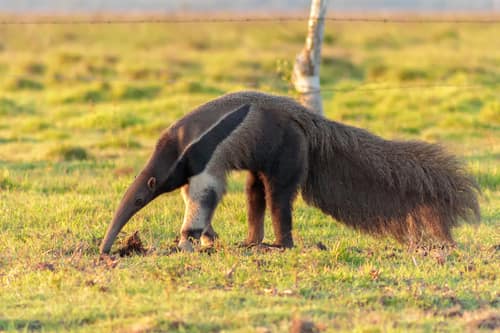
Frequent Companion (c) Fernando Flores, some rights reserved (CC BY-SA) · cc-by-sa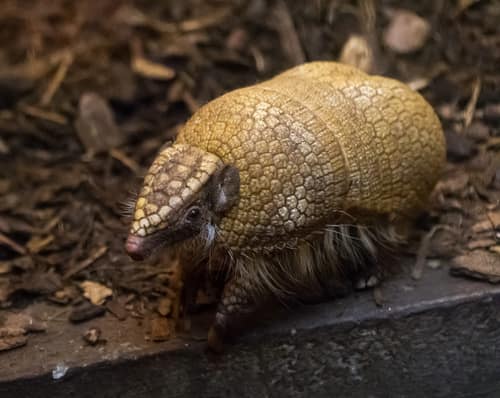
Close Relative Hedwig Storch / CC BY-SA 3.0 · cc-by-sa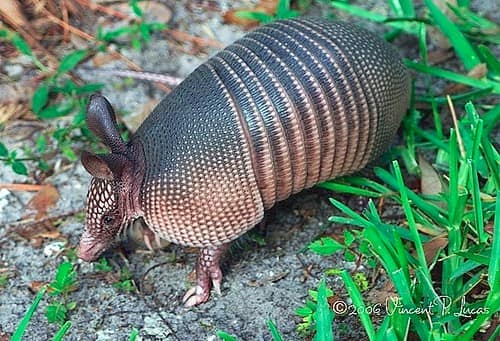
Co-occurring Relative "Nine-banded Armadillo" by leppyone is licensed under CC BY 2.0. To view a copy of this license, visit https://creativecommons.org/licenses/by/2.0/. · cc-by
Help improve the field guideSomething wrong?
Checking your Fauna account…Report a name, category, or profile issue for review.