
Mammal · GBIF taxon 2440254
Common Brushtail Possum
Trichosurus vulpeculaAlso known as Brushtail Possum
Common Brushtail Possums are sturdy nocturnal marsupials with pointed ears, strong climbing claws, and thick bushy tails with partly bare undersides. They shelter by day in tree hollows or buildings and emerge after dusk to forage in trees and on the ground.
arboreal marsupialnocturnal foragerprehensile tail
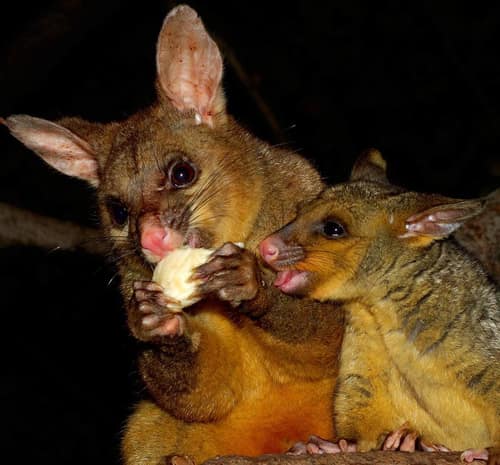
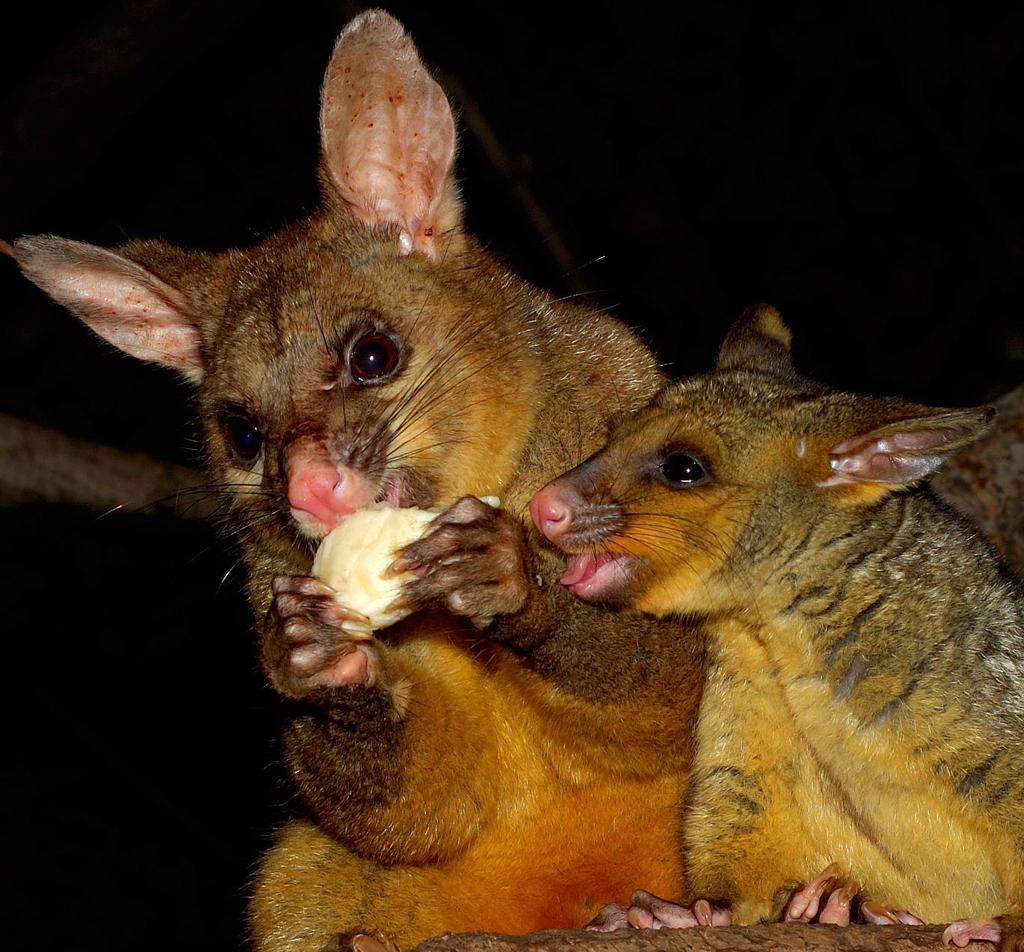
—observations
—countries
—peak records
Least ConcernConservation statusIUCN Red List categoriesLCNTVUENCREWEXLeast ConcernRed List categories, explained →
Diet & prey
- beetles
- moths
- other insects
Predators
- dingoes
- large owls
- domestic dogs
ThreatsVehicle strikes, dog attacks, habitat loss, poisoning, entanglement, and conflict around buildings
HabitatsForest, woodland, scrub, farmland, suburban parks, gardens, and roof spaces
Life spanOften six to twelve years in the wild, with some individuals living longer
Size / weightNot available
Classification
- FamilyPhalangeridae
- SpeciesTrichosurus vulpecula
Native Introduced
Native range in olive; established introduced range in rust.
Interaction riskLow
- Low
- Moderate
- High
- Very high
- Why interaction risk is low
- A frightened possum can bite or rake with sharp claws; never corner, feed, or grab one.
- Why it is dangerous
- Strong jaws and climbing claws can cause punctures and deep scratches when escape is blocked.
- How to recognize a risky encounter
- Note the large pointed ears and densely furred tail before distinguishing it from smaller possums.
- What to do
- Do not touch or confine the animal; use a licensed wildlife rescuer for injured or trapped possums.
Responsible observation
- Observe: Watch quietly after dusk while leaving its route to trees unobstructed.
- Prevent: Secure roof access and food sources without trapping an animal inside.
Help improve the field guideSomething wrong?
Checking your Fauna account…Report a name, category, or profile issue for review.