
Mammal · GBIF taxon 2440206
Huon Tree Kangaroo
Dendrolagus matschieiAlso known as Matschie's Tree-kangaroo, Boongarry
Matschie's tree-kangaroos spend up to sixty percent of their time resting high in the cloud forest canopy, perfectly adapted for arboreal life with strong forelimbs and flexible hind feet. They navigate slippery branches with cushion-like paw pads and curved claws, leaping down distances of up to eighteen meters to the ground without injury. Mothers raise single joeys inside their pouches for nearly a year before the young become fully independent.
ArborealMarsupialHerbivore
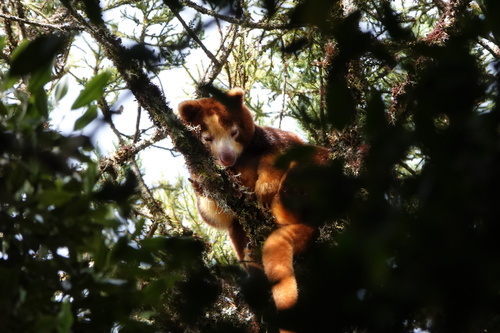
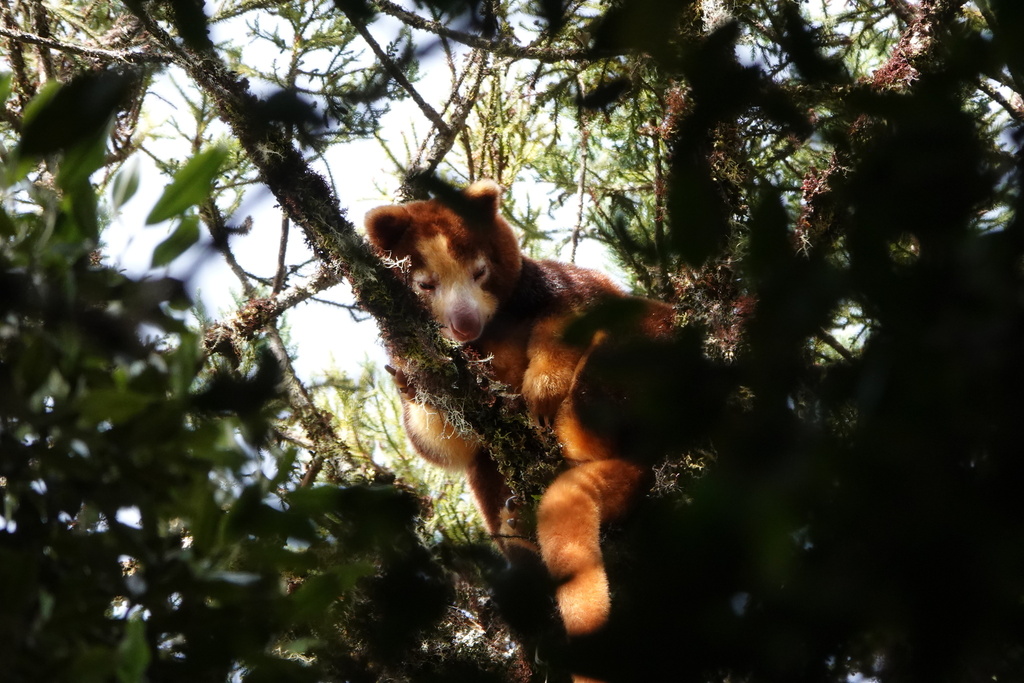
—observations
—countries
—peak records
EndangeredConservation statusIUCN Red List categoriesLCNTVUENCREWEXEndangeredRed List categories, explained →
Diet & prey
- Leaves, fruit, moss, sap, and flowers
Predators
- New Guinea singing dog
- Papuan eagle
- Amethystine python
ThreatsDeforestation, habitat fragmentation, and subsistence hunting
HabitatsMontane tropical cloud forests
Life span15–20 years
Size / weightNot available
Classification
- OrderDiprotodontia
- FamilyMacropodidae
- GenusDendrolagus
- SpeciesDendrolagus matschiei
Range data is not available yet.
Interaction riskLow
- Low
- Moderate
- High
- Very high
- Why interaction risk is low
- Possesses sharp claws and strong jaws; view from a respectful distance without attempting contact.
- Why it is dangerous
- Equipped with curved claws for tree climbing and powerful hind legs that can deliver severe scratches if cornered.
- How to recognize a risky encounter
- Look for dense chestnut-brown fur, bright golden-yellow limbs, belly, and tail, and a bear-like face.
- What to do
- Maintain a quiet distance and never attempt to corner or grasp an animal found near the ground.
- What to notice
- Easily identified by its golden-yellow tail, rich reddish-brown pelt, and distinct facial whorl.
- Support conservation
- Keep noise levels low, stay on established forest trails, and refrain from using flash photography.
Responsible observation
- Canopy Observation: Scan middle and upper mossy branches in misty montane forests during early morning.
- Eco-tourism Guidelines: Support community-managed conservation areas on the Huon Peninsula.
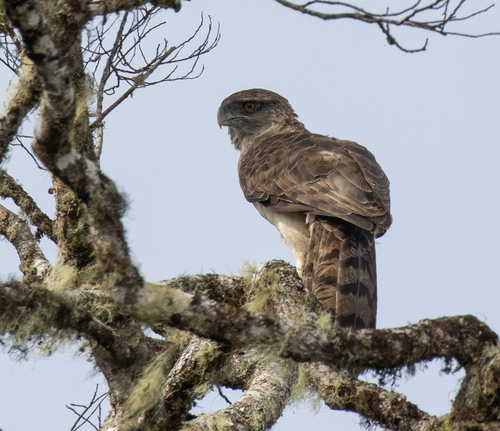
Predator (c) avocat, algunos derechos reservados (CC BY), subido por avocat · cc-by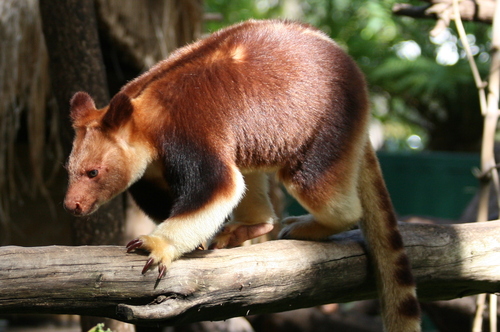
Close Relative (c) Matthias Liffers, some rights reserved (CC BY) · cc-by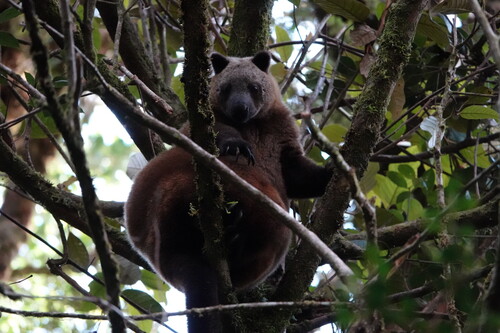
Close Relative (c) Daniel, some rights reserved (CC BY), uploaded by Daniel · cc-by
Help improve the field guideSomething wrong?
Checking your Fauna account…Report a name, category, or profile issue for review.