
Mammal
Swamp Wallaby
Wallabia bicolorAlso known as Black Wallaby, Black-tailed Wallaby, Fern Wallaby, Stinker
Swamp wallabies hop through dense undergrowth with a distinctive low-headed, horizontal posture and their tails held straight out behind them. Unusually among marsupials, females can conceive a new embryo while already carrying a developing fetus in an adjacent uterus, allowing continuous reproduction throughout the year. They are solitary and cryptic browsers that thrive on coarse, fibrous vegetation, even tolerating plants toxic to domestic livestock.
MarsupialNocturnalSolitary
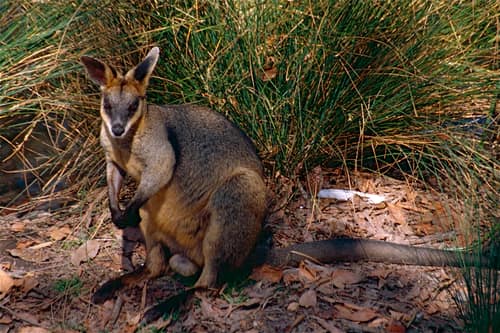
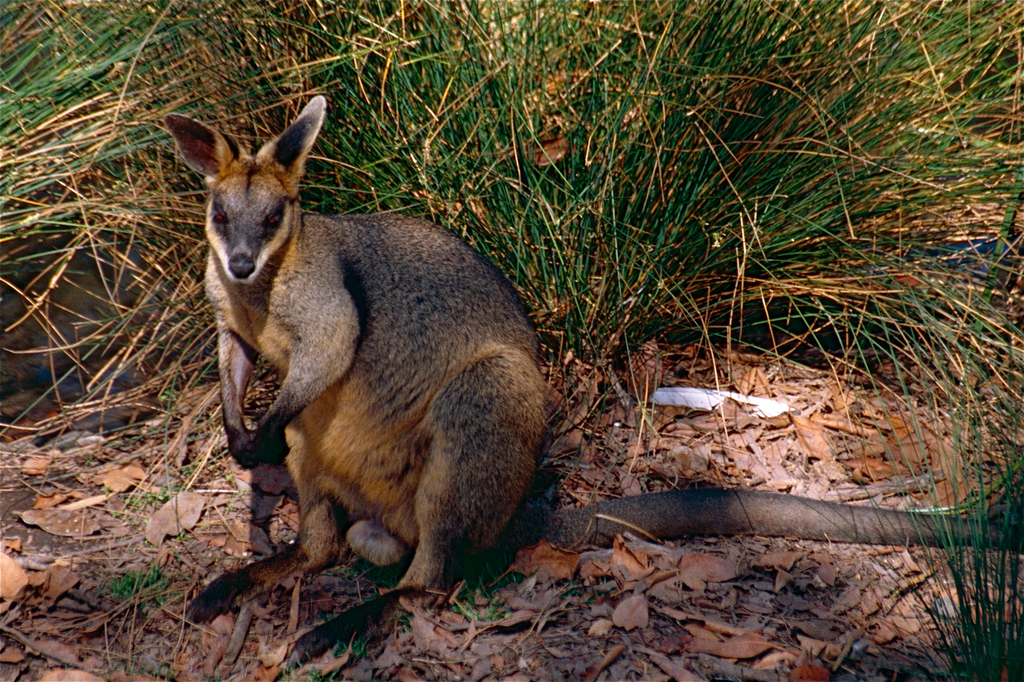
—observations
—countries
—peak records
Least ConcernConservation statusIUCN Red List categoriesLCNTVUENCREWEXLeast ConcernRed List categories, explained →
Diet & preyBracken Fern, Shrub foliage, Fungi
Predators
- Dingo
- Red Fox
- Wedge-tailed Eagle
ThreatsVehicle collisions, habitat fragmentation, and predation by dogs and foxes
HabitatsDense forests, woodlands, coastal heath, and swamp margins
Life span12–15 years in the wild
Classification
- OrderDiprotodontia
- FamilyMacropodidae
- GenusWallabia
- SpeciesWallabia bicolor
Range data is not available yet.
Interaction riskLow
- Low
- Moderate
- High
- Very high
- Why interaction risk is low
- Can inflict deep lacerations with powerful hind claws if cornered; observe from a distance.
- Why it is dangerous
- Possesses sharp claws on powerful hind legs capable of disemboweling or inflicting severe lacerations if cornered or restrained.
- How to recognize a risky encounter
- Recognizable by dark charcoal-brown fur, yellowish-orange belly, and a pale cheek stripe, hopping with head held unusually low.
- What to do
- Never corner, touch, or attempt to handle a wild individual; give injured animals space and contact licensed wildlife rescuers.
Responsible observation
- Road Caution: Watch roadsides carefully at dawn and dusk when individuals frequently feed near road shoulders.
- Quiet Approach: Move slowly along trail edges, as they rely on dense cover and freeze or flee upon sudden movements.
- Pet Control: Keep dogs leashed in bushland reserves to prevent distress or violent defensive kicks.
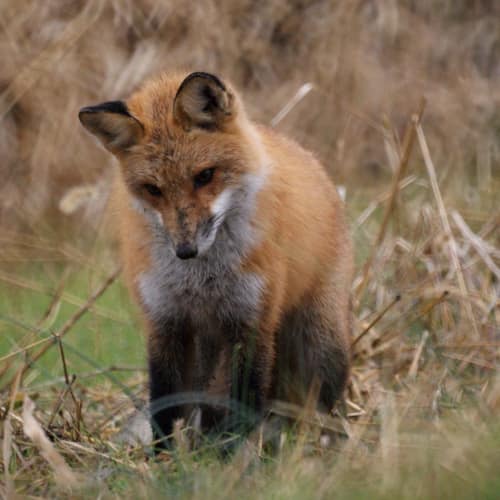
Predator "Red Fox" by Mike's Birds is licensed under CC BY-SA 2.0. To view a copy of this license, visit https://creativecommons.org/licenses/by-sa/2.0/. · cc-by-sa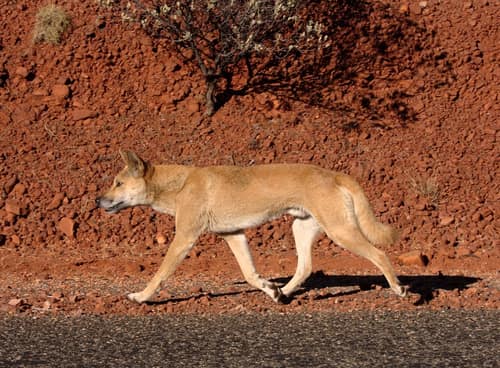
Predator Jarrod Amoore from Sydney, Australia / CC BY 2.0 · cc-by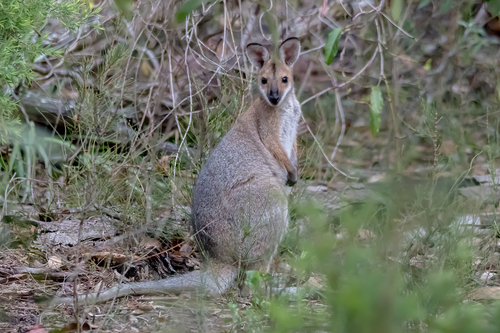
Close Relative (c) Andrew Allen, some rights reserved (CC BY), uploaded by Andrew Allen · cc-by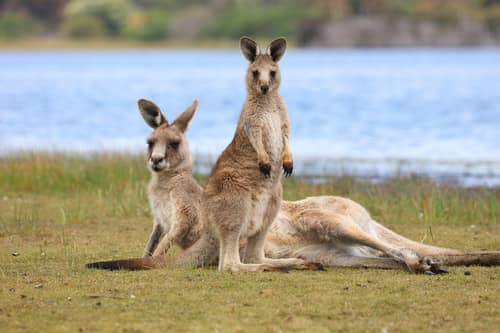
Close Relative (c) Shane Walker, some rights reserved (CC BY), uploaded by Shane Walker · cc-by
Help improve the field guideSomething wrong?
Checking your Fauna account…Report a name, category, or profile issue for review.