
Mammal
Big-eared Opossum
Didelphis auritaAlso known as Sarue, Gamba, Brazilian Common Opossum
Big-eared opossums are adaptable nocturnal marsupials that thrive across the canopy and understory of South America's Atlantic Forest. Solitary by nature, they navigate branches with a dexterous prehensile tail and opposable hallux toes on their hind feet, descending to the ground to forage as twilight sets in. Females carry litters of tiny young inside a well-developed pouch before transferring older joeys to ride safely on their backs.
MarsupialNocturnalArboreal
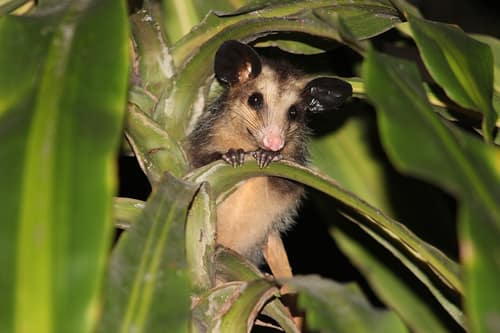
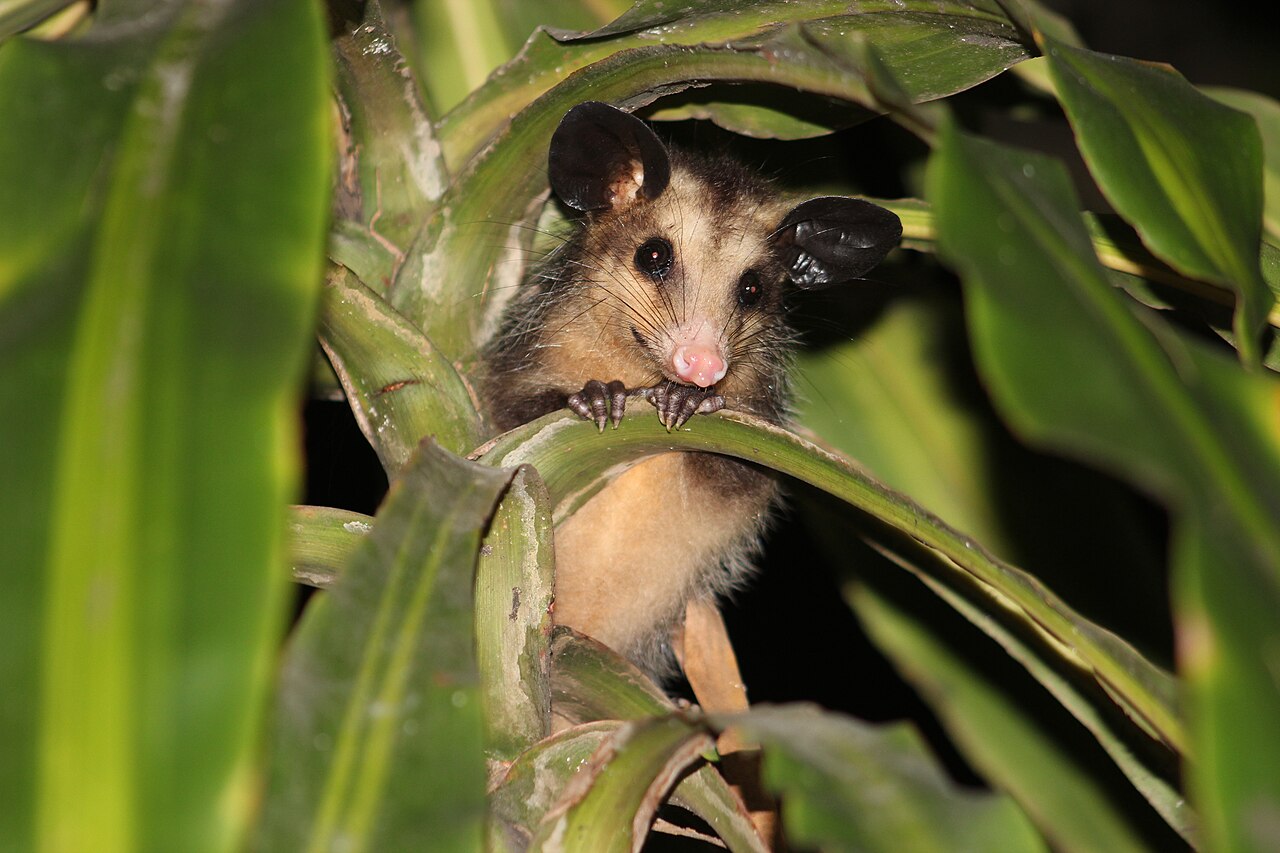
—observations
—countries
—peak records
Least ConcernConservation statusIUCN Red List categoriesLCNTVUENCREWEXLeast ConcernRed List categories, explained →
Diet & preyPassiflora Fruits, Insects, Small Rodents
Predators
- Ocelot
- Black-and-white Owl
- Bushmaster
ThreatsDeforestation, vehicle collisions, domestic dog attacks, and human persecution
HabitatsTropical and subtropical moist lowland forests, secondary growth, and rural gardens
Life span2–4 years
Classification
- FamilyDidelphidae
- SpeciesDidelphis aurita
Native
Interaction riskLow
- Low
- Moderate
- High
- Very high
- Why interaction risk is low
- Cornered individuals bare teeth and bite defensively; observe quietly from a respectful distance.
- Why it is dangerous
- Possesses sharp teeth and strong jaws capable of inflicting deep puncture wounds and scratches if grabbed or cornered.
- How to recognize a risky encounter
- Recognizable by prominent bare black ears, coarse dark grey fur, and a distinct black mask running over a pale face.
- What to do
- Do not attempt to touch or corner an opossum; step away slowly and allow it a clear escape route.
Responsible observation
- Nocturnal Spotting: Scan Atlantic Forest tree canopies after dark using a red-filtered flashlight to detect eye shine.
- Urban Encounters: Give cornered individuals space to retreat into tree cover, as hissing is merely a defensive bluff.
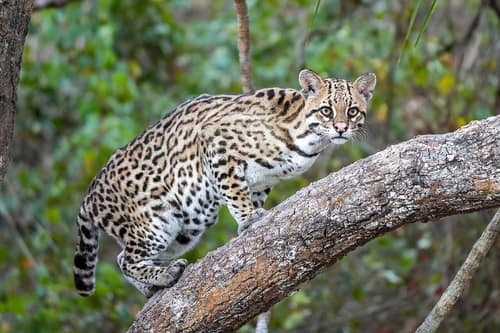
Predator Giles Laurent / CC BY-SA 4.0 · cc-by-sa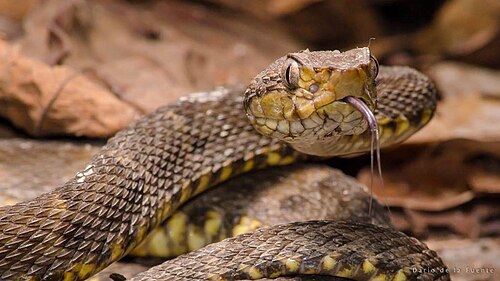
Prey Darío De la Fuente / CC BY 4.0 · cc-by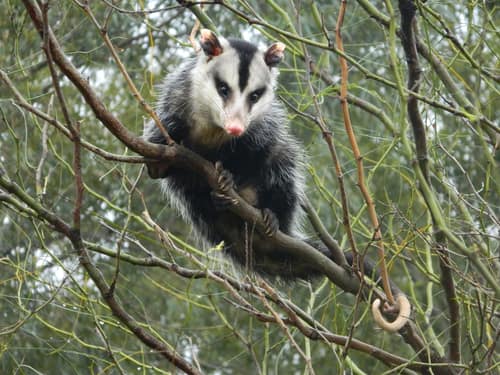
Close Relative (c) Eduardo Luis Beltrocco, some rights reserved (CC BY), uploaded by Eduardo Luis Beltrocco · cc-by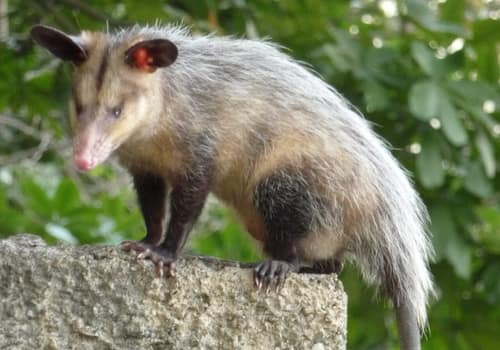
Close Relative Rabipelao.jpg: Juan Tello derivative work: WolfmanSF (talk) / CC BY 2.0 · cc-by
Keep collecting in Fauna
Found in Collections
Species set
Moonlight Marvels
Big-eared Opossum is found in this collection. Identify it in Fauna to fill this slot and continue your progress.
—/7
Help improve the field guideSomething wrong?
Checking your Fauna account…Report a name, category, or profile issue for review.