
Mammal · GBIF taxon 2437638
Hispaniolan Hutia
Plagiodontia aediumAlso known as Zagouti, Hispaniolan Zagouti
Hispaniolan hutias are sturdy, nocturnal rodents that represent one of the very few surviving endemic terrestrial mammals on Hispaniola. They spend daylight hours concealed within limestone crevices, tree hollows, or burrow systems, emerging at night to forge pathways through the canopy and forest floor. Vocal communications include high-pitched squeaks and chatter when interacting near communal nesting den sites.
NocturnalEndangeredArboreal
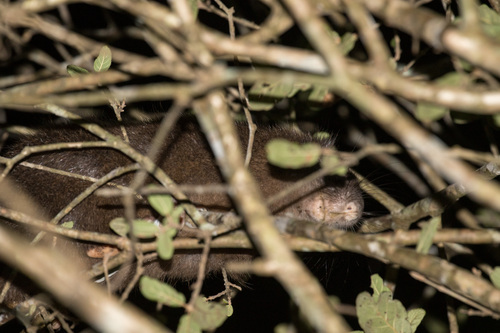
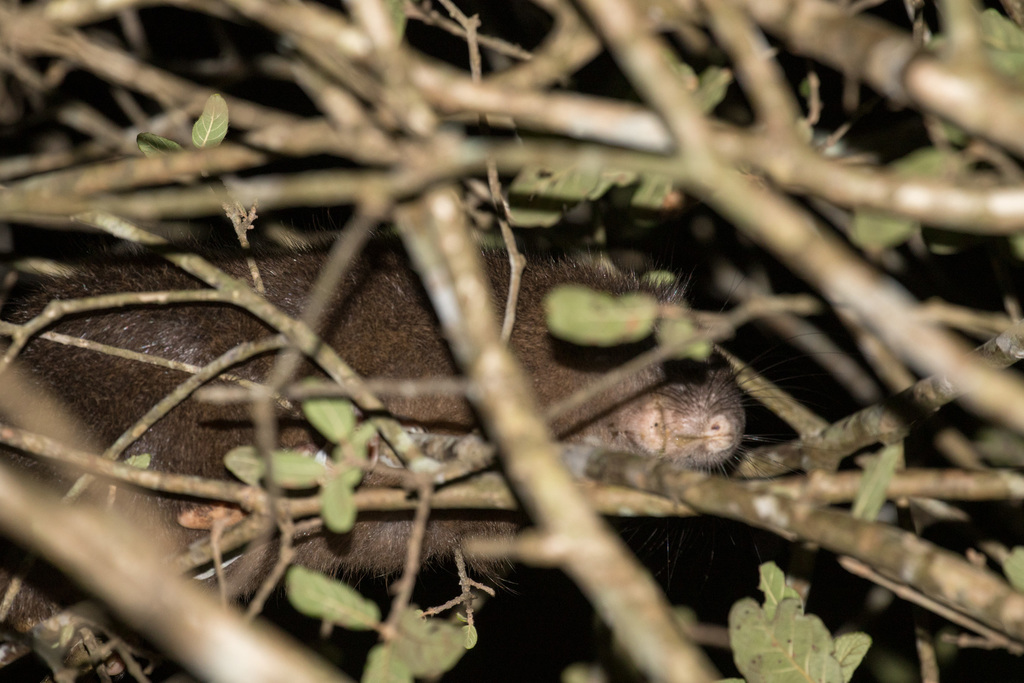
—observations
—countries
—peak records
Least ConcernConservation statusIUCN Red List categoriesLCNTVUENCREWEXLeast ConcernRed List categories, explained →
Diet & prey
- Tropical Fruits
- Tree Leaves
- Plant Roots
Predators
- Feral Dogs
- Small Asian Mongoose
- Feral Cats
ThreatsDeforestation, invasive predators, human hunting
HabitatsSubtropical moist forests, dry forests, rocky karst areas
Life span8–10 years
Size / weightNot available
Classification
- FamilyCapromyidae
- SpeciesPlagiodontia aedium
Range data is not available yet.
Interaction riskLow
- Low
- Moderate
- High
- Very high
- Why interaction risk is low
- May bite or scratch if cornered; keep a respectful distance and do not handle.
- Why it is dangerous
- Equipped with large, sharp incisors and powerful claws that can inflict severe wounds if handled or cornered.
- How to recognize a risky encounter
- Recognized by a stocky body, brownish-grey coarse fur, small eyes, and prominent orange incisors.
- What to do
- Never attempt to touch or trap wild individuals; ensure they have a clear path to retreat.
- What to notice
- Look for a dark, guinea-pig-like mammal navigating canopy branches or rocky terrain at night.
- Support conservation
- Maintain a respectful distance and avoid disclosing exact nesting cave or hollow locations publicly.
Responsible observation
- Night Spotting: Use a red-filtered flashlight to scan tree limbs after dark without disturbing their vision.
- Quiet Approach: Move quietly through karst trails to avoid scaring individuals into limestone crevices.
- Nest Respect: Keep away from low tree hollows or rock fissures where family groups rest during the day.
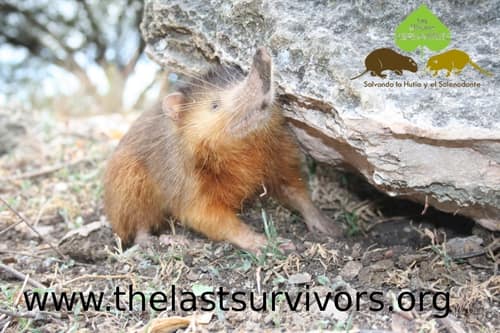
Co-occurring Native (c) Solenodon joe, some rights reserved (CC BY) · cc-by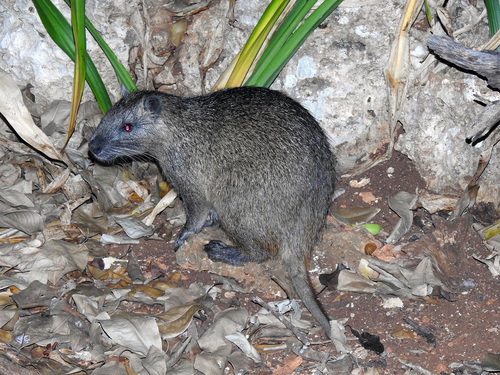
Close Relative (c) Louis Imbeau, some rights reserved (CC BY), uploaded by Louis Imbeau · cc-by Image unavailable
Close Relative
Help improve the field guideSomething wrong?
Checking your Fauna account…Report a name, category, or profile issue for review.