
Mammal · GBIF taxon 2437570
White-tailed Antelope Squirrel
Ammospermophilus leucurusAlso known as White-Tailed Antelope Ground Squirrel, Antelope Ground Squirrel
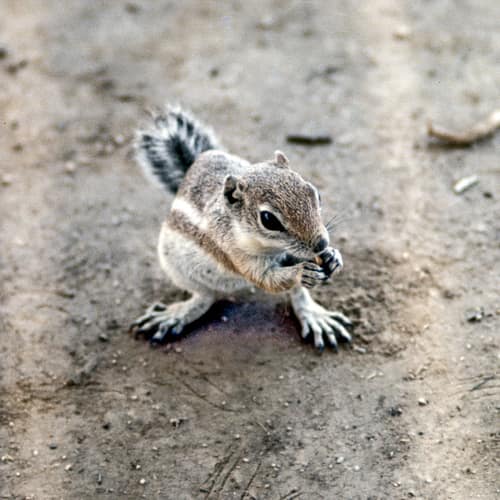
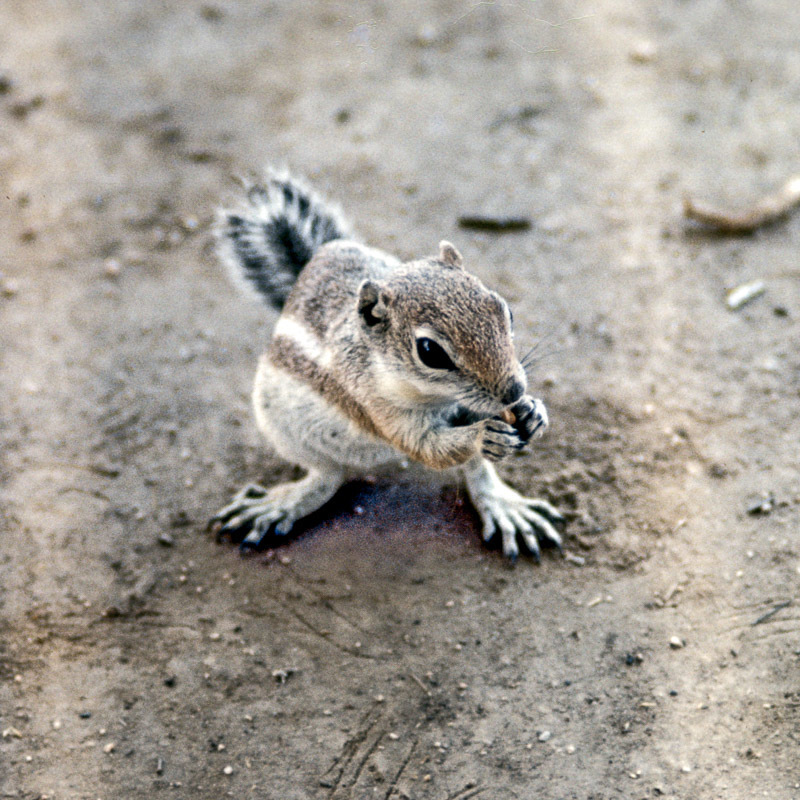
White-tailed antelope squirrels dart across blistering desert soils with their tails arched tightly over their backs, exposing a flash of bright white undersides that reflect sunlight and signal alarm. These small ground squirrels tolerate extreme body temperatures that would kill most mammals, temporarily storing heat before cooling off in shady burrows. They spend their days harvesting seeds, green vegetation, and insects to survive the harsh arid climate of the North American deserts.
DiurnalDesertRodent
—observations
—countries
—peak records
Least ConcernConservation statusIUCN Red List categoriesLCNTVUENCREWEXLeast ConcernRed List categories, explained →
Diet & prey
- Seeds
- Cactus Fruit
- Insects
Predators
- Coyotes
- Red-tailed Hawks
- Rattlesnakes
ThreatsHabitat loss, land development, and extreme climate events
HabitatsArid deserts, sagebrush scrub, and rocky canyons
Life span2 to 4 years
Size / weightNot available
Classification
- FamilySciuridae
- SpeciesAmmospermophilus leucurus
Native
Interaction riskLow
- Low
- Moderate
- High
- Very high
- Why interaction risk is low
- Capable of delivering a sharp bite if handled; observe from a safe distance.
Responsible observation
- Binocular Spotting: Look for small mammals scampering with tails curled over their backs along sunny washes.
- Timing Observation: Search during morning hours when squirrels actively forage before peak daytime temperatures.
- Respect Burrows: Keep a clear distance from subterranean burrows to avoid disrupting nesting chambers.
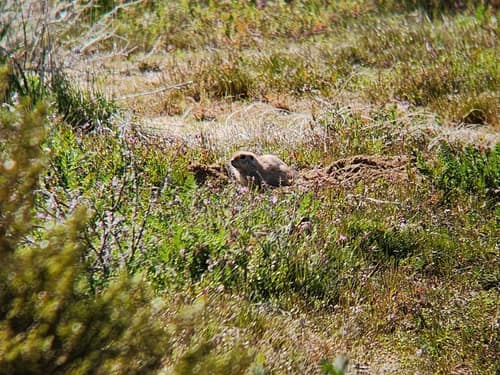
Competitor (c) Cristhian Mace, some rights reserved (CC BY) · cc-by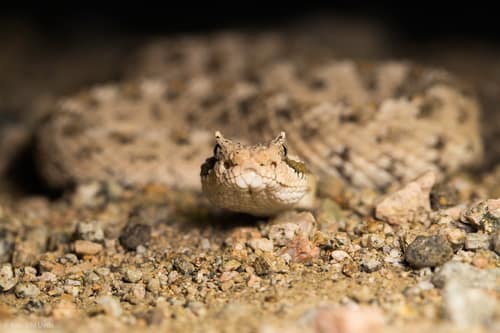
Predator (c) Ken-ichi Ueda, some rights reserved (CC BY) · cc-by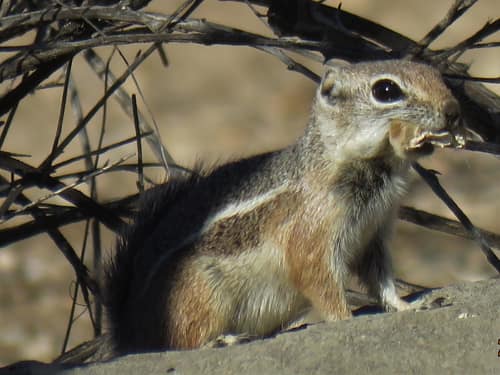
Close Relative no rights reserved, uploaded by Steve Wells · cc0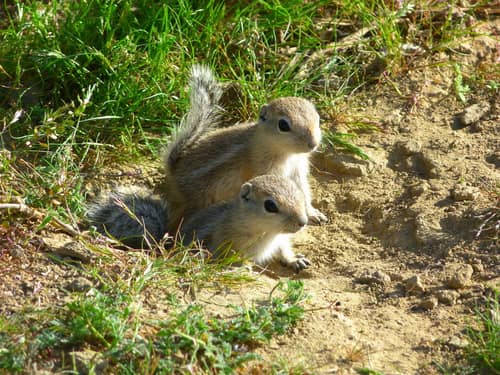
Close Relative (c) Zack Abbey, some rights reserved (CC BY), uploaded by Zack Abbey · cc-by
Help improve the field guideSomething wrong?
Checking your Fauna account…Report a name, category, or profile issue for review.