
Mammal
Black Giant Squirrel
Ratufa bicolorAlso known as Malayan Giant Squirrel
Black giant squirrels spend their lives high in the forest canopy, bounding across tree gaps with athletic leaps of up to six meters. Unlike most tree squirrels, they flatten their long bodies tightly against thick branches when resting or alarmed rather than scampering into tree hollows. Solitary and diurnal, they construct massive football-shaped twig nests in the upper branches and advertise territories with deep, resonant barking calls.
ArborealDiurnalHerbivore
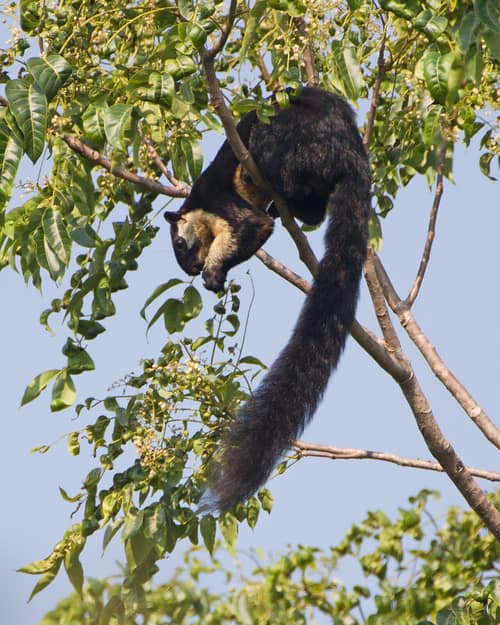
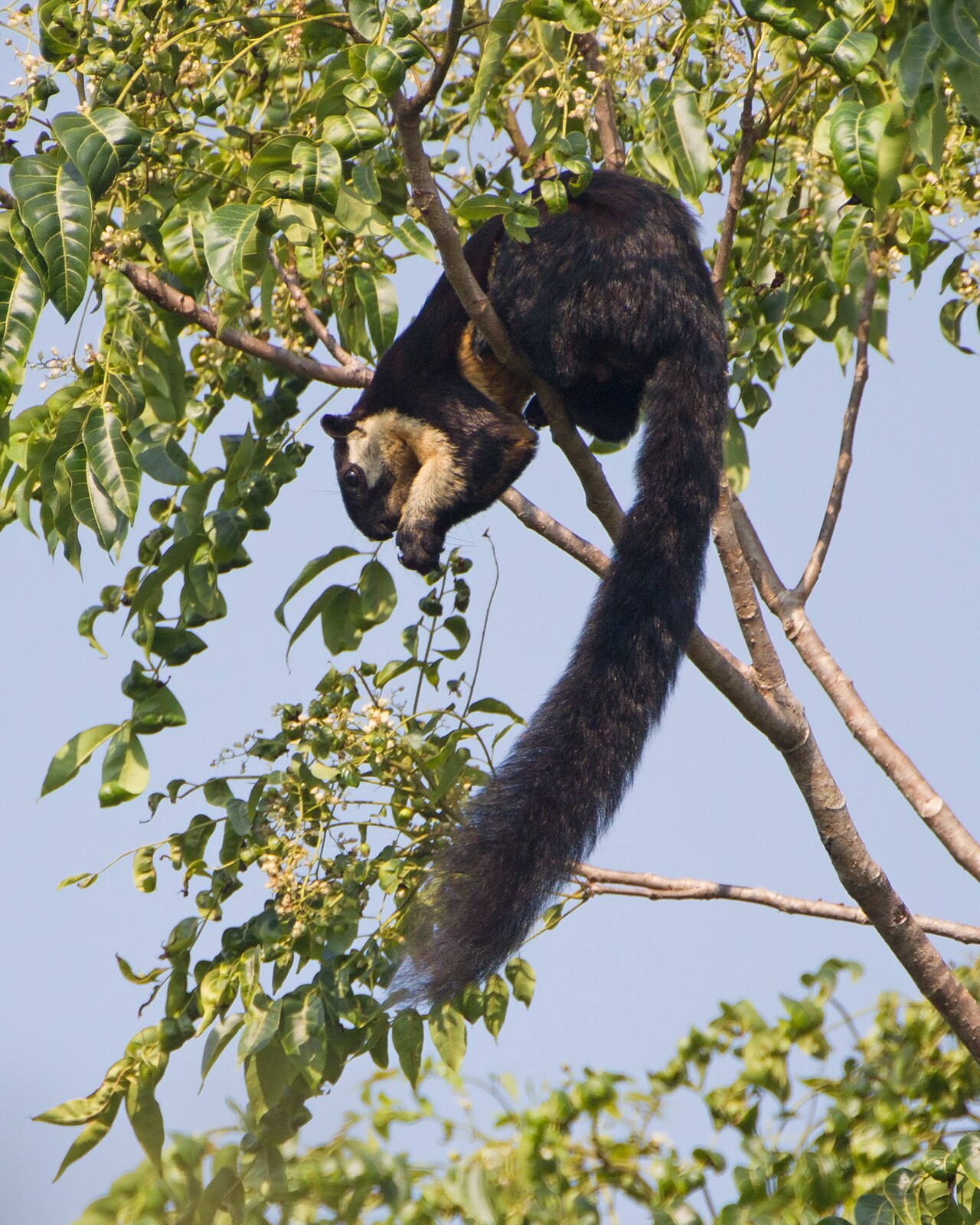
—observations
—countries
—peak records
Near ThreatenedConservation statusIUCN Red List categoriesLCNTVUENCREWEXNear ThreatenedRed List categories, explained →
Diet & preyFigs and wild fruit, Tree seeds and nuts, Broadleaf foliage
Predators
- Clouded leopard
- Crested serpent eagle
- Reticulated python
ThreatsDeforestation, logging, habitat fragmentation, and hunting for bushmeat
HabitatsTropical and subtropical evergreen and semi-evergreen broadleaf forests
Life span10–18 years
Classification
- FamilySciuridae
- SpeciesRatufa bicolor
Range data is not available yet.
Interaction riskLow
- Low
- Moderate
- High
- Very high
- Why interaction risk is low
- Safe to observe from the ground at a normal distance.
- What to notice
- Look for a massive dark brown to jet-black squirrel with a pale buff underside and a very long, bushy tail.
- Support conservation
- Observe silently through binoculars from forest trails without using calls or spotlighting at dusk.
Responsible observation
- Look high: Scan mature fruiting fig trees with binoculars during early morning feeding bouts.
- Listen carefully: Listen for loud, rhythmic chattering calls echoing through the tall canopy.
- Keep distance: Stay on marked trails to avoid startling foraging adults overhead.
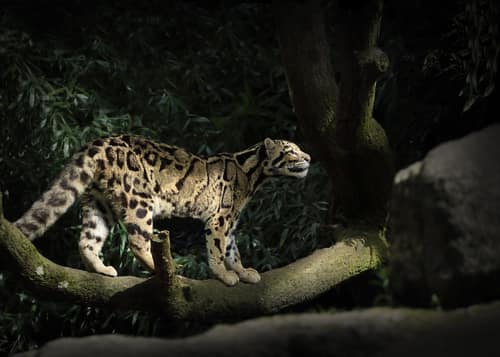
Predator "Clouded Leopard catching the light" by charlieishere@btinternet.com is licensed under CC BY 2.0. To view a copy of this license, visit https://creativecommons.org/licenses/by/2.0/. · cc-by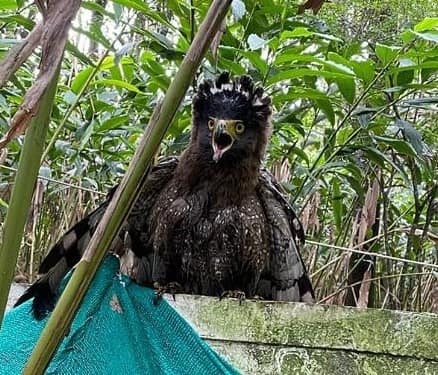
Predator (c) Seema Merchant, some rights reserved (CC BY) · cc-by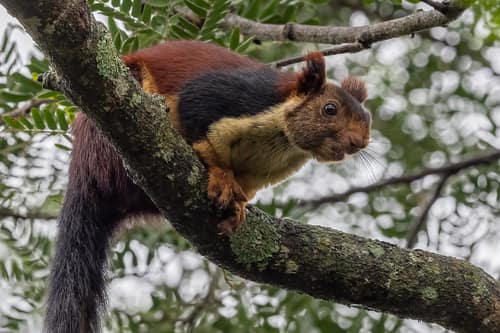
Close Relative "An Indian Giant Squirrel eating fruit" by Hari K Patibanda is licensed under CC BY 2.0. To view a copy of this license, visit https://creativecommons.org/licenses/by/2.0/. · cc-by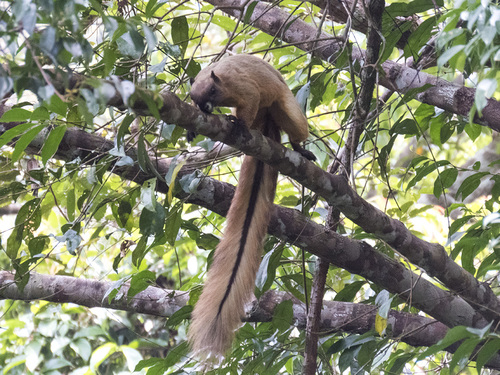
Close Relative (c) Sebastian Doak, some rights reserved (CC BY), uploaded by Sebastian Doak · cc-by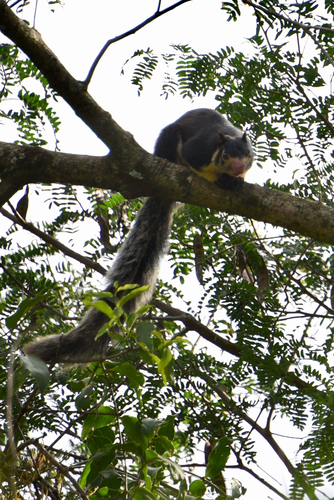
Close Relative (c) melianie_max_and_asker, some rights reserved (CC BY), uploaded by melianie_max_and_asker · cc-by
Help improve the field guideSomething wrong?
Checking your Fauna account…Report a name, category, or profile issue for review.