
Mammal · GBIF taxon 2437564
Pale Giant Squirrel
Ratufa affinisAlso known as Cream-coloured Giant Squirrel
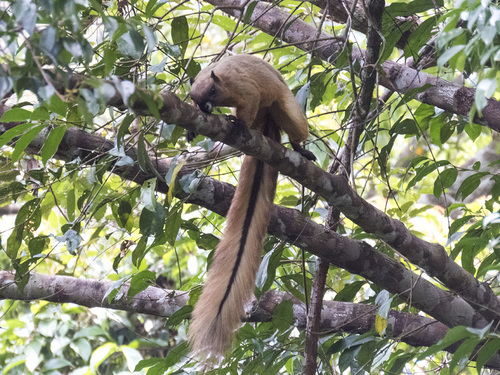
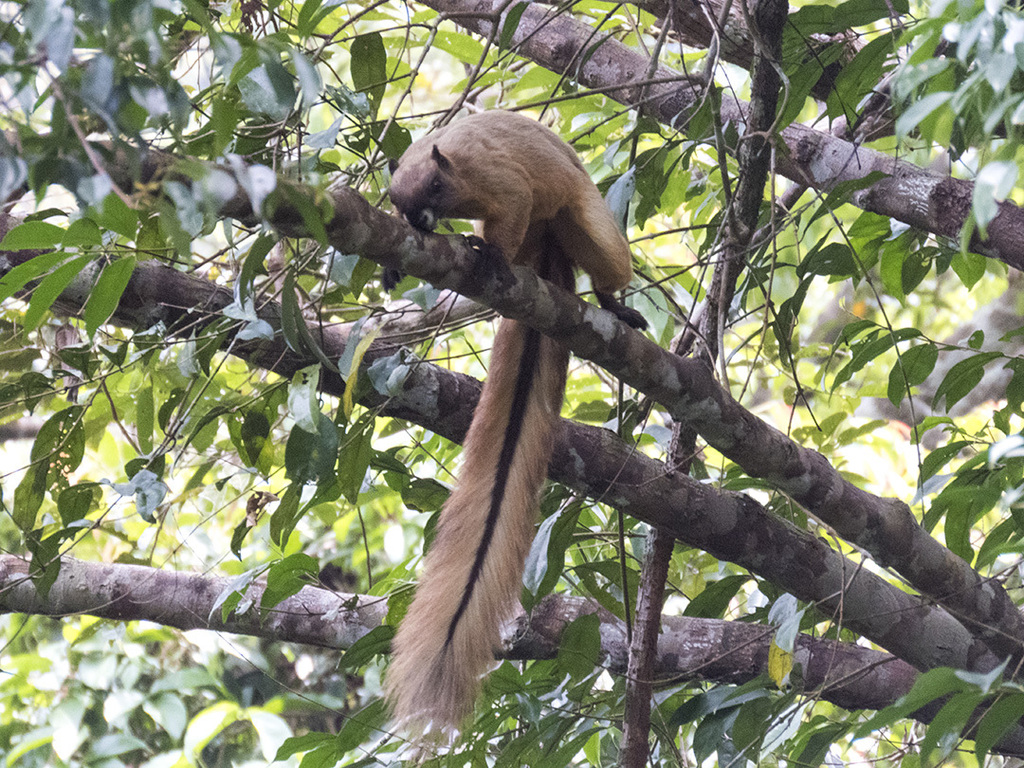
Pale giant squirrels traverse the high canopy of Sundaland rainforests, spanning gaps of several meters between branches with athletic leaps. Unlike many smaller rodents, they rarely descend to the forest floor, spending their daylight hours foraging among emergent tree crowns and resting in bulky leaf dreys. Solitary adults maintain loose canopy feeding territories, communicating with resonant rattling barks while dispersing seeds for tall dipterocarp trees.
ArborealDiurnalRainforest
 1 / 7
1 / 7—observations
—countries
—peak records
Near ThreatenedConservation statusIUCN Red List categoriesLCNTVUENCREWEXNear ThreatenedRed List categories, explained →
Diet & prey
- Dipterocarp seeds
- Ficus figs
- Tree bark
Predators
- Sunda Clouded Leopard
- Black Eagle
- Reticulated Python
ThreatsHabitat loss from commercial logging, agricultural expansion, and bushmeat hunting
HabitatsPrimary and secondary lowland dipterocarp forests, freshwater swamps, and submontane woodlands
Life span8–12 years in the wild; up to 18 years in captivity
Classification
- FamilySciuridae
- SpeciesRatufa affinis
Range data is not available yet.
Interaction riskLow
- Low
- Moderate
- High
- Very high
- Why interaction risk is low
- Safe to observe at a normal distance.
- What to notice
- Recognizable by its huge body, uniform cream to pale buff coat, and bushy pale tail.
- Support conservation
- Observe from forest trails using binoculars without shaking vegetation or using recorded call playbacks.
Responsible observation
- Canopy Scanning: Scan high emergent crowns early in the morning when individuals actively feed.
- Audio Tracking: Listen for resonant, rattling alarm calls that reveal active feeding sites.
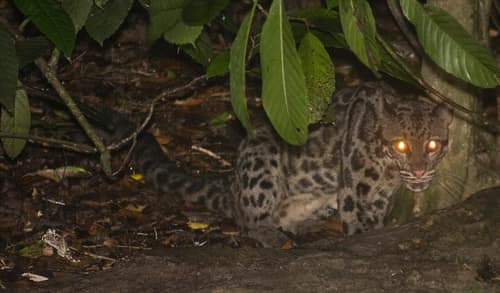
Predator www.photosbypaulo.com / CC BY-SA 3.0 · cc-by-sa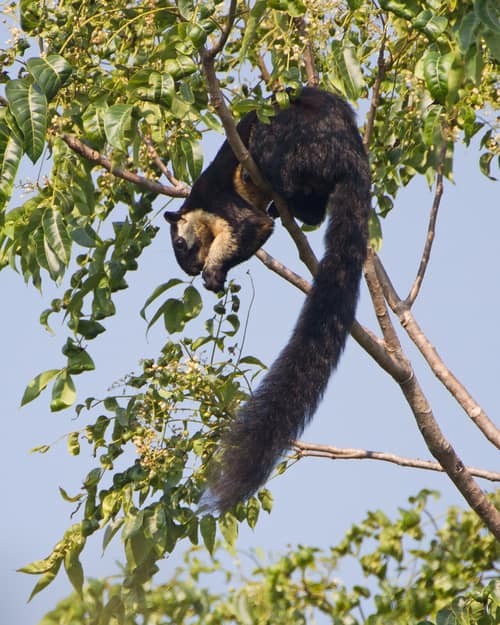
Close Relative JJ Harrison (https://www.jjharrison.com.au/) / CC BY-SA 3.0 · cc-by-sa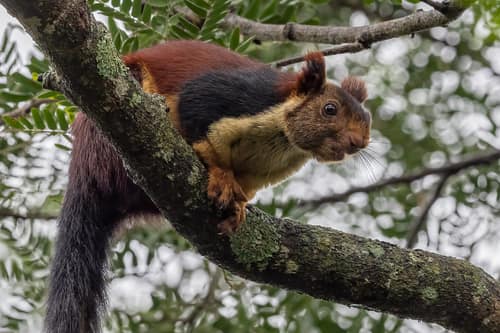
Close Relative "An Indian Giant Squirrel eating fruit" by Hari K Patibanda is licensed under CC BY 2.0. To view a copy of this license, visit https://creativecommons.org/licenses/by/2.0/. · cc-by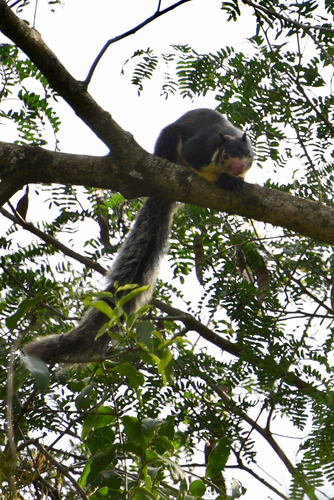
Close Relative (c) melianie_max_and_asker, some rights reserved (CC BY), uploaded by melianie_max_and_asker · cc-by
Help improve the field guideSomething wrong?
Checking your Fauna account…Report a name, category, or profile issue for review.