
Mammal · GBIF taxon 2437378
Hoary Marmot
Marmota caligataAlso known as Whistler
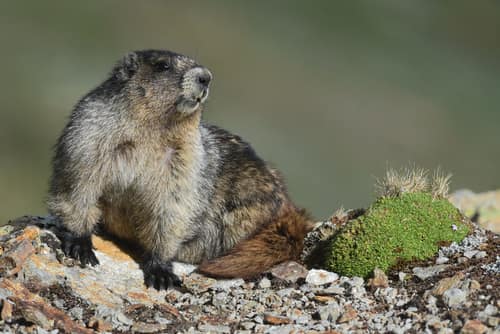
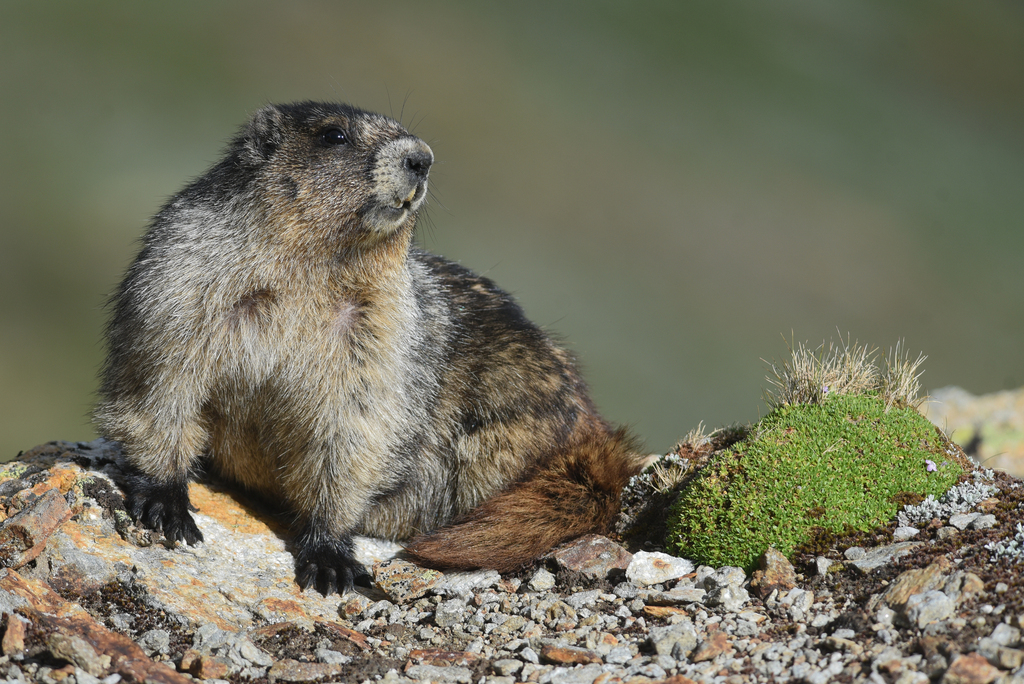
The Hoary Marmot is a large silver-gray ground squirrel with dark lower legs and a contrasting pale shoulder region. Family groups occupy rocky alpine slopes and give piercing whistles when danger approaches.
Alpine MammalRocky BurrowAlarm Whistle
—observations
—countries
—peak records
Least ConcernConservation statusIUCN Red List categoriesLCNTVUENCREWEXLeast ConcernRed List categories, explained →
Diet & prey
- Insects
Predators
- Golden eagles
- Wolves
- Bears
ThreatsClimate-driven habitat change, disturbance, roads, and food conditioning
HabitatsAlpine meadows, talus slopes, boulder fields, and subalpine openings
Life spanOften 10 to 15 years in the wild
Size / weightNot available
Classification
- OrderRodentia
- FamilySciuridae
- GenusMarmota
- SpeciesMarmota caligata
Native
Interaction riskLow
- Low
- Moderate
- High
- Very high
- Why interaction risk is low
- A cornered or food-conditioned marmot can bite; never feed, touch, or block a burrow entrance.
- Why it is dangerous
- Large incisors can cause a serious wound when a marmot is cornered, fed, or handled.
- How to recognize a risky encounter
- Recognize the bulky silver-gray squirrel with dark legs and a pale shoulder mantle.
- What to do
- Never feed or touch a marmot; back away and leave every burrow entrance unobstructed.
Responsible observation
- Sound: Pause after a sharp whistle and scan nearby rocks.
- Distance: Watch from afar without approaching the burrow system.
Keep collecting in Fauna
Found in Collections
Ecosystem chain Pro
Alpine Heights
Hoary Marmot is found in this collection. Identify it in Fauna to fill this slot and continue your progress.
Unlock to track progress
Help improve the field guideSomething wrong?
Checking your Fauna account…Report a name, category, or profile issue for review.