
Mammal · GBIF taxon 2437322
Little Ground Squirrel
Spermophilus pygmaeusAlso known as Little Souslik, Pygmy Ground Squirrel, Small Souslik
Little ground squirrels construct extensive underground burrows in the dry steppes and semideserts of Eastern Europe and Central Asia, emerging daily to forage during warmer weather. They spend up to eight months of the year hibernating underground to survive severe winters and summer droughts. Highly social yet territorial, they rely on sharp high pitched alarm calls to warn neighboring burrows of approaching raptors.
BurrowingSocialDiurnal
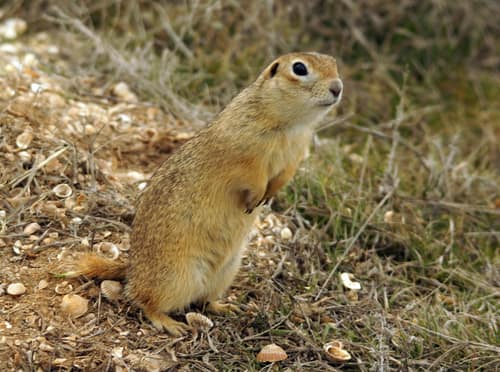
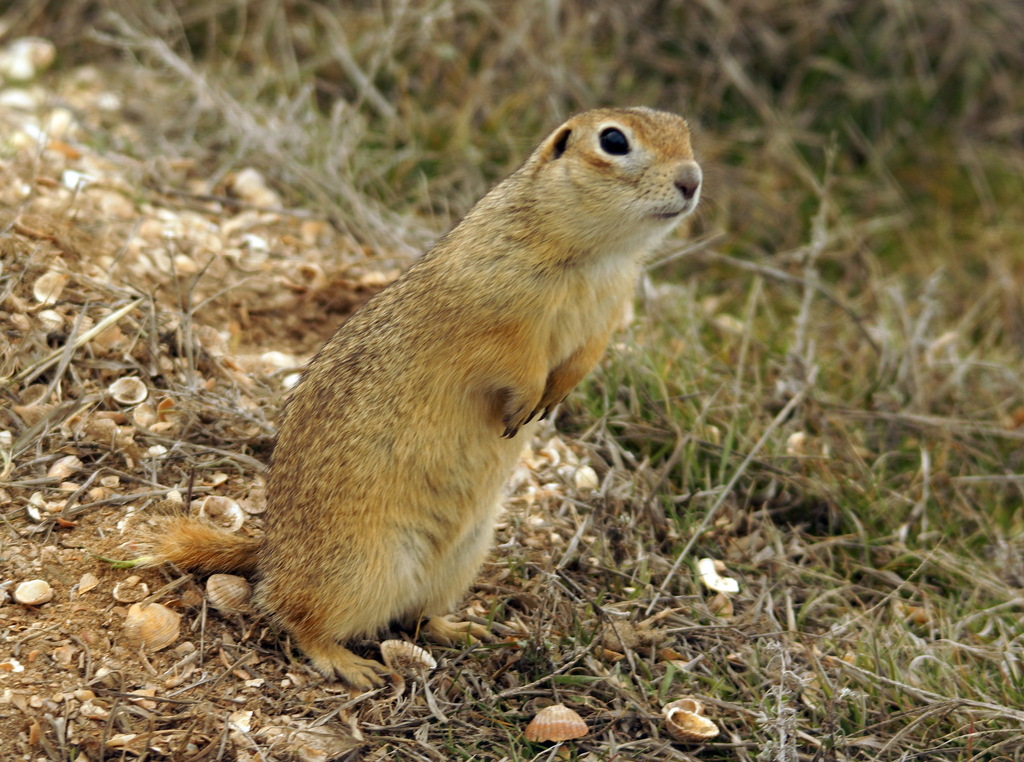
Licensed reference(c) SIA, some rights reserved (CC BY), uploaded by SIA · cc-by
—observations
—countries
—peak records
Least ConcernConservation statusIUCN Red List categoriesLCNTVUENCREWEXLeast ConcernRed List categories, explained →
Diet & prey
- Grass shoots
- Seeds
- Insects
Predators
- Steppe Eagle
- Saker Falcon
- Steppe Polecat
ThreatsHabitat loss from agriculture, steppe fires, and direct extermination
HabitatsDry steppes, semideserts, grasslands, and pasture margins
Life span3–6 years
Size / weightNot available
Classification
- FamilySciuridae
- SpeciesSpermophilus pygmaeus
Range data is not available yet.
Interaction riskLow
- Low
- Moderate
- High
- Very high
- Why interaction risk is low
- May bite if cornered or handled; observe quietly from a respectful distance.
Responsible observation
- Observation: Scan open steppe pastures on sunny mornings when individuals stand sentry near burrows.
- Distance: Keep a distance of at least 15 meters to prevent triggering alarm calls.
- Seasonal timing: Plan visits between April and July before adults begin summer hibernation.
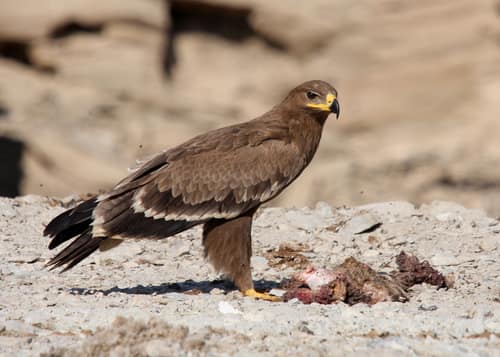
Predator (c) Christoph Moning, some rights reserved (CC BY), uploaded by Christoph Moning · cc-by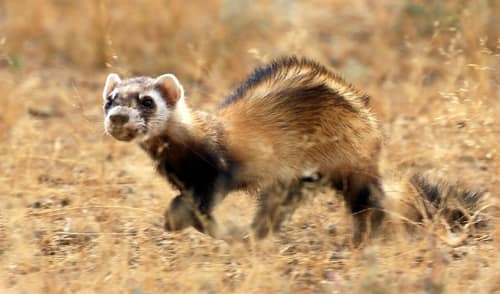
Predator Andrey Giljov / CC BY-SA 4.0 · cc-by-sa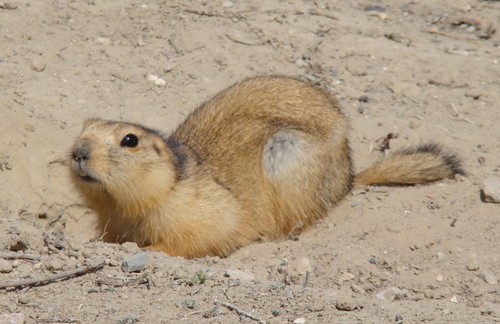
Close Relative (c) Юрий Данилевский (Yuriy Danilevsky), some rights reserved (CC BY), uploaded by Юрий Данилевский (Yuriy Danilevsky) · cc-by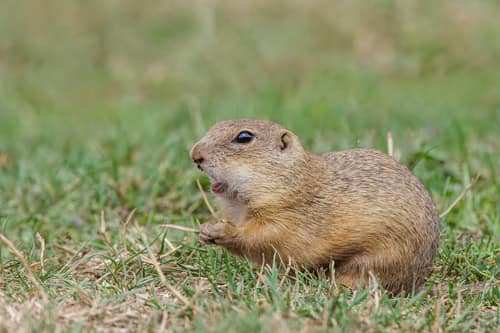
Close Relative Charles J. Sharp / CC BY-SA 4.0 · cc-by-sa
Help improve the field guideSomething wrong?
Checking your Fauna account…Report a name, category, or profile issue for review.