
Mammal
Desert Hedgehog
Paraechinus aethiopicusAlso known as Ethiopian Hedgehog
Desert hedgehogs thrive in harsh arid environments across Northern Africa and the Middle East by entering periods of torpor during extreme heat or food scarcity. Their exceptionally large ears help dissipate body heat while listening for subtle underground prey movements. When threatened, they roll into a dense ball of sharp quills while emitting sharp huffs or high pitched squeaks.
NocturnalDesert DwellerSolitary
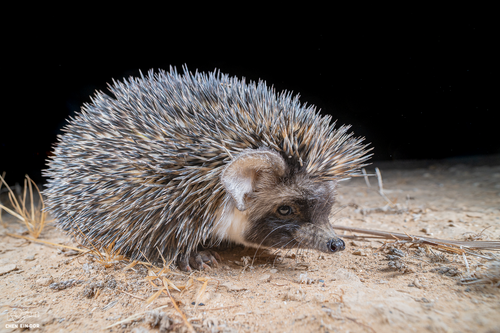
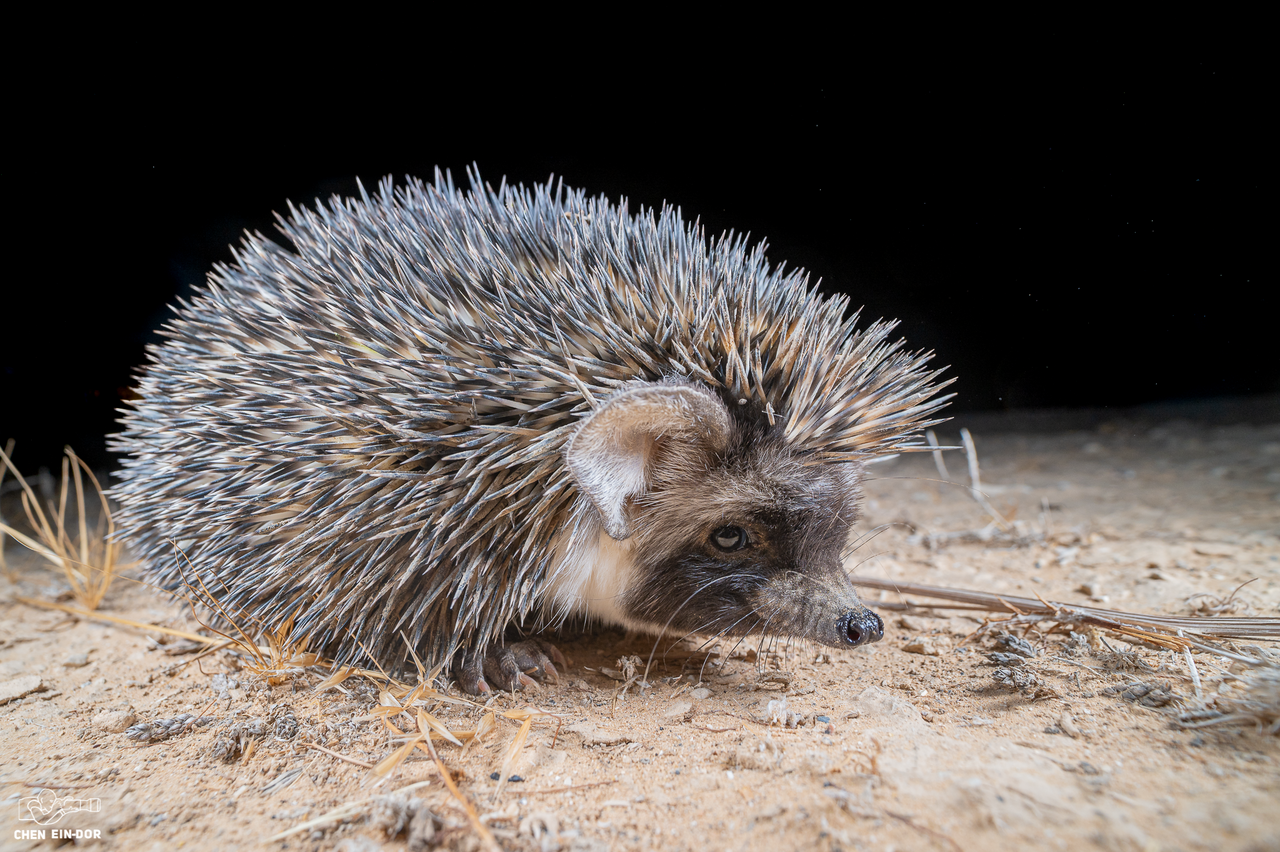
—observations
—countries
—peak records
Least ConcernConservation statusIUCN Red List categoriesLCNTVUENCREWEXLeast ConcernRed List categories, explained →
Diet & preyScorpions, Beetles, Lizards
Predators
- Eagle owls
- Jackals
- Foxes
ThreatsRoadkill, habitat fragmentation, pesticide use
HabitatsArid deserts, dry scrublands, rocky plateaus
Life span3–7 years
Classification
- FamilyErinaceidae
- SpeciesParaechinus aethiopicus
Range data is not available yet.
Interaction riskLow
- Low
- Moderate
- High
- Very high
- Why interaction risk is low
- Sharp spines can prick skin if handled; observe quietly from a safe distance.
Responsible observation
- Nighttime observation: Use a red-filtered flashlight after dark to spot them without causing stress.
- Maintain distance: Allow them room to forage naturally without blocking their retreat to burrows.
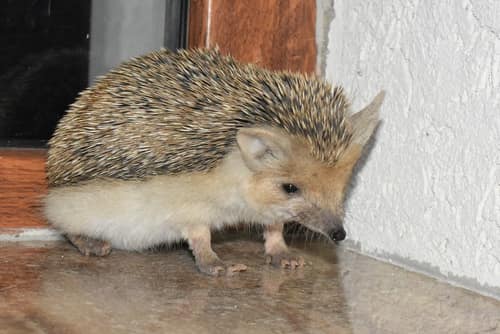
Desert Relative (c) Kudaibergen Amirekul, some rights reserved (CC BY-SA), uploaded by Kudaibergen Amirekul · cc-by-sa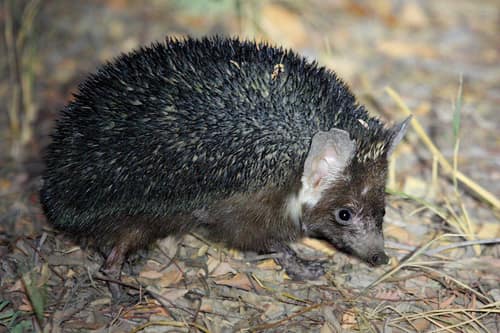
Close Relative (c) Shah Jahan, some rights reserved (CC BY-SA) · cc-by-sa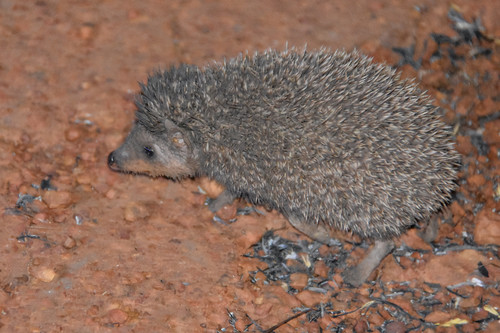
African Relative (c) Jay Pruett, some rights reserved (CC BY), uploaded by Jay Pruett · cc-by
Help improve the field guideSomething wrong?
Checking your Fauna account…Report a name, category, or profile issue for review.