
Mammal · GBIF taxon 2437044
Southern Tree Hyrax
Dendrohyrax arboreusAlso known as Southern Tree Dassie
Southern tree hyraxes spend nearly their entire lives high in the canopy, gripping mossy branches with specialized, rubbery foot pads that act like suction cups. Best known for their haunting nocturnal vocalizations, individuals broadcast territorial crescendos of shrieks and barks that carry for kilometers across dense montane forests. Though superficially resembling large rodents, these nimble climbers are phylogenetically closest to elephants and manatees.
NocturnalArborealVocal
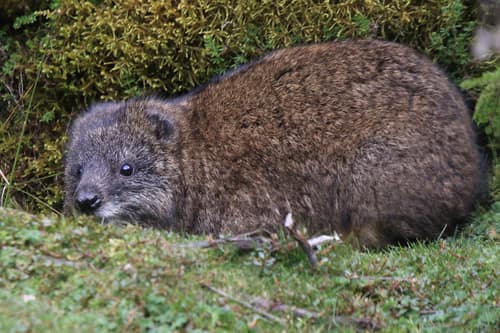
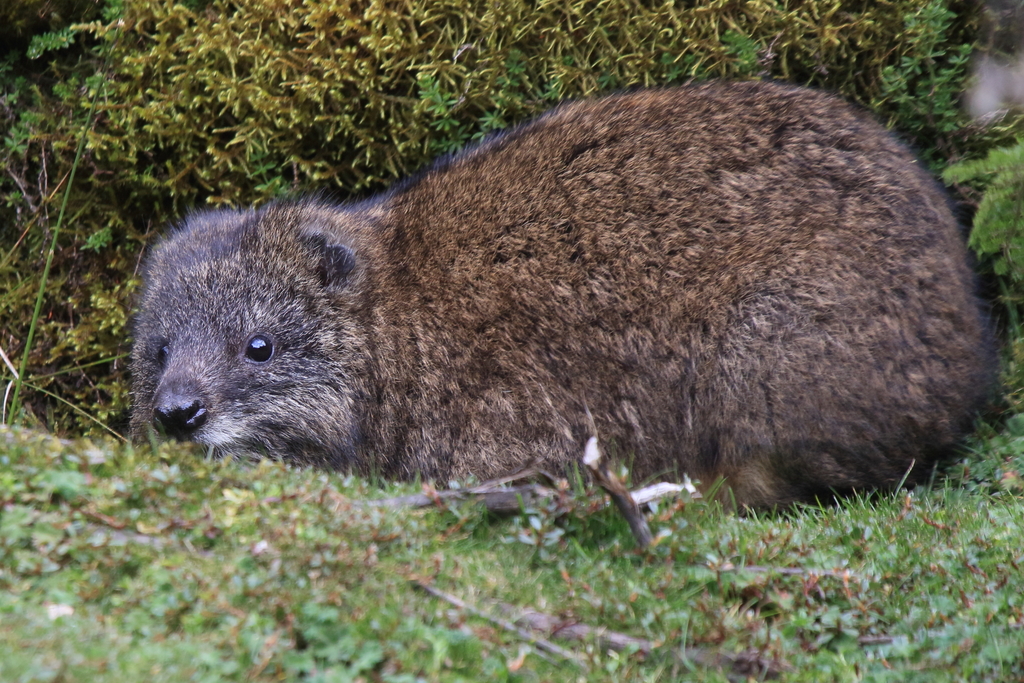 1 / 5
1 / 5—observations
—countries
—peak records
Least ConcernConservation statusIUCN Red List categoriesLCNTVUENCREWEXLeast ConcernRed List categories, explained →
Diet & prey
- Ficus Leaves
- Podocarpus Foliage
- Wild Fruits
Predators
- Crowned Eagle
- Leopard
- African Rock Python
ThreatsDeforestation, habitat fragmentation, and local hunting for skins and meat
HabitatsAfromontane forests, coastal forests, and riverine woodlands
Life span10–12 years
Size / weightNot available
Classification
- OrderHyracoidea
- FamilyProcaviidae
- GenusDendrohyrax
- SpeciesDendrohyrax arboreus
Native
Interaction riskLow
- Low
- Moderate
- High
- Very high
- Why interaction risk is low
- Safe to observe at a normal distance.
Responsible observation
- Listen After Dark: Identify their territory through loud, escalating nighttime screams reverberating through the forest canopy.
- Use Red Light: Scan tall branches with a red-filtered headlamp to spot eye-shine without startling them.
- Inspect Tree Bases: Look for accumulated dung piles at tree bases indicating active, long-term sleeping hollows.
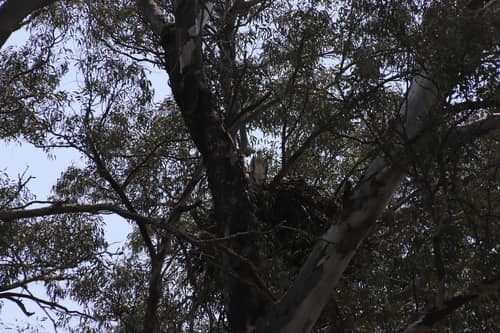
Predator (c) Suvarna Parbhoo Mohan, some rights reserved (CC BY-SA) · cc-by-sa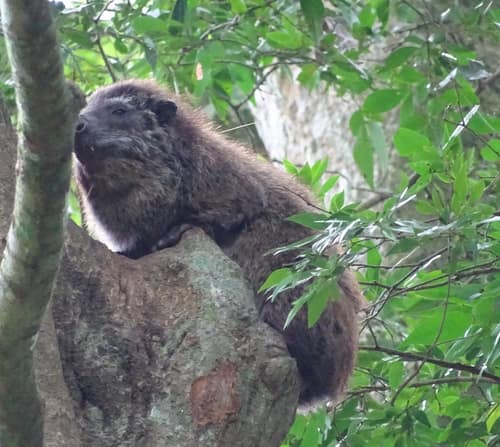
Close Relative (c) Sandra Keller, some rights reserved (CC BY), uploaded by Sandra Keller · cc-by
Same Family (c) dhfischer, some rights reserved (CC BY) · cc-by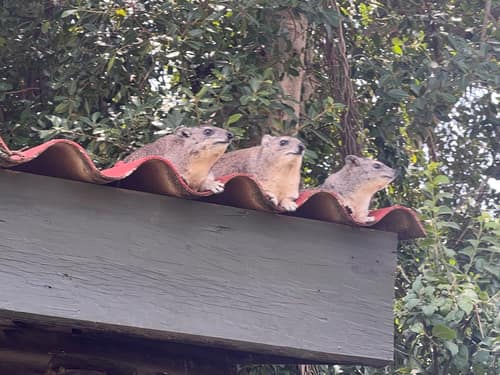
Same Family (c) Summer J. Smentek, some rights reserved (CC BY) · cc-by
Help improve the field guideSomething wrong?
Checking your Fauna account…Report a name, category, or profile issue for review.