
Mammal · GBIF taxon 2436688
Pygmy Rabbit
Brachylagus idahoensisAlso known as Idaho Pygmy Rabbit
Weighing barely a pound, pygmy rabbits are North America's smallest lagomorphs and specialized residents of the sagebrush steppe. They rely heavily on big sagebrush, which provides nearly their entire winter diet and essential shelter from raptors and coyotes. Unlike almost all other native American rabbits, they excavate their own interconnected burrow networks directly into deep, loose soils beneath mature shrub canopies.
BurrowingHerbivoreSecretive
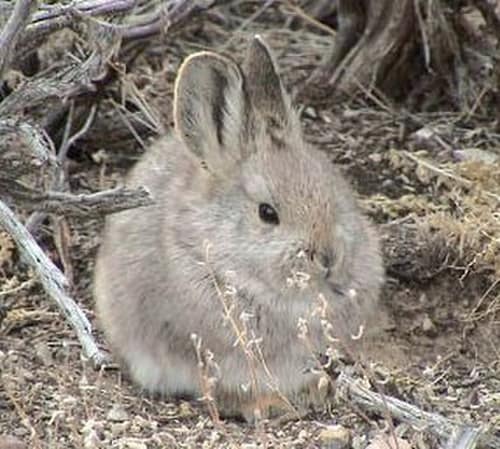
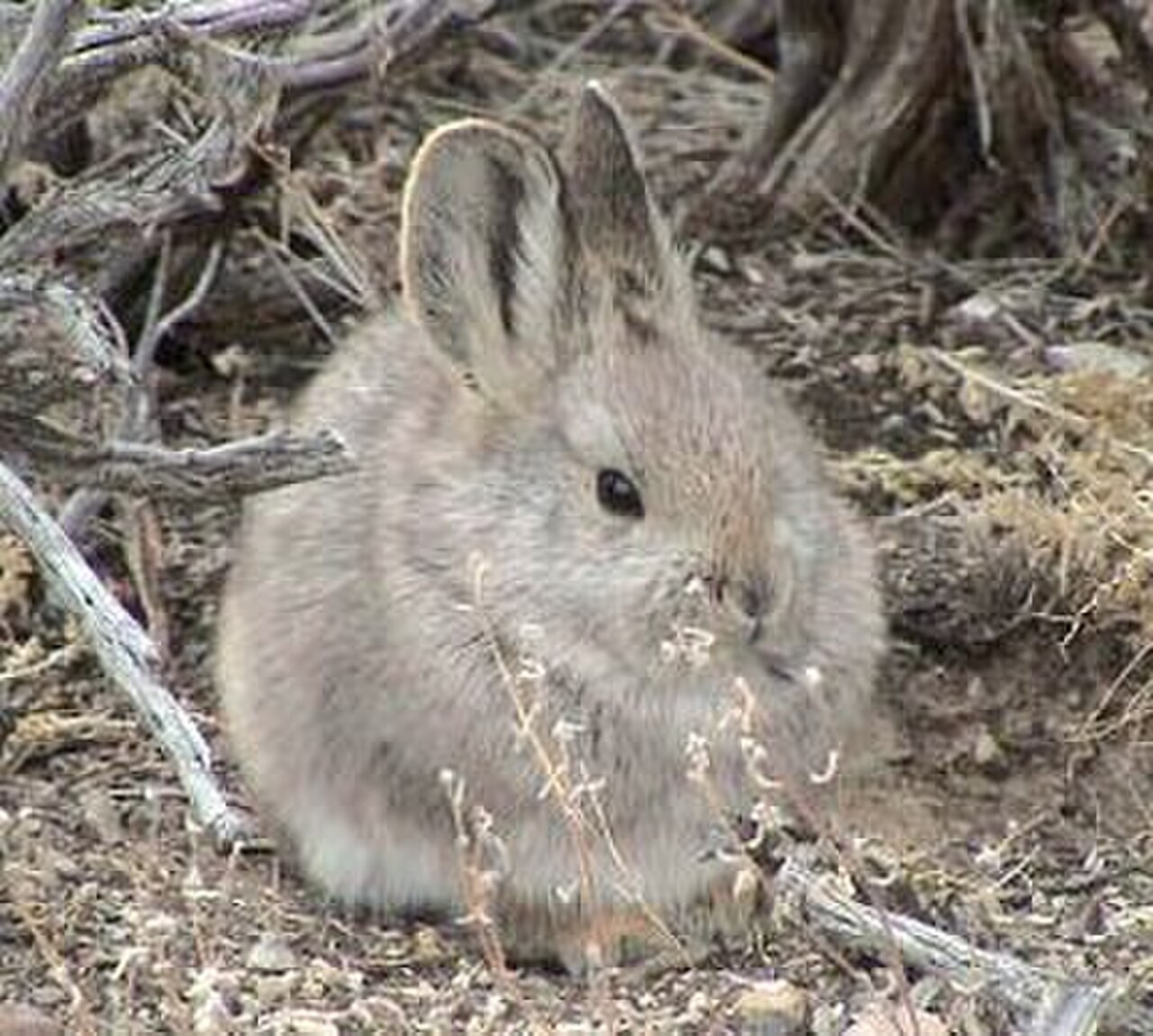
Licensed referenceUnited States Bureau of Land Management / Public domain · cc0
—observations
—countries
—peak records
Least ConcernConservation statusIUCN Red List categoriesLCNTVUENCREWEXLeast ConcernRed List categories, explained →
Diet & prey
- Folivore, feeding predominantly on big sagebrush leaves, supplemented by native grasses and forbs in spring and summer
Predators
- Coyote
- American Badger
- Great Horned Owl
ThreatsHabitat fragmentation from agriculture, wildfire, invasive cheatgrass, and energy development
HabitatsDense, tall sagebrush steppe with deep, loose, uncompacted soils
Life span3–5 years
Classification
- FamilyLeporidae
- SpeciesBrachylagus idahoensis
Range data is not available yet.
Interaction riskLow
- Low
- Moderate
- High
- Very high
- Why interaction risk is low
- Safe to observe at a normal distance.
- What to notice
- Look for remarkably short, rounded ears without black tips and a tiny tail lacking white underside fur.
- Support conservation
- Keep a respectful distance to avoid causing stress, and never trample burrow systems in loose soils.
Responsible observation
- Timing: Scan the bases of dense sagebrush stands at dawn or dusk when feeding activity peaks.
- Field signs: Check soft soil hummocks for tiny burrow entrances measuring roughly 10 to 12 cm across.
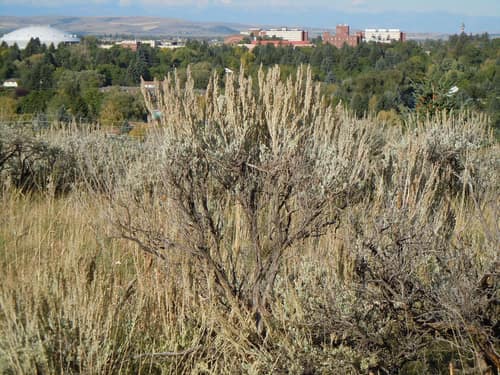
Primary Food (c) Matt Lavin, some rights reserved (CC BY) · cc-by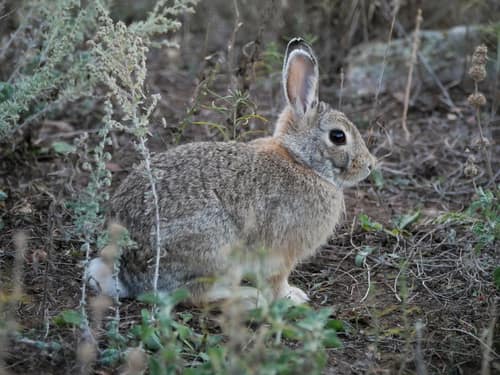
Neighbor (c) ayden, some rights reserved (CC BY), uploaded by ayden · cc-by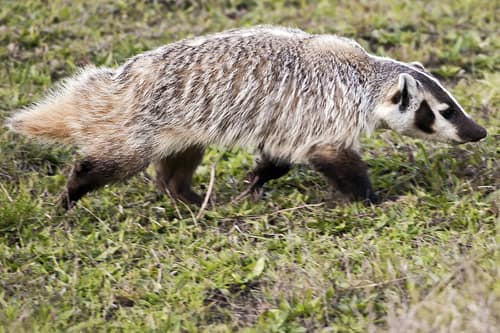
Predator Yathin S Krishnappa / CC BY-SA 3.0 · cc-by-sa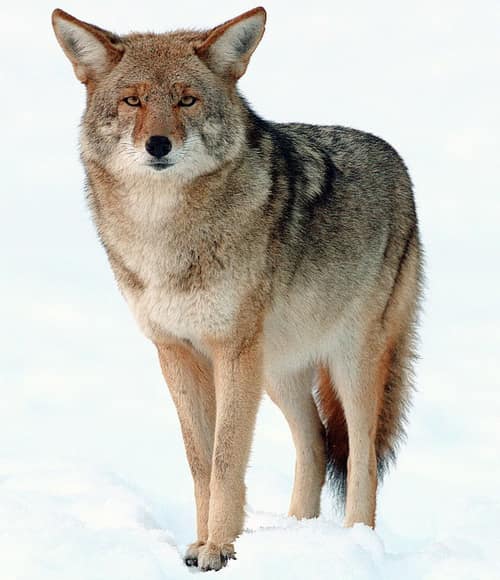
Predator Yathin S Krishnappa / CC BY-SA 3.0 · cc-by-sa
Help improve the field guideSomething wrong?
Checking your Fauna account…Report a name, category, or profile issue for review.