
Mammal
Proboscis Monkey
Nasalis larvatusAlso known as Long-nosed Monkey, Bekantan
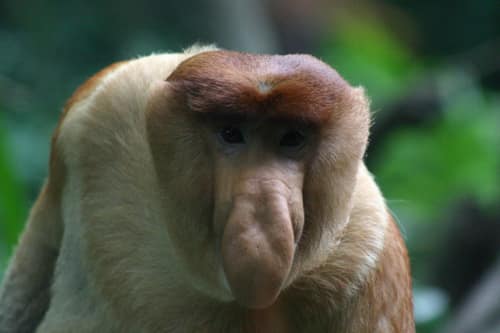
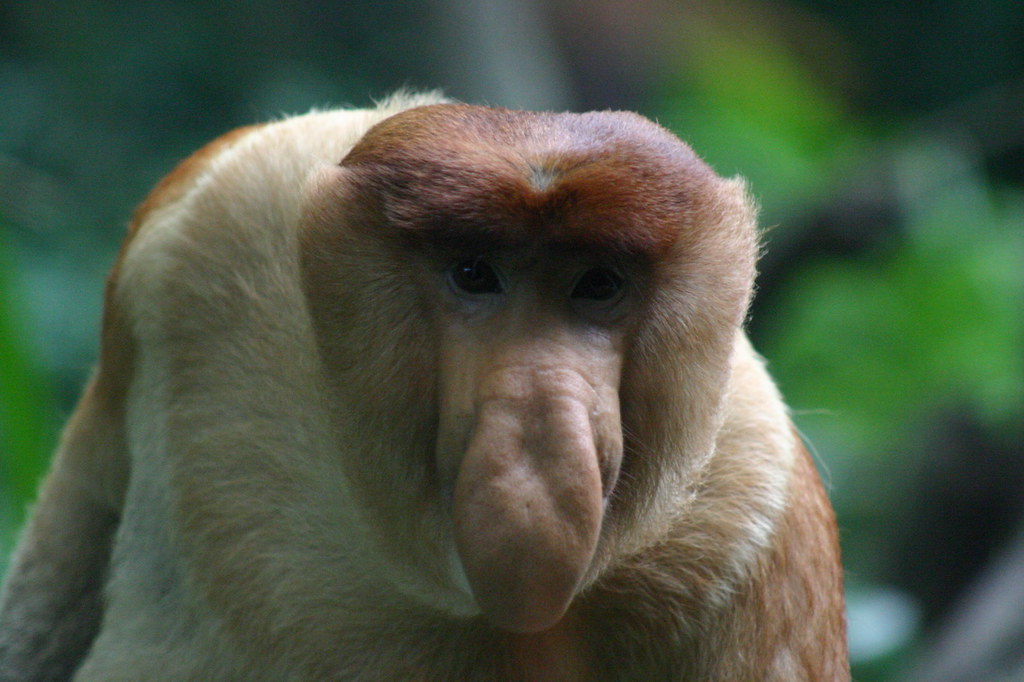
Proboscis monkeys navigate Borneo's riverine canopy in structured harems, leaping between branches and taking to the water with webbed feet to cross wide streams. Large adult males use their bulbous, pendulous noses as resonance chambers to amplify loud honking calls that intimidate rivals and attract mates. Specialized multi-chambered stomachs allow them to ferment tough, fibrous leaves that other primates cannot digest.
ArborealEndemicSwimmer
—observations
—countries
—peak records
EndangeredConservation statusIUCN Red List categoriesLCNTVUENCREWEXEndangeredRed List categories, explained →
Diet & preyUnripe Leaves, Unripe Fruits, Seeds
Predators
- Saltwater Crocodile
- False Gharial
- Clouded Leopard
ThreatsDeforestation, Oil Palm Expansion, Hunting
HabitatsMangrove Forests, Riverine Swamps, Coastal Lowlands
Life span15–20 years
Classification
- FamilyCercopithecidae
- SpeciesNasalis larvatus
Native
Interaction riskLow
- Low
- Moderate
- High
- Very high
- Why interaction risk is low
- Can inflict sharp bites if cornered or handled; observe quietly from boats or designated boardwalks.
- Why it is dangerous
- Large males possess long, sharp canine teeth capable of delivering serious bites if provoked or cornered.
- How to recognize a risky encounter
- Look for heavy-bodied primates with bright reddish-orange fur on the back and a long white tail.
- What to do
- Never approach on foot or reach toward individuals; remain inside boats or on designated boardwalks.
- What to notice
- Recognized by large orange-brown bodies, grey limbs, white tails, and prominent pendulous noses on males.
- Support conservation
- Observe quietly from river craft at a distance, avoiding flash photography and loud motor acceleration.
Responsible observation
- Best Viewing Times: Scan tree crowns along riverbanks at dawn and dusk when troops congregate to sleep.
- Boat Approaches: Keep motor noise low and stay at least 15 meters away to avoid flushing troops into the river.
- Behavior Spotting: Watch for dramatic belly-flop dives into deep river stretches during territorial crossings.
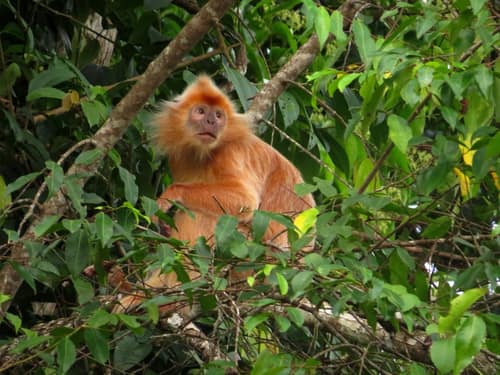
Co-occurring Primate (c) Paul Prior, some rights reserved (CC BY), uploaded by Paul Prior · cc-by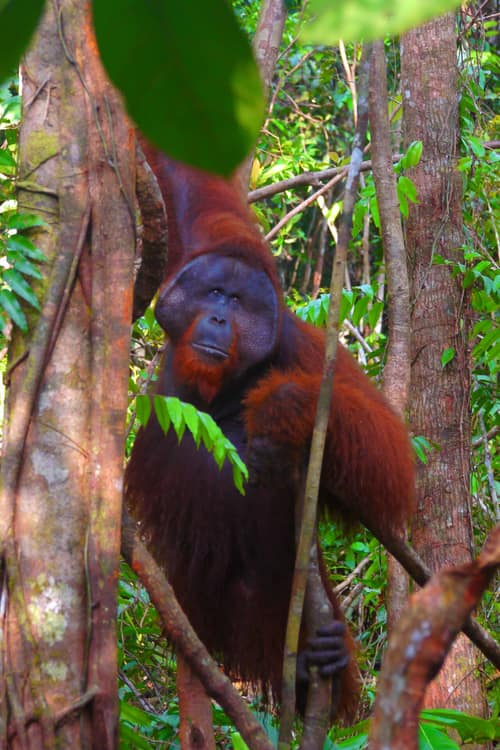
Sympatric Primate Nanosanchez / CC BY-SA 4.0 · cc-by-sa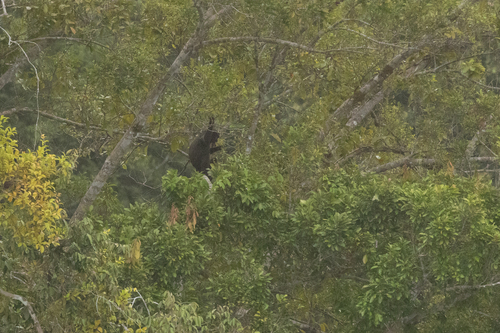
Close Relative (c) CaracalShan, some rights reserved (CC BY) · cc-by
Help improve the field guideSomething wrong?
Checking your Fauna account…Report a name, category, or profile issue for review.