Also known as Tiger Quoll, Spotted Quoll, Spotted-tailed Dasyure, Tiger Cat
Spotted-tailed quolls are agile predators capable of bounding up vertical tree trunks to raid possum hollows as easily as they hunt across the forest floor. Solitary and largely nocturnal, individuals patrol massive home territories and communicate through community latrine sites established on prominent boulders or fallen logs. As mainland Australia's largest surviving marsupial carnivore, they serve a vital ecological role by regulating populations of small-to-medium mammals and clearing carrion.
Possesses remarkably powerful jaws; keep a respectful distance and never attempt to handle or corner one.
Why it is dangerous
Possesses one of the highest bite forces relative to body mass among predatory mammals, easily capable of inflicting deep puncture wounds and bone fractures.
How to recognize a risky encounter
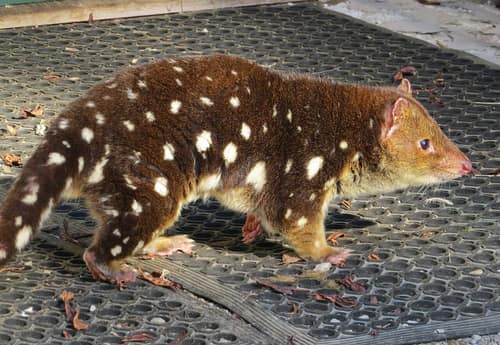
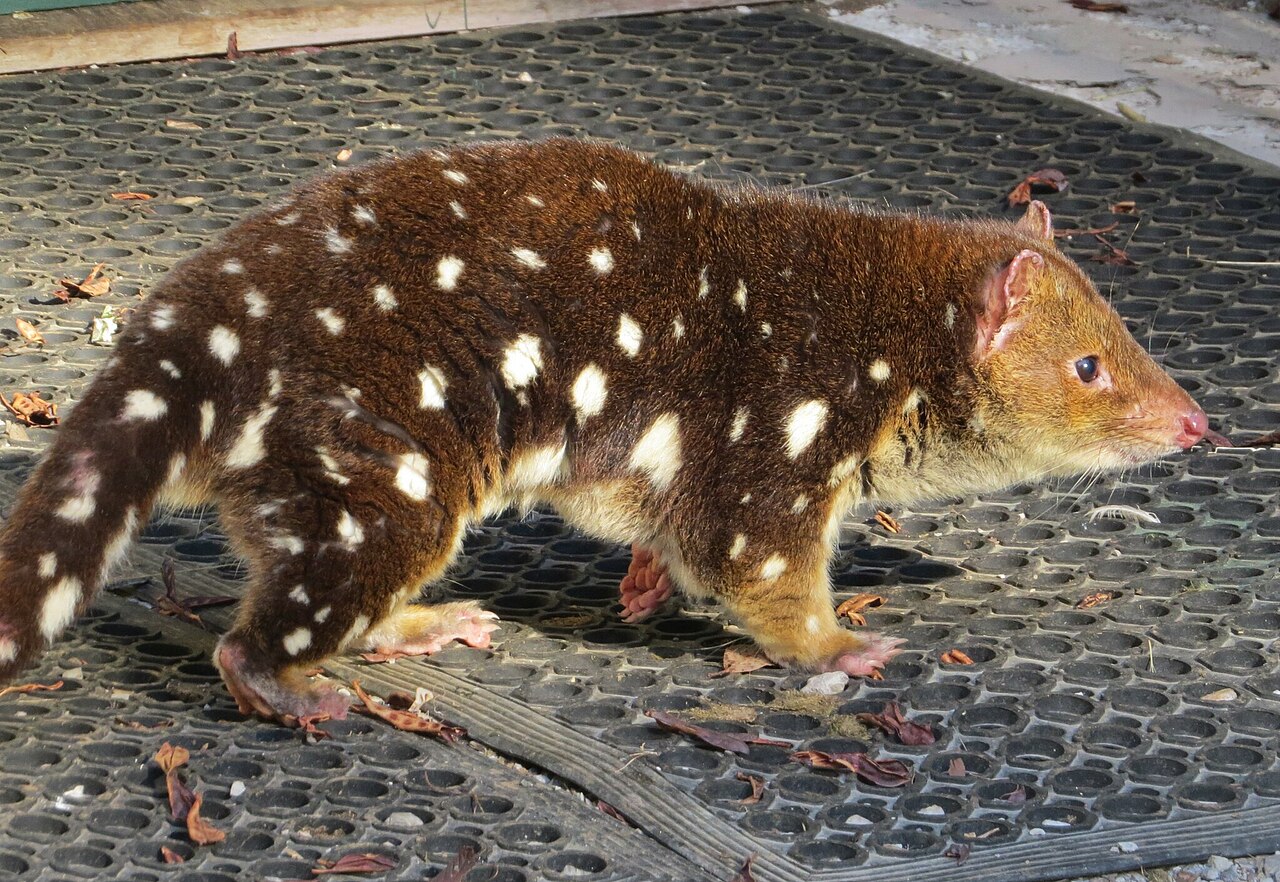
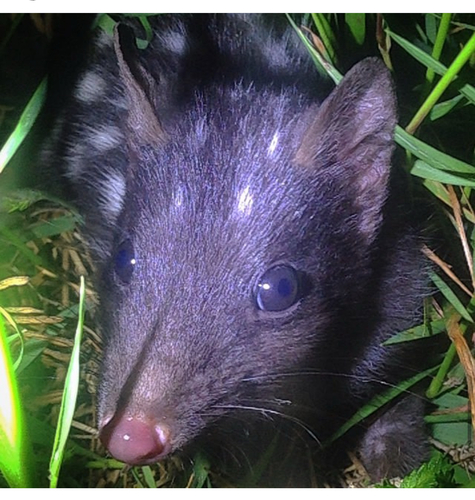
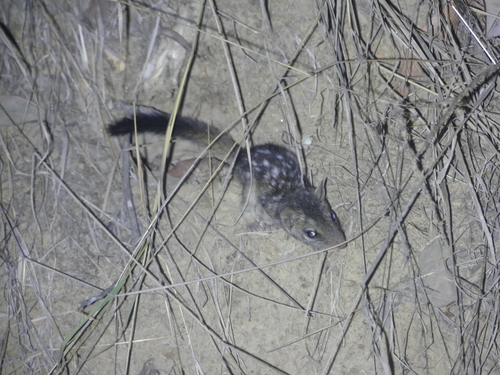
Recognized by white spots that cover both the body and the tail, distinguishing it from all other quoll species.
What to do
Never corner, feed, or attempt to grab an individual; back away slowly and keep domestic pets securely restrained.
What to notice
Look for rich chestnut-brown fur covered in irregular white spots that extend along the entire length of the tail.
Support conservation
Keep torchlight brief, stay on designated walking tracks to avoid crushing latrines, and report sightings to local wildlife authorities.
Responsible observation
Spotlighting: Search high in tree hollows and along rocky creek beds using a low-intensity red beam to avoid dazzling their eyes.
Latrine monitoring: Check large, flat boulders and mossy fallen logs for communal scats containing bone and fur fragments.
Give space: Allow the animal an open escape route if encountered on a trail, as cornered quolls defend themselves fiercely.