
Mammal · GBIF taxon 2435307
Golden Bandicoot
Isoodon auratusAlso known as Golden Short-nosed Bandicoot, Wintarru
Golden bandicoots are solitary nocturnal marsupials that forage by digging distinctive conical pits into sandy soils to unearth subterranean prey. Females possess backward-facing pouches that protect developing joeys from dirt during frantic excavation across hummock grasslands and sandstone plateaus. Once widespread across central and western Australia, their mainland range has contracted sharply to rugged Kimberley refuges and predator-free offshore islands.
NocturnalMarsupialBurrower
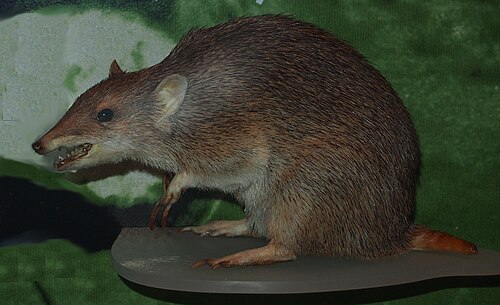
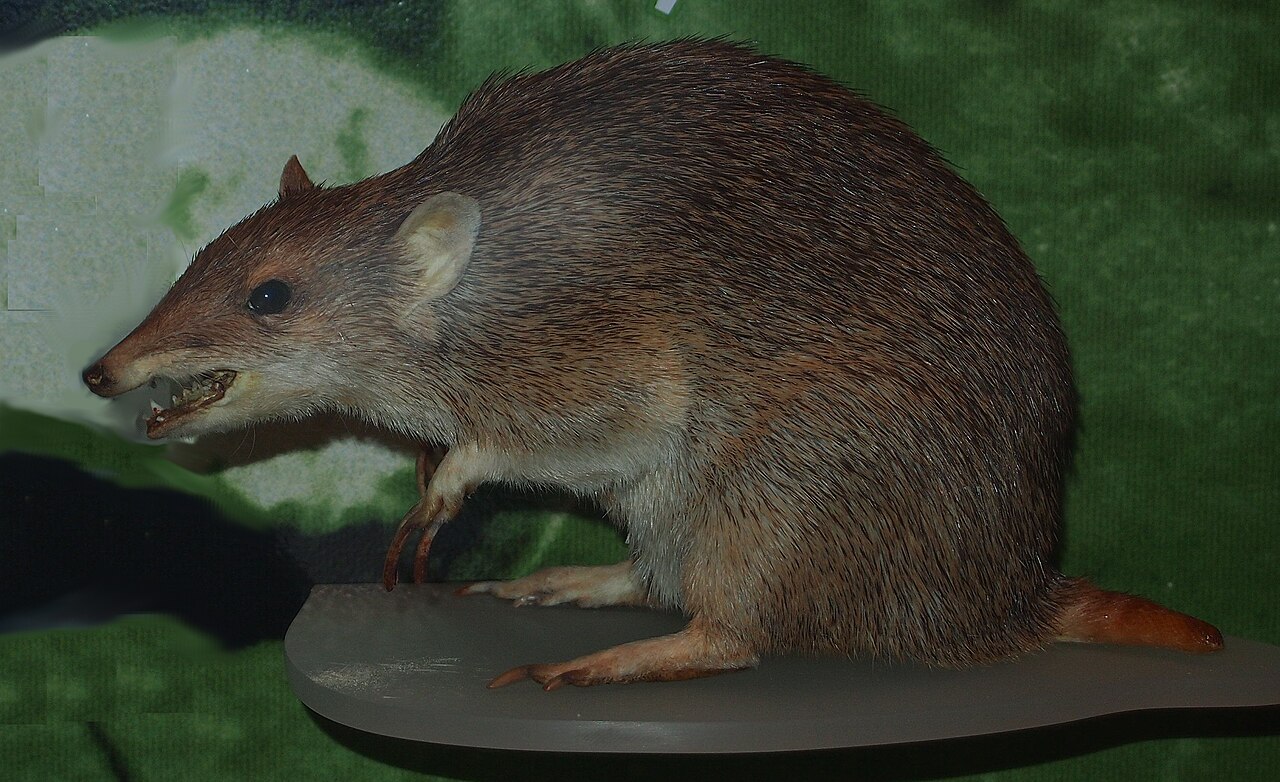
Licensed referenceMark Marathon / CC BY-SA 4.0 · cc-by-sa
—observations
—countries
—peak records
VulnerableConservation statusIUCN Red List categoriesLCNTVUENCREWEXVulnerableRed List categories, explained →
Diet & prey
- Termites
- Invertebrate Larvae
- Grass Seeds
Predators
- Feral Cat
- Dingo
- Carpet Python
ThreatsFeral cat predation, altered fire regimes, introduced herbivores
HabitatsHummock grasslands, sandstone heathlands, vine thickets, coastal scrub
Life span2–4 years
Classification
- FamilyPeramelidae
- SpeciesIsoodon auratus
Range data is not available yet.
Interaction riskLow
- Low
- Moderate
- High
- Very high
- Why interaction risk is low
- Safe to observe from a respectful distance.
- What to notice
- Recognizable by its small compact size, sharp snout, and speckled golden-yellow bristly coat.
- Support conservation
- Keep observation distances wide and never disturb natural shelter sites or nesting hollows.
Responsible observation
- Night Spotting: Use a soft red torch beam to observe natural foraging without causing stress.
- Habitat Protection: Avoid walking through delicate spinifex tussocks where bandicoots build concealed daytime nests.
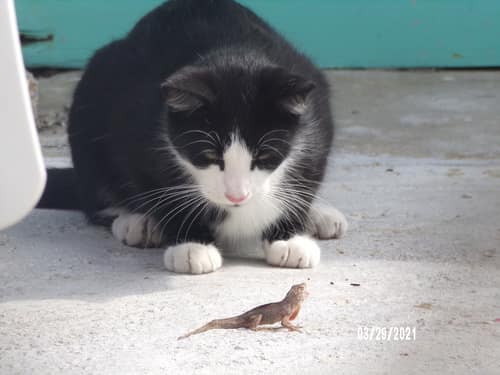
Predator (c) chloe ⋆˚꩜。, some rights reserved (CC BY-SA) · cc-by-sa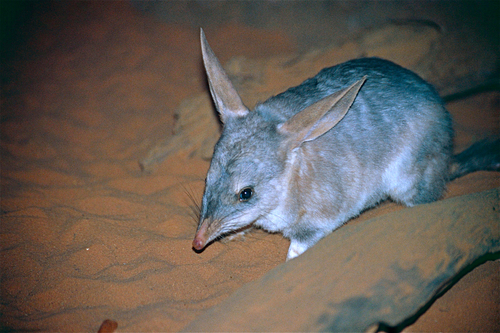
Same Order (c) Bernard DUPONT, some rights reserved (CC BY-SA) · cc-by-sa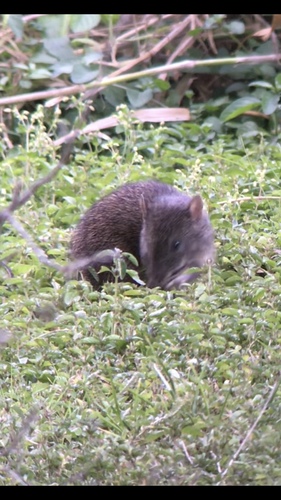
Close Relative (c) brandon_hewitt, some rights reserved (CC BY) · cc-by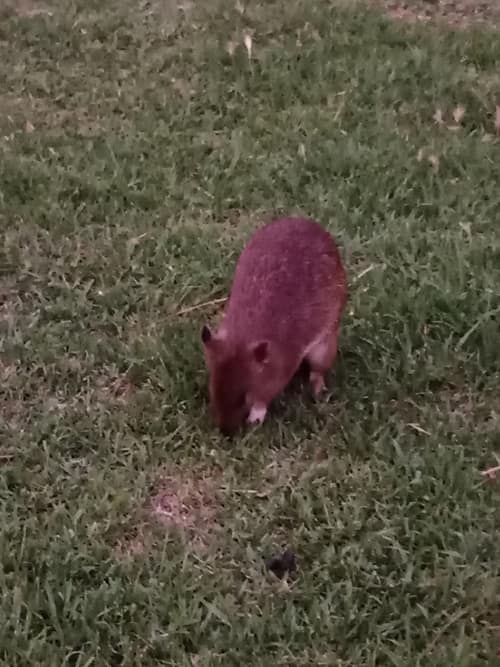
Close Relative (c) Patrick Connolly, some rights reserved (CC BY) · cc-by
Help improve the field guideSomething wrong?
Checking your Fauna account…Report a name, category, or profile issue for review.