
Mammal
Domestic Cat
Felis catusAlso known as House Cat, Moggie
Domestic cats are highly adaptable, crepuscular carnivores that have shared human habitations for thousands of years as companions and pest controllers. They retain formidable hunting instincts, utilizing flexible spines, keen hearing, and retractable claws to stalk small prey during twilight hours. Communication relies on a complex repertoire of meows, purrs, body postures, and facial pheromone scent markings.
DomesticCarnivoreCrepuscular
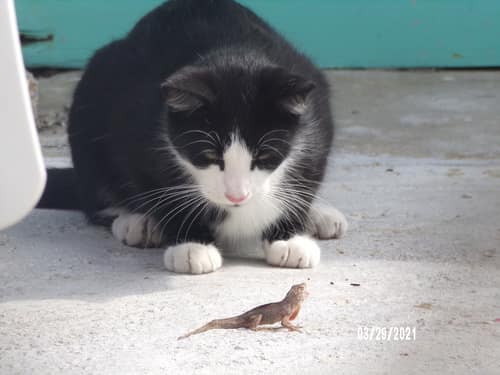
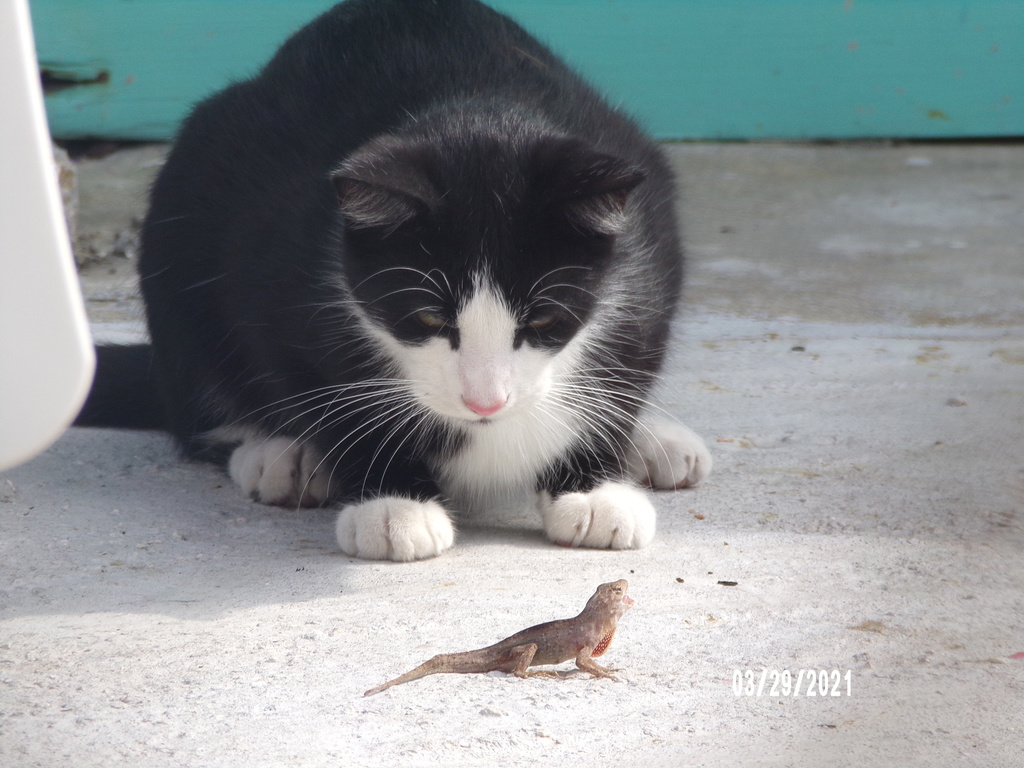
—observations
—countries
—peak records
Not EvaluatedConservation statusIUCN Red List categoriesLCNTVUENCREWEXNot Evaluated — not placed on the risk ladderRed List categories, explained →
Diet & preyHouse Mouse, Brown Rat, Songbirds
Predators
- Coyote
- Great Horned Owl
- Domestic Dog
ThreatsVehicles, infectious diseases, rodenticide poisoning, coyote predation
HabitatsHuman habitations, urban areas, farmland, worldwide environments
Life span12–18 years
Classification
- OrderCarnivora
- FamilyFelidae
- GenusFelis
- SpeciesFelis catus
Range data is not available yet.
Interaction riskLow
- Low
- Moderate
- High
- Very high
- Why interaction risk is low
- Safe to observe at a normal distance.
Responsible observation
- Greeting Etiquette: Offer a relaxed, outstretched finger at nose height and let the cat approach first.
- Reading Signals: Monitor ear position and tail movement to recognize signs of overstimulation or fear.
- Wildlife Protection: Keep cats indoors or use contained catios to protect local songbird populations.
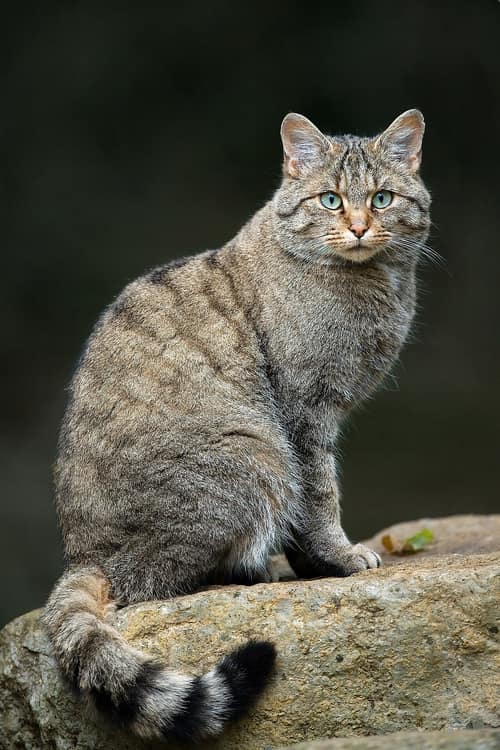
Ancestor Lviatour / CC BY-SA 3.0 · cc-by-sa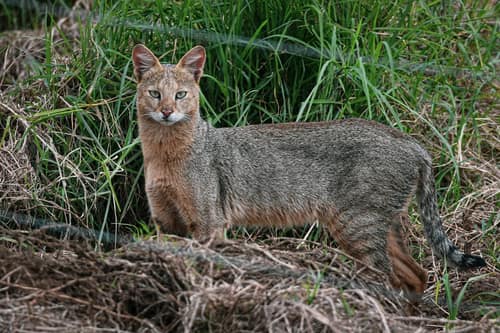
Close Relative (c) Harshad Sharma, some rights reserved (CC BY), uploaded by Harshad Sharma · cc-by
Close Relative no rights reserved, uploaded by Dave Brown · cc0
Keep collecting in Fauna
Found in Collections
Species set Pro
Farm Friends
Domestic Cat is found in this collection. Identify it in Fauna to fill this slot and continue your progress.
Unlock to track progress
Help improve the field guideSomething wrong?
Checking your Fauna account…Report a name, category, or profile issue for review.