
Mammal · GBIF taxon 2435010
Caracal
Caracal caracalAlso known as Desert Lynx, Persian Lynx, Gazelle Cat, Red Lynx
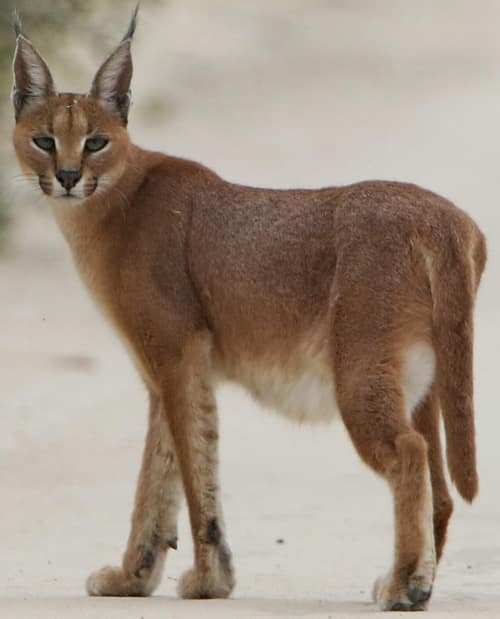
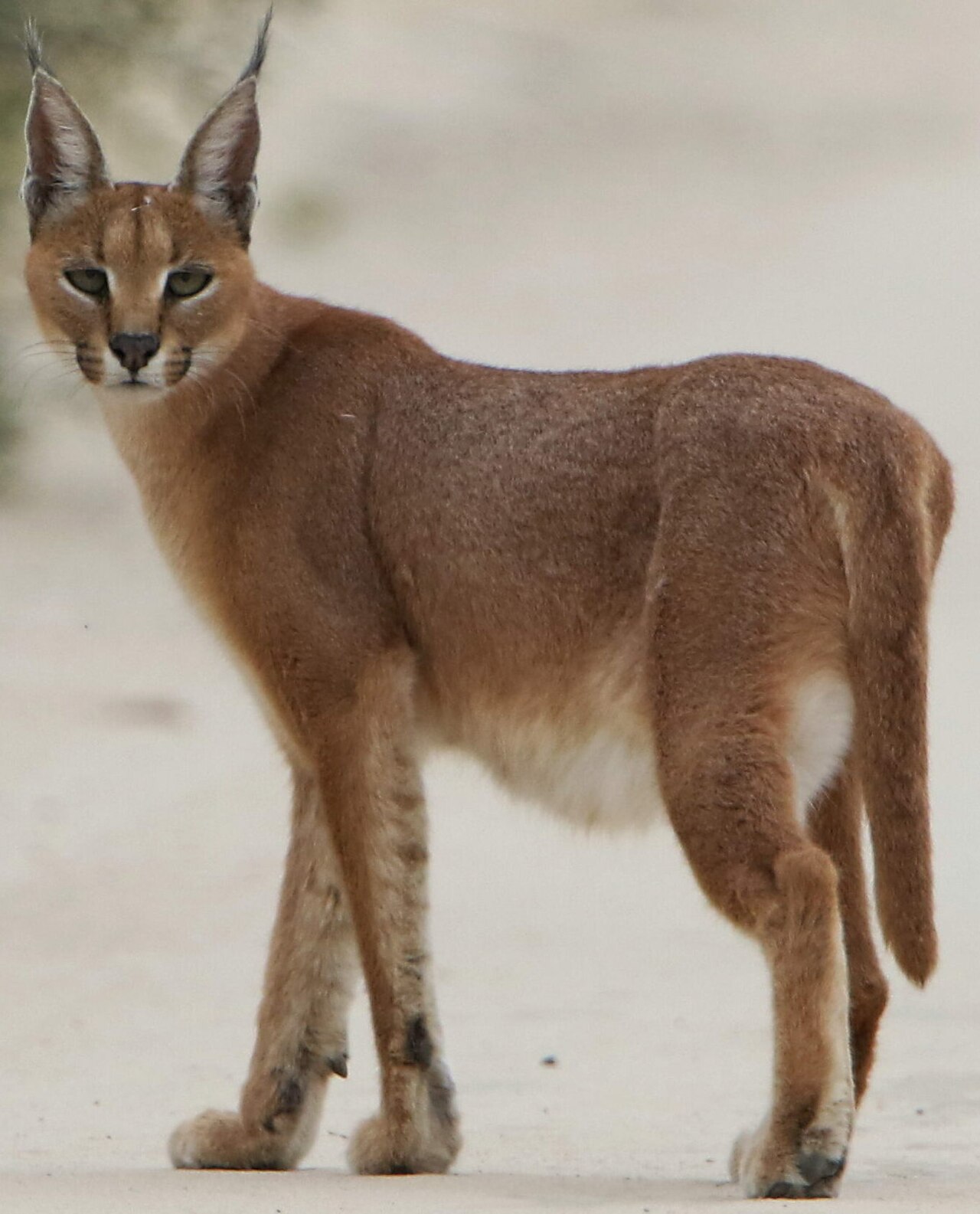
Caracals are solitary, nocturnal wild cats celebrated for their extraordinary leaping abilities, capable of launching more than three meters into the air to snag birds mid-flight. Distinctive black ear tufts, extending up to five centimeters, help pinpoint prey rustling in dense brush and facilitate subtle visual communication across arid landscapes. They roam dry savannahs, deserts, and rocky scrublands, relying on patient stalking and sudden bursts of speed to capture small mammals.
NocturnalCarnivorePredator
—observations
—countries
—peak records
Least ConcernConservation statusIUCN Red List categoriesLCNTVUENCREWEXLeast ConcernRed List categories, explained →
Diet & prey
- Rodents
- Ground Birds
- Hares
Predators
- Leopard
- Lion
- Hyena
ThreatsHabitat destruction, retaliatory farmer killings, and vehicle strikes
HabitatsDeserts, dry savannahs, scrublands, and rocky hills
Life span12–15 years in the wild; up to 19 years in captivity
Size / weightNot available
Classification
- FamilyFelidae
- SpeciesCaracal caracal
Range data is not available yet.
Interaction riskLow
- Low
- Moderate
- High
- Very high
- Why interaction risk is low
- Solitary wild predator; maintain distance and do not corner or handle.
- Why it is dangerous
- Equipped with sharp claws and strong jaws capable of inflicting severe lacerations if cornered or defended.
- How to recognize a risky encounter
- Recognized by a reddish-tan coat, pale underside, and long black ear tufts in arid environments.
- What to do
- Maintain a safe distance and back away slowly if encountered unexpectedly; never approach.
- What to notice
- Identified by prominent black ear tufts and uniform sandy coat in sparse desert scrub.
- Support conservation
- Avoid sharing precise coordinates of wild sightings in Central or South Asia online.
Responsible observation
- Observation: Scan rocky outcrops and dry scrub at twilight with high-powered binoculars.
- Safety: Give mother caracals with kits extra space to prevent protective aggression.
- Tracks: Look for four-toed, round footprints lacking visible claw marks in loose soil.
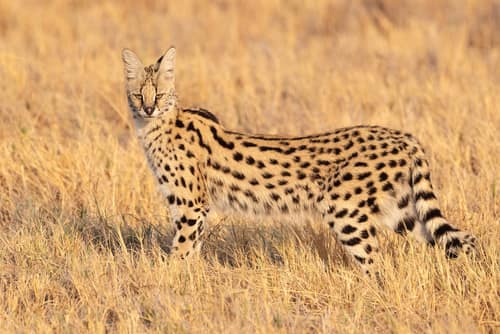
Competitor (c) Morten Ross, some rights reserved (CC BY), uploaded by Morten Ross · cc-by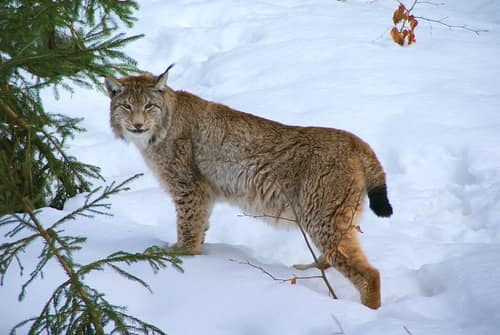
Look-alike Aconcagua (talk) / CC BY-SA 3.0 · cc-by-sa Image unavailable
Close Relative
Help improve the field guideSomething wrong?
Checking your Fauna account…Report a name, category, or profile issue for review.