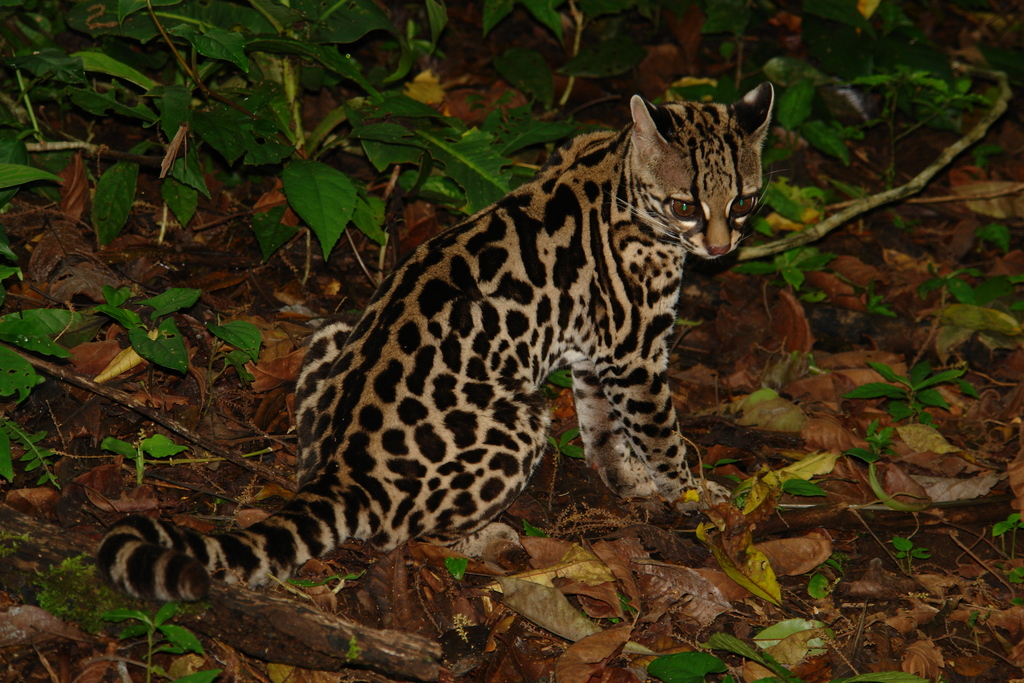
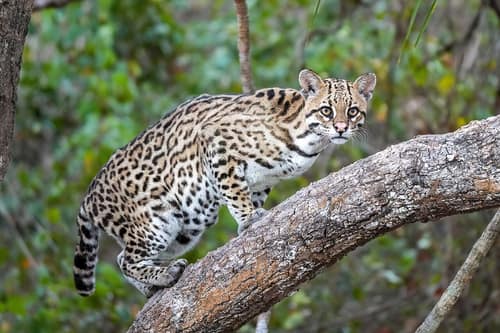
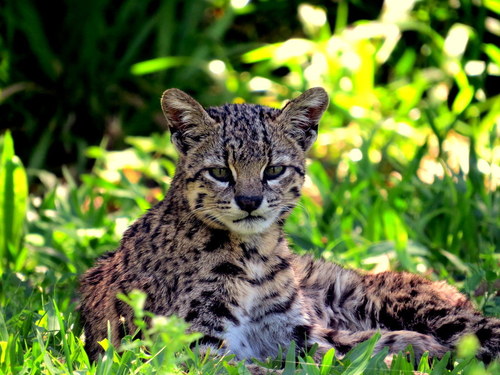
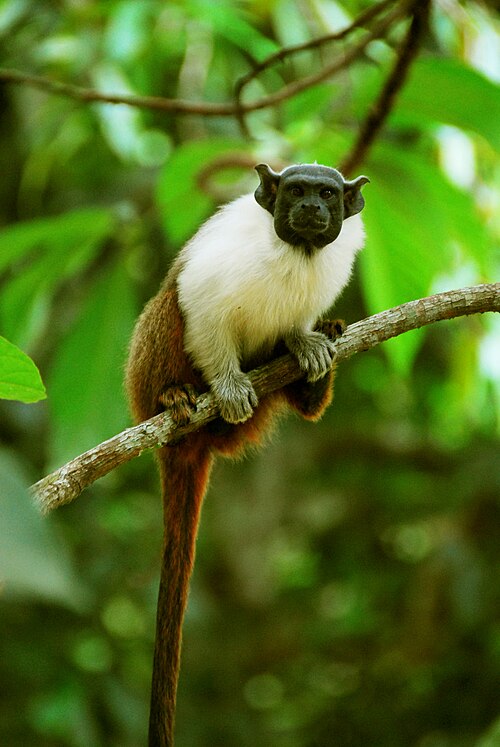
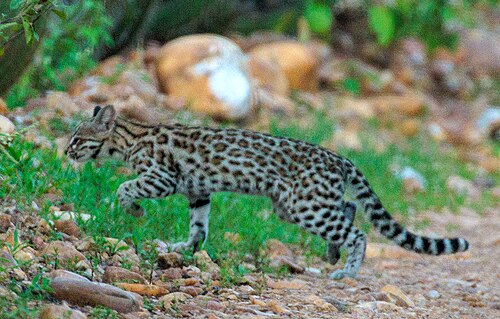
Margays spend the majority of their lives high in the forest canopy, moving through branches with an agility unmatched by almost any other cat. Flexible ankle joints that rotate up to 180 degrees allow them to run headfirst down vertical tree trunks and hang from boughs by a single hind paw. They are even known to practice vocal mimicry, imitating the distress calls of infant tamarins to lure inquisitive monkeys into striking range.
ThreatsDeforestation, habitat fragmentation, and opportunistic poaching for the pet and pelt trades
HabitatsPrimary tropical rainforests, cloud forests, and moist deciduous woodlands
Life span12–16 years in the wild (up to 24 years in captivity)
Size / weightNot available
Classification
OrderCarnivora
FamilyFelidae
GenusLeopardus
SpeciesLeopardus wiedii
Range & activity
Range data is not available yet.
Safe observation
Interaction riskLow
Low
Moderate
High
Very high
Why interaction risk is low
Can deliver a sharp defensive bite or scratch if cornered; observe from a respectful distance.
Why it is dangerous
Possesses sharp retractable claws and strong jaws designed for subduing struggling prey, which can inflict painful lacerations if the animal feels trapped.
How to recognize a risky encounter
Recognizable by oversized nocturnal eyes, a tail noticeably longer than its hind legs, and dark rosettes surrounding a tawny center.
What to do
Never corner, touch, or attempt to rescue an adult or kitten; leave an unobstructed escape route up into the canopy.
What to notice
Often mistaken for the larger ocelot, but distinguished by a proportionally longer tail, larger bulging eyes, and strictly arboreal behavior.
Support conservation
Maintain silent observation from trail systems and strictly avoid using bright white spotlights directly in their eyes.
Responsible observation
Night Spotting: Scan middle-canopy branches with a dim red beam to catch their large, reflective eyes.
Footstep Caution: Move silently along forest paths, as margays possess acute hearing and evade noisy intruders.
Canopy Corridors: Look around continuous arboreal bridges, as margays rarely descend to cross gaps on the ground.