
Mammal
Falkland Warrah
Dusicyon australisAlso known as Falkland Islands Wolf, Warrah, Falkland Islands Fox, Antarctic Wolf
Falkland warrahs roamed windswept tussac grasslands as the solitary native mammalian carnivores of their remote archipelago, subsisting on ground-nesting birds, marine carrion, and seals. Lacking native predators or competitors, they evolved an extraordinary tameness, often trotting directly toward visiting sealers and settlers out of sheer curiosity. This absence of fear proved catastrophic once pastoral sheep farming began, leading to rapid, deliberate eradication by ranchers and fur trappers.
EndemicCarnivore
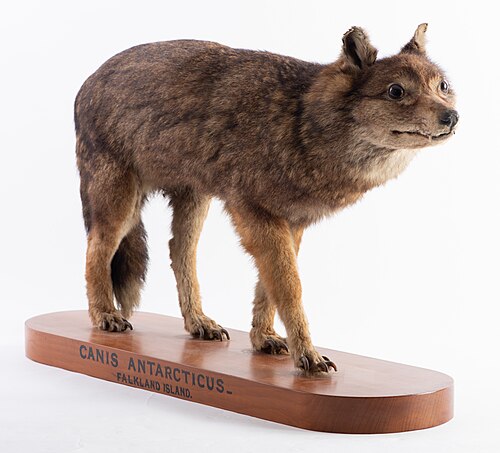
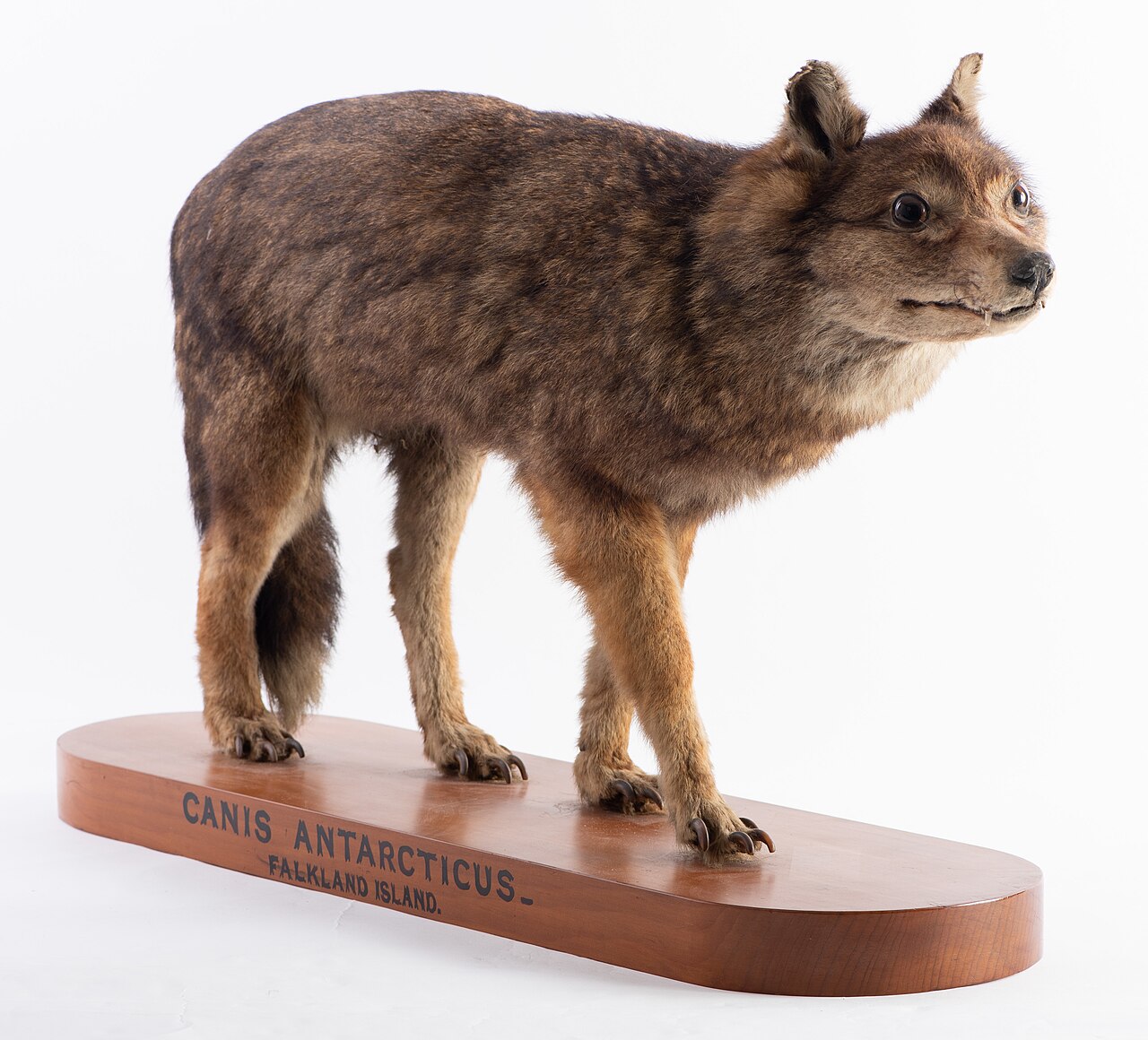
—observations
—countries
—peak records
ExtinctConservation statusIUCN Red List categoriesLCNTVUENCREWEXExtinctRed List categories, explained →
Diet & preyUpland geese, Penguins, Pinniped carrion
Predators
- Humans
ThreatsDirect persecution by sheep ranchers, fur hunting, island isolation
HabitatsTussac grasslands, coastal dunes, subantarctic shrubland
Life span8–12 years in the wild
Classification
- OrderCarnivora
- FamilyCanidae
- GenusDusicyon
- SpeciesDusicyon australis
Range data is not available yet.
Interaction riskModerate
- Low
- Moderate
- High
- Very high
- Why interaction risk is moderate
- Extinct since 1876; historic records describe this island canid as gentle and fearless toward humans.
Responsible observation
- Museum Collections: Observe preserved skeletal specimens and skins at major institutions like London's Natural History Museum.
- Historical Accounts: Read Charles Darwin's 'The Voyage of the Beagle' for vivid historical records of its ecology.
- Archipelago Heritage: Visit Falkland cultural museums to learn about early island colonization and wildlife history.
 Image unavailable
Extinct Sister Species 
Ecological Counterpart (c) Luciano Massa, some rights reserved (CC BY), uploaded by Luciano Massa · cc-by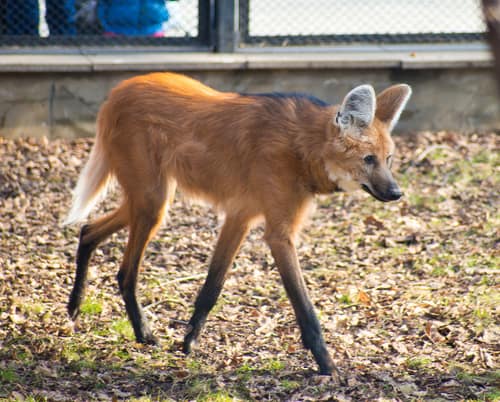
Closest Living Relative (c) Rigelus, some rights reserved (CC BY-SA) · cc-by-sa
Help improve the field guideSomething wrong?
Checking your Fauna account…Report a name, category, or profile issue for review.