
Mammal
Asian Small-clawed Otter
Aonyx cinereusAlso known as Oriental Small-clawed Otter, Small-clawed Otter, Asian Short-clawed Otter
These highly social carnivores live in extended family groups of up to fifteen individuals, communicating through a complex vocabulary of at least twelve distinct vocalizations. Their unique, hand-like paws feature reduced claws and highly sensitive pads that allow them to dexterously probe muddy riverbeds for crabs and mollusks. As the smallest of all otter species, they play a vital role in wetland ecosystems by controlling crustacean populations.
SocialSemiaquaticVocal
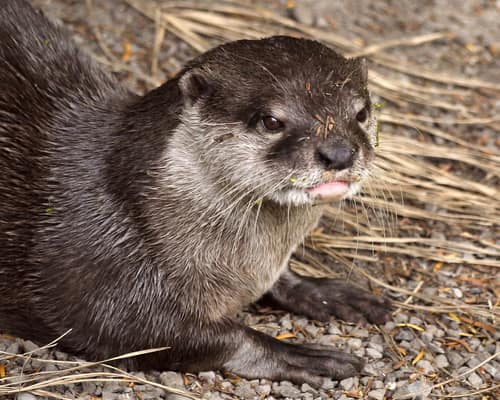
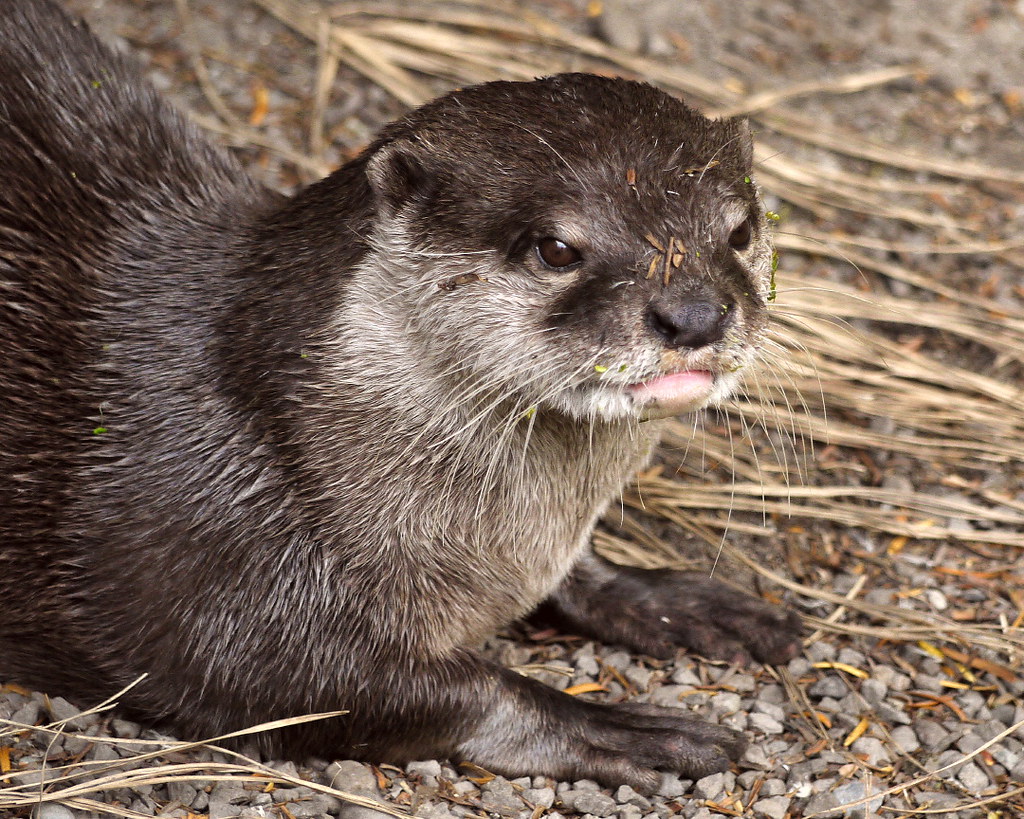
—observations
—countries
—peak records
VulnerableConservation statusIUCN Red List categoriesLCNTVUENCREWEXVulnerableRed List categories, explained →
Diet & preyCrabs, Mollusks, Frogs
Predators
- Saltwater Crocodiles
- Large Snakes
- Birds of Prey
ThreatsHabitat destruction, water pollution, pesticide runoff, and the illegal pet trade
HabitatsMangrove swamps, freshwater wetlands, rivers, creeks, and rice paddies
Life span10 to 15 years in the wild
Classification
- FamilyMustelidae
- SpeciesAonyx cinereus
Native Introduced
Native range in olive; established introduced range in rust.
Interaction riskLow
- Low
- Moderate
- High
- Very high
- Why interaction risk is low
- Capable of delivering a painful bite if cornered; maintain a respectful distance.
- Why it is dangerous
- Possesses strong jaws and sharp teeth designed for crushing hard shells, which can inflict deep, infectious puncture wounds.
- How to recognize a risky encounter
- Identifiable by its diminutive size, blunt snout, and hand-like paws with tiny, recessed claws.
- What to do
- Never attempt to feed, corner, or handle wild otters; back away slowly if they show signs of agitation.
- What to notice
- Look for small, dark brown otters with cream-colored throats moving in tightly-knit family groups.
- Support conservation
- Report any suspected illegal trade or captive keeping to local wildlife authorities immediately.
Responsible observation
- Listen for chirps: Listen for high-pitched chirps, squeaks, and whistles, which often signal a nearby family group.
- Scan muddy banks: Look for distinctive hand-like tracks without clear claw marks along muddy shorelines.
- Keep your distance: Avoid approaching wild groups to prevent disrupting their highly coordinated foraging behaviors.
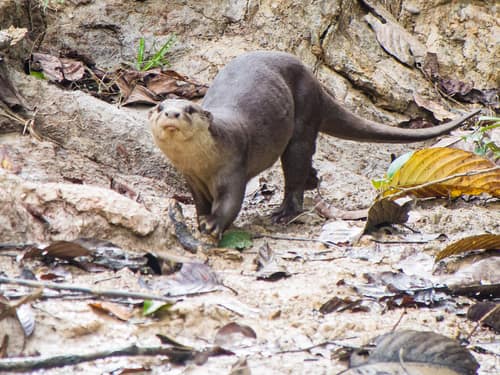
Frequent Companion "Smooth-coated Otter" by Mike Prince is licensed under CC BY 2.0. To view a copy of this license, visit https://creativecommons.org/licenses/by/2.0/. · cc-by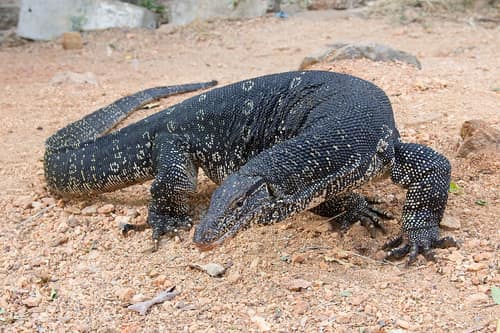
Competitor Carlos Delgado / CC BY-SA 4.0 · cc-by-sa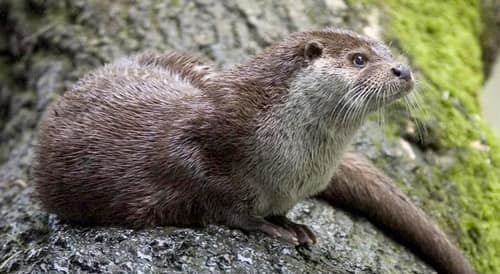
Close Relative Bernard Landgraf / CC BY-SA 3.0 · cc-by-sa
Help improve the field guideSomething wrong?
Checking your Fauna account…Report a name, category, or profile issue for review.