
Mammal
Ratel
Mellivora capensisAlso known as Honey Badger
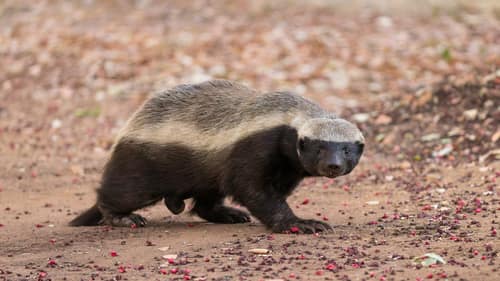
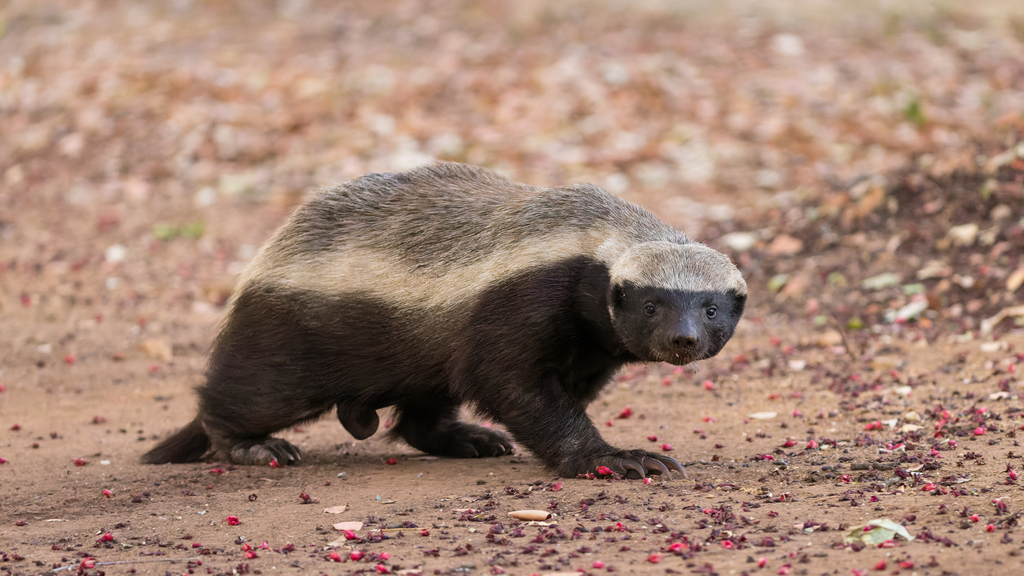
Ratels are renowned for exceptional tenacity, thick loose skin that deflects bites and stings, and powerful foreclaws capable of excavating hardened soils within minutes. These solitary, wide-ranging foragers navigate arid scrublands and woodlands, using impressive problem-solving abilities to roll logs, dig out venomous snakes, and raid beehives. When confronted by larger carnivores, they vocalize with raspy barks, release pungent anal secretions, and launch aggressive counterattacks.
CarnivoreNocturnalBurrowing
—observations
—countries
—peak records
Least ConcernConservation statusIUCN Red List categoriesLCNTVUENCREWEXLeast ConcernRed List categories, explained →
Diet & preyCape Cobra, Bush Karoo Rat, Honey Bee Larvae
Predators
- Lion
- Leopard
- Spotted Hyena
ThreatsDirect persecution by beekeepers, retaliatory trapping and poisoning, bushmeat harvesting
HabitatsSavannas, semi-deserts, grasslands, open woodlands, arid scrub
Life span10–14 years in the wild; up to 24 years in captivity
Classification
- OrderCarnivora
- FamilyMustelidae
- GenusMellivora
- SpeciesMellivora capensis
Range data is not available yet.
Interaction riskLow
- Low
- Moderate
- High
- Very high
- Why interaction risk is low
- Possesses formidable jaws and sharp claws, mounting aggressive defense if cornered; observe from a safe distance.
- Why it is dangerous
- Possesses powerful crushing jaws and sharp, curved claws capable of inflicting deep puncture wounds, tissue tears, and severe infections.
- How to recognize a risky encounter
- Stocky, low-slung body with a striking white or grey mantle contrasting against pitch-black lower fur.
- What to do
- Never corner, harass, or attempt to handle a wild individual; back away slowly if encountered on foot.
Responsible observation
- Vehicle Viewing: Observe comfortably from inside a safari vehicle, as foraging individuals tolerate vehicles better than people on foot.
- Give Space: Never block a burrow entrance or corner an individual, as they attack aggressively when retreat is cut off.
- Apiary Protection: Suspend commercial beehives on high wire stands to deter nighttime break-ins without lethal control.
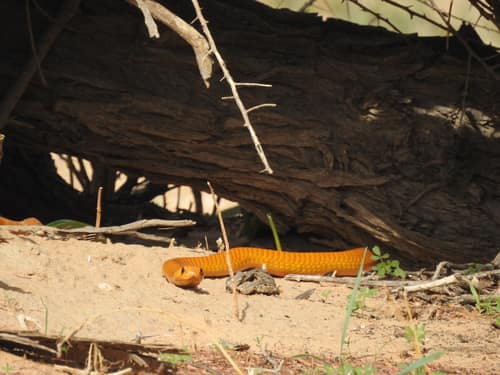
Prey (c) Ryan van Huyssteen, some rights reserved (CC BY) · cc-by Image unavailable
Ecological Associate 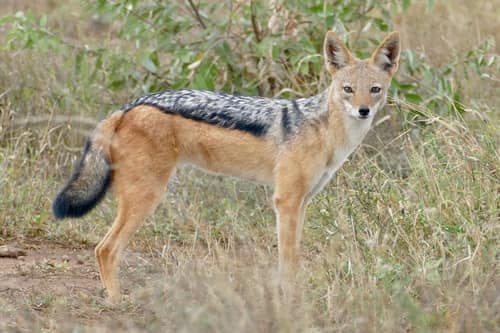
Competitor (c) Bernard DUPONT, some rights reserved (CC BY-SA) · cc-by-sa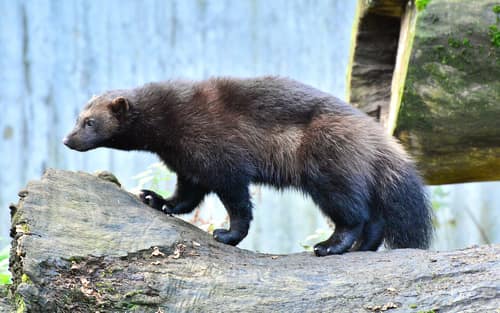
Same Family Esquilo / CC BY-SA 3.0 · cc-by-sa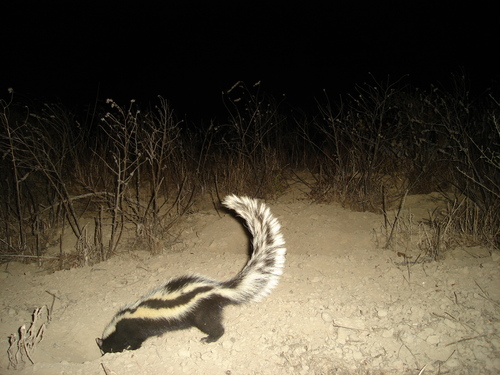
Same Family (c) Henry de Lange, some rights reserved (CC BY), uploaded by Henry de Lange · cc-by
Help improve the field guideSomething wrong?
Checking your Fauna account…Report a name, category, or profile issue for review.