
Mammal · GBIF taxon 2432851
Straw-coloured Fruit Bat
Eidolon helvumAlso known as Straw-colored Fruit Bat
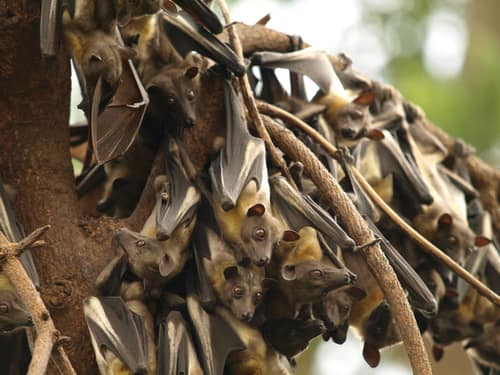
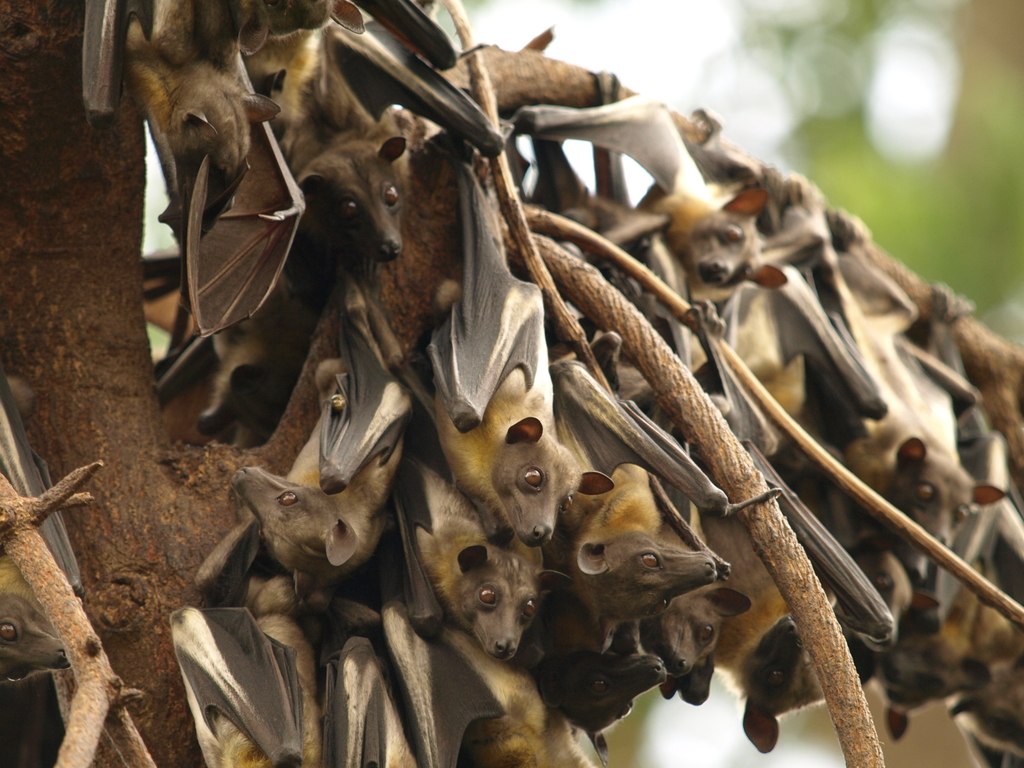
The Straw-coloured Fruit Bat is a large African flying fox with long narrow wings and yellowish fur across the neck and back. Huge colonies roost in exposed trees and travel long distances at night, dispersing seeds and pollen between feeding areas.
migratory fruit batcolonial roostinglong-distance seed disperser
—observations
—countries
—peak records
Near ThreatenedConservation statusIUCN Red List categoriesLCNTVUENCREWEXNear ThreatenedRed List categories, explained →
Diet & prey
- Fruits, flower nectar, pollen, leaves, and soft plant material
Predators
- crowned eagles
- pythons
- humans
ThreatsHunting, roost destruction, forest loss, persecution, power lines, and unsustainable harvest
HabitatsTropical forest, savanna woodland, mangroves, farms, towns, and large communal roost trees
Life spanOften 15 to 25 years
Size / weightNot available
Classification
- FamilyPteropodidae
- SpeciesEidolon helvum
Native
Interaction riskModerate
- Low
- Moderate
- High
- Very high
- Why interaction risk is moderate
- Never handle live or dead bats; bites, scratches, and bodily fluids can expose people to pathogens.
- Why it is dangerous
- Bats may carry zoonotic pathogens and can deliver a serious defensive bite or scratch when handled.
- How to recognize a risky encounter
- A large long-winged fruit bat with yellowish neck fur and dark tawny-brown underparts.
- What to do
- Never touch a live or dead bat; isolate the area and contact trained wildlife or public-health personnel.
Responsible observation
- Roost: Observe from well outside the canopy and keep noise and lights low.
- Grounded bat: Keep people and pets away and contact trained wildlife responders.
Help improve the field guideSomething wrong?
Checking your Fauna account…Report a name, category, or profile issue for review.