
Mammal · GBIF taxon 2432491
Rafinesque's Big-eared Bat
Corynorhinus rafinesquiiAlso known as Southeastern Big-eared Bat
Rafinesque's big-eared bats navigate dense bottomland hardwood forests using high-frequency echolocation, hunting moths and flying insects under cover of darkness. Possessing enormous ears that exceed one-third of their total body length, these bats curl their ears into horn-like coils when resting to conserve heat. Maternal colonies roost inside dark hollow trees, abandoned buildings, or cave entrances, remaining exceptionally sensitive to human disturbance.
NocturnalInsectivoreMammal
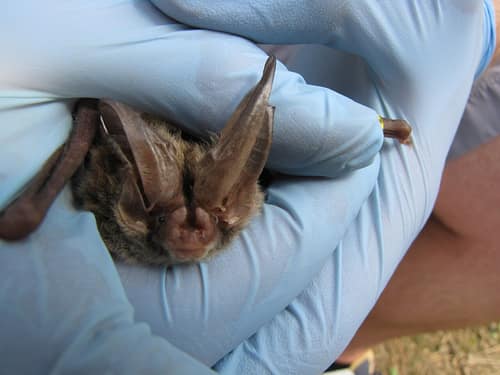
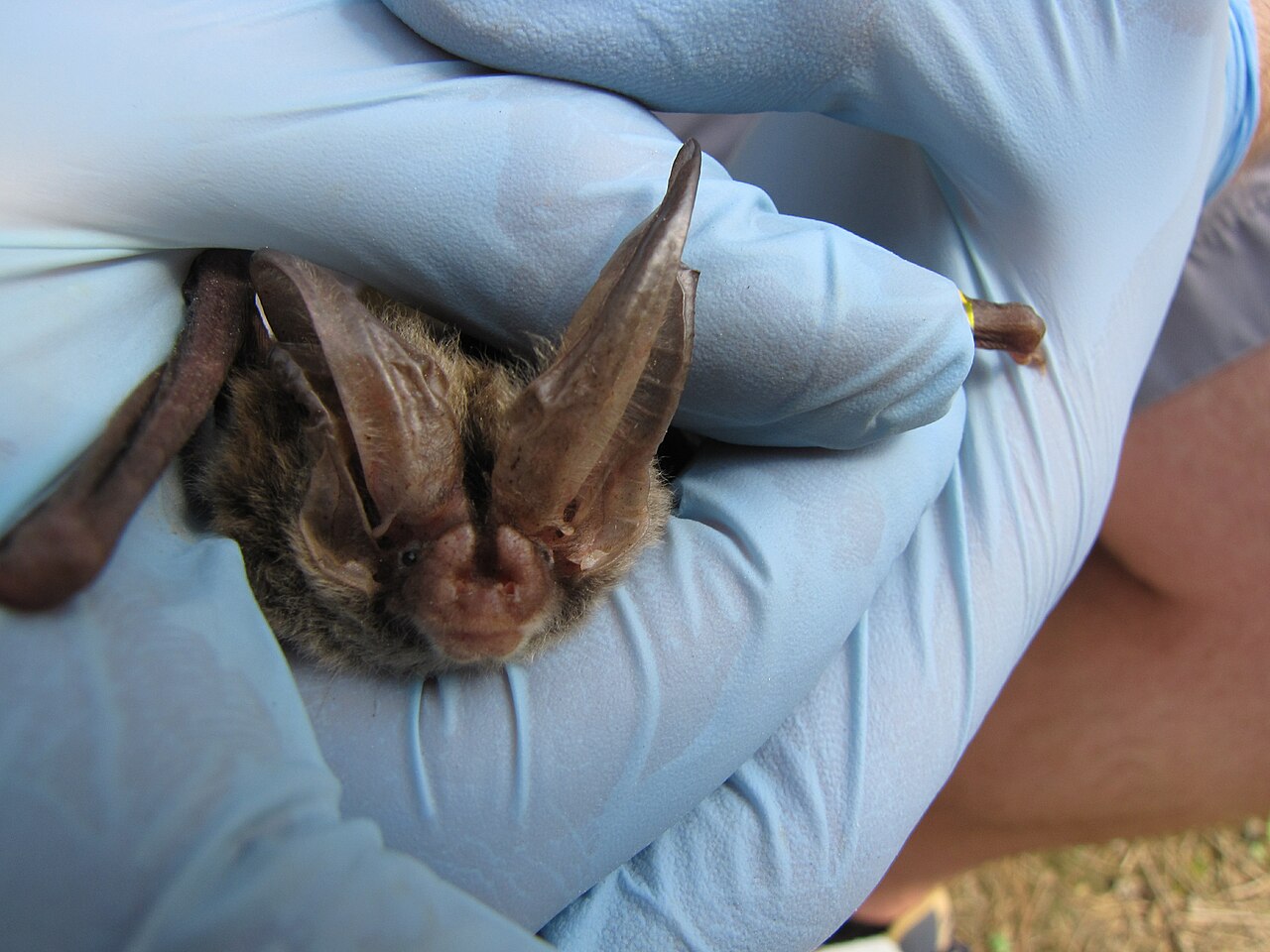
Licensed referenceCSJordan / CC BY 3.0 · cc-by
—observations
—countries
—peak records
Least ConcernConservation statusIUCN Red List categoriesLCNTVUENCREWEXLeast ConcernRed List categories, explained →
Diet & prey
- Moths
- Beetles
- Flies
Predators
- Owls
- Snakes
- Raccoons
ThreatsDeforestation, roost disturbance, loss of mature hollow trees
HabitatsBottomland hardwood forests, cypress swamps, caves, abandoned structures
Life span10–14 years
Size / weightNot available
Classification
- FamilyVespertilionidae
- SpeciesCorynorhinus rafinesquii
Native
Interaction riskModerate
- Low
- Moderate
- High
- Very high
- Why interaction risk is moderate
- May carry rabies or bite if cornered; observe roosts quietly from a distance.
- Why it is dangerous
- Can transmit the rabies virus through bites or scratches and can inflict a sharp defensive bite if handled.
- How to recognize a risky encounter
- Features enormous ears over 2.5 cm long, facial glands, and greyish-brown fur with stark white toe hairs.
- What to do
- Never touch or pick up a grounded bat; contact local wildlife rescuers for assistance.
- What to notice
- Recognizable by massive ears that curl back like ram horns during periods of torpor or rest.
- Support conservation
- Maintain a respectful distance from roost openings and refrain from entering active cave hibernacula.
Responsible observation
- Roost Observation: Use red light and minimize sound near tree hollows to avoid flushing colonies.
- Habitat Protection: Preserve mature bottomland hardwood stands containing hollow roosting trees.
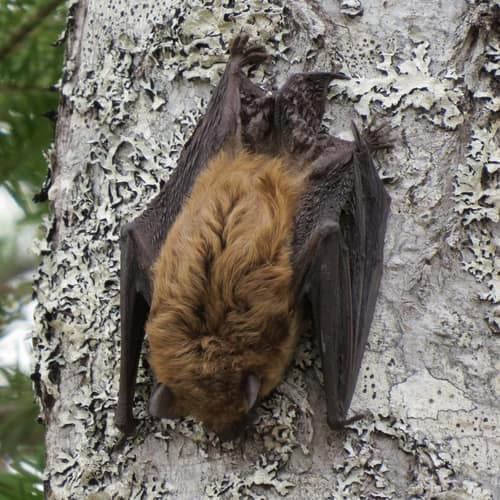
Frequent Companion (c) Fyn Kynd, some rights reserved (CC BY) · cc-by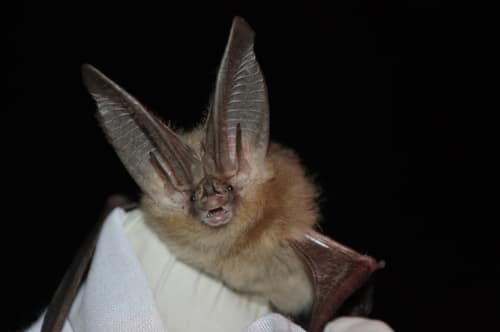
Close Relative (c) U.S. Fish and Wildlife Service Headquarters, some rights reserved (CC BY) · cc-by
Help improve the field guideSomething wrong?
Checking your Fauna account…Report a name, category, or profile issue for review.