
Mammal · GBIF taxon 2432087
Sunda Flying Lemur
Galeopterus variegatusAlso known as Malayan Flying Lemur, Malayan Colugo, Sunda Colugo
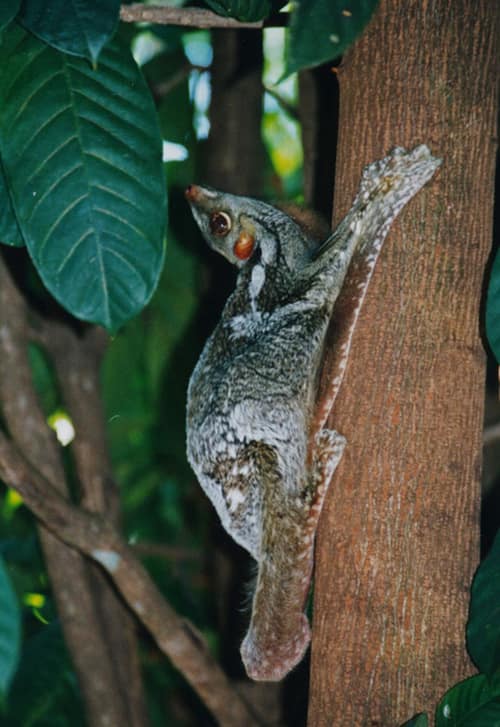
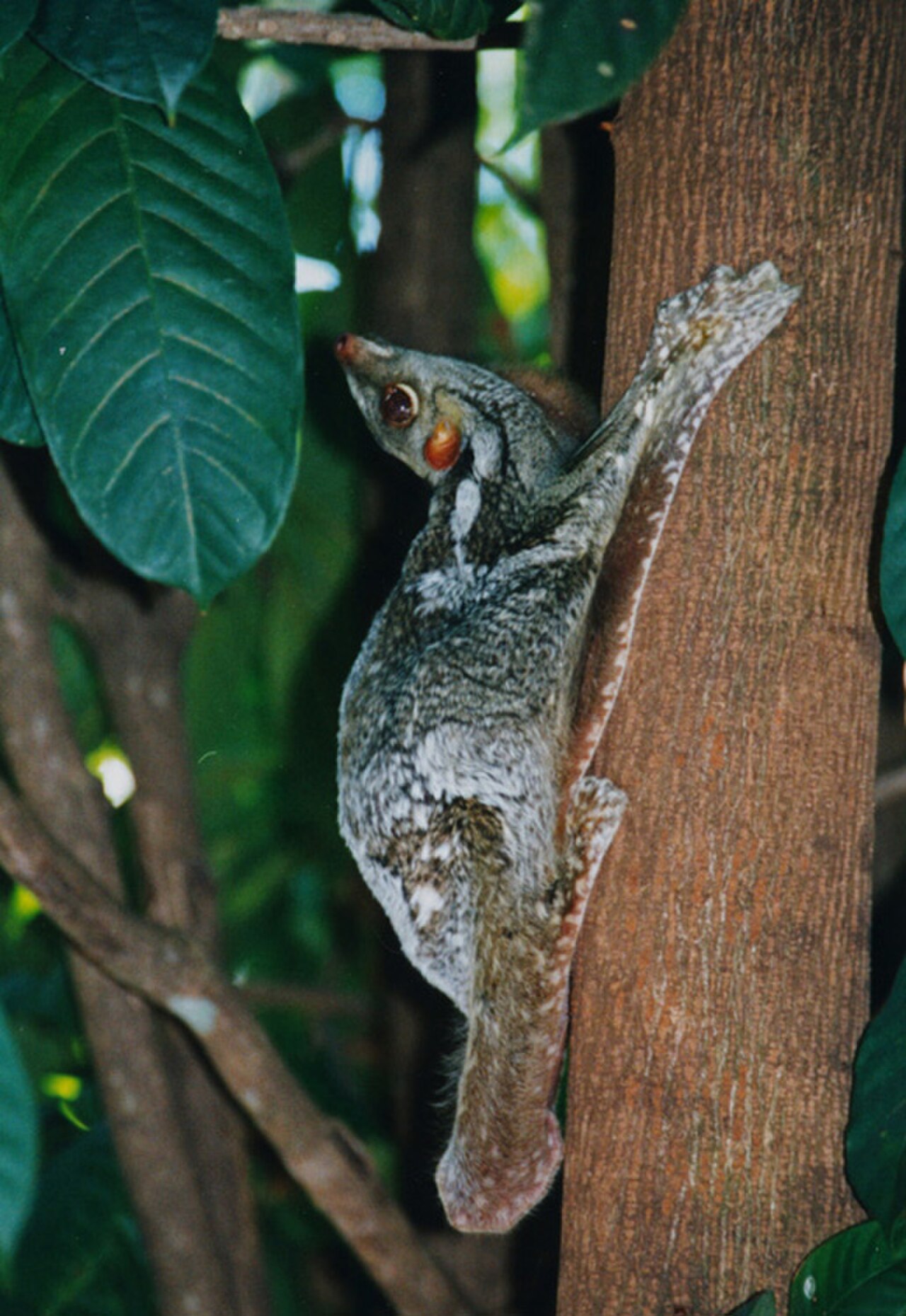
Sunda flying lemurs possess an expansive furry gliding membrane called a patagium that extends from the neck to the tips of their fingers, toes, and tail. Clinging vertically to tree trunks by day, they rely on mottled grey and green fur for camouflage before leaping into the night sky to glide up to 100 meters between canopy trees. Females carry a single infant attached to their belly, folding the lower part of their patagium into a warm pouch while resting or moving.
NocturnalArborealMammal
—observations
—countries
—peak records
Least ConcernConservation statusIUCN Red List categoriesLCNTVUENCREWEXLeast ConcernRed List categories, explained →
Diet & prey
- Young Leaves
- Tree Flowers
- Plant Sap
Predators
- Changeable Hawk-Eagle
- Reticulated Python
- Large Civets
ThreatsDeforestation, forest degradation, localized hunting
HabitatsTropical rainforests, swamp forests, cultivated plantations
Life span15–17 years
Size / weightNot available
Classification
- FamilyCynocephalidae
- SpeciesGaleopterus variegatus
Range data is not available yet.
Interaction riskLow
- Low
- Moderate
- High
- Very high
- Why interaction risk is low
- Strictly arboreal and shy; observe quietly from a distance without disturbing roosting or gliding individuals.
Responsible observation
- Nighttime Observation: Use a red-filtered flashlight to view nocturnal activity without causing stress.
- Spotting Day Roosts: Scan tree trunks and large branch forks for mottled, lichen-like fur patterns.
- Respect Canopy Corridors: Avoid cutting branches or clearing paths near known gliding routes between trees.
 Image unavailable
Predator 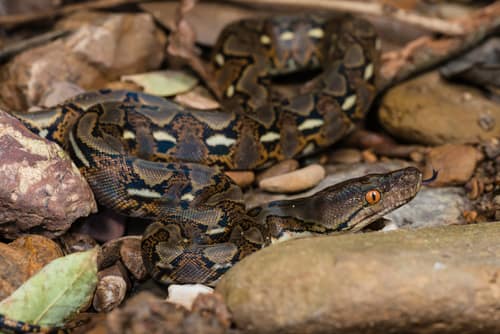
Predator (c) Rushen, some rights reserved (CC BY-SA) · cc-by-sa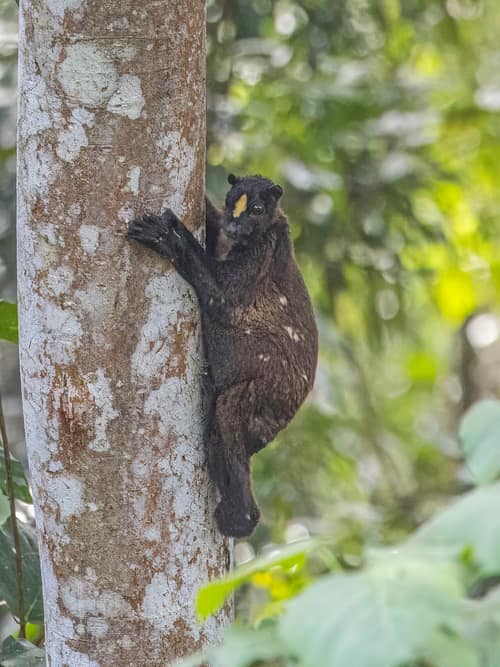
Close Relative Charles J. Sharp / CC BY-SA 4.0 · cc-by-sa
Help improve the field guideSomething wrong?
Checking your Fauna account…Report a name, category, or profile issue for review.