
Amphibian · GBIF taxon 2431913
California Newt
Taricha torosaAlso known as Orange-bellied Newt
The California Newt has rough brown skin above and a vivid yellow-orange belly. Adults spend much of the year on land, then travel to ponds or slow streams to breed, relying on potent skin toxin for defense.
Toxic AmphibianSeasonal BreederOrange Belly
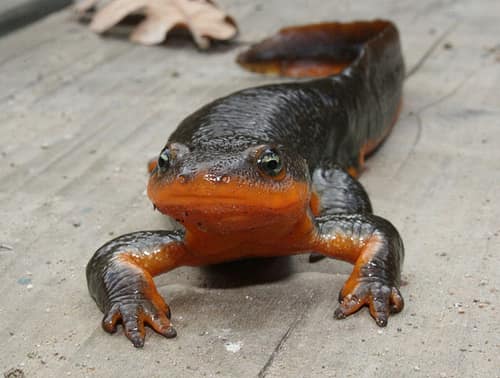
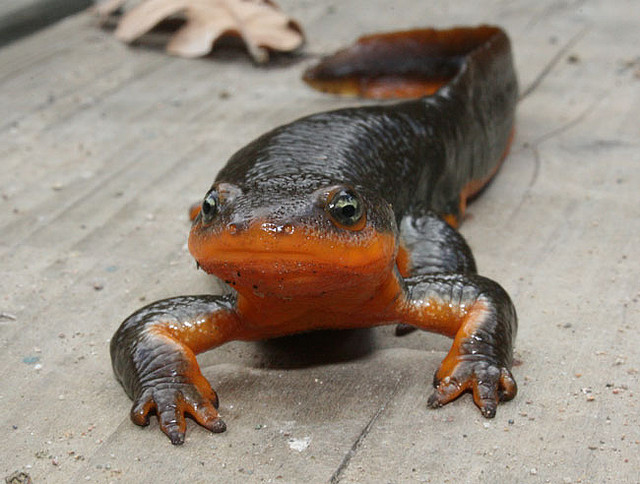
Licensed referenceYostkr / CC BY-SA 3.0 · cc-by-sa
—observations
—countries
—peak records
Near ThreatenedConservation statusIUCN Red List categoriesLCNTVUENCREWEXNear ThreatenedRed List categories, explained →
Diet & prey
- Insects
- Worms
- Small crustaceans
Predators
- Garter snakes
- Large frogs
- Wading birds
ThreatsRoad mortality, drought, altered stream flow, introduced predators, pollution, and habitat loss
HabitatsOak woodland, chaparral, moist forest, ponds, reservoirs, and slow streams
Life spanLong-lived for an amphibian; adults may survive 15 years or more
Size / weightNot available
Classification
- FamilySalamandridae
- SpeciesTaricha torosa
Range data is not available yet.
Interaction riskHigh
- Low
- Moderate
- High
- Very high
- Why interaction risk is high
- Skin contains tetrodotoxin that is dangerous if swallowed or transferred to the mouth, eyes, or broken skin.
- Why it is dangerous
- Tetrodotoxin in the skin can cause severe paralysis or death when swallowed and may enter through damaged tissue.
- How to recognize a risky encounter
- Look for grainy brown dorsal skin and a striking yellow-orange underside on a sturdy newt.
- What to do
- Never pick up or mouth-contact a newt; keep pets away and wash exposed skin thoroughly.
Responsible observation
- Distance: Watch without touching, even if a newt crosses a path.
- Pets: Keep dogs away because mouthing a newt can be fatal.
- Roads: Contact trained wildlife help for animals in immediate danger.
Help improve the field guideSomething wrong?
Checking your Fauna account…Report a name, category, or profile issue for review.