
Amphibian · GBIF taxon 2431719
Green Salamander
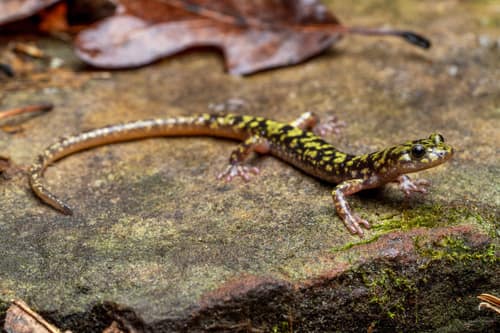
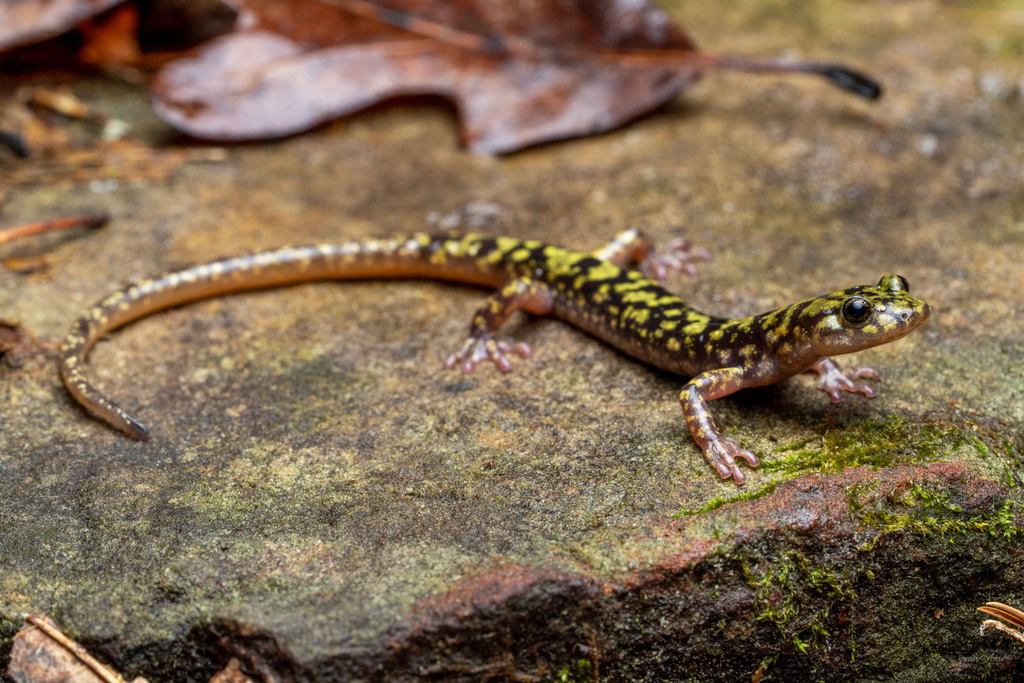
Aneides aeneusThe Green Salamander is a flattened lungless salamander patterned with lichen-green patches on a dark body and equipped with squared toe tips. It presses into narrow shaded rock crevices and sometimes climbs fissured bark in Appalachian forests.
Rock-crevice SalamanderLichen CamouflageLungless Amphibian
—observations
—countries
—peak records
Near ThreatenedConservation statusIUCN Red List categoriesLCNTVUENCREWEXNear ThreatenedRed List categories, explained →
Diet & prey
- Ants
- Beetles
- Mites
Predators
- Small snakes
- Shrews
- Forest birds
ThreatsQuarrying, logging, rock disturbance, collecting, disease, development, and climate-driven drying of crevices
HabitatsMoist shaded sandstone and limestone outcrops, cliffs, boulder fields, ravines, and fissured trees
Life spanLikely several years, although maximum longevity in the wild is not well documented
Size / weightNot available
Classification
- FamilyPlethodontidae
- SpeciesAneides aeneus
Range data is not available yet.
Interaction riskLow
- Low
- Moderate
- High
- Very high
- Why interaction risk is low
- Never pry into crevices, move rocks, or touch a salamander's permeable skin.
- What to notice
- Lichen-green blotches, a flattened body, and squared toe tips distinguish an animal resting within a shaded fissure.
- Support conservation
- Do not pry out or touch a salamander, shine prolonged bright light, alter rock faces, or publish precise colony locations.
Responsible observation
- Pattern: Look for irregular lichen-green patches across a dark flattened body.
- Toes: Use close-focus optics to note squared toe tips without extracting the animal.
- Light: Keep illumination dim and brief, and leave every rock exactly in place.
Help improve the field guideSomething wrong?
Checking your Fauna account…Report a name, category, or profile issue for review.