
Amphibian · GBIF taxon 2431224
Northern Dusky Salamander
Desmognathus fuscusAlso known as Dusky Salamander
Northern dusky salamanders thrive in the moist margins of cold, clean forest seepages and rocky streams. Like all lungless salamanders, they respire entirely through their thin, vascularized skin and the lining of the mouth, requiring cool, perpetually damp microhabitats to survive. Females provide dedicated maternal care, curling around clutches of eggs hidden under damp moss or stones until the aquatic larvae hatch.
AmphibianNocturnalStream Dweller
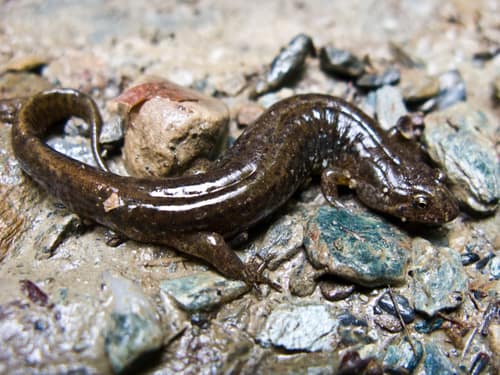
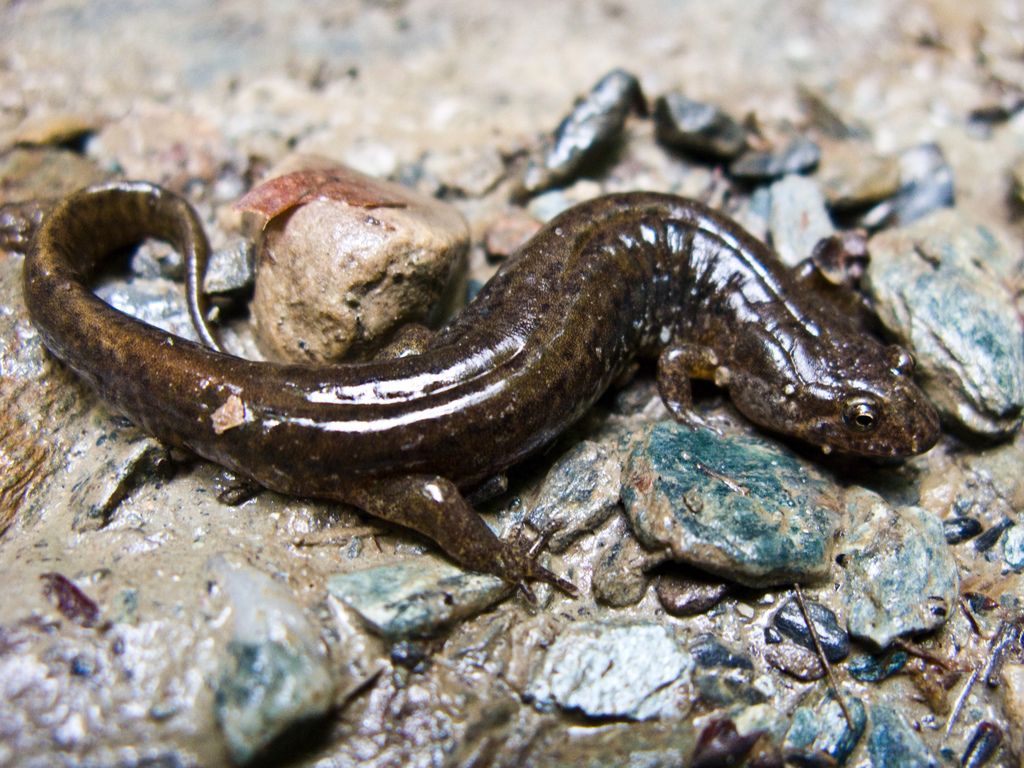
—observations
—countries
—peak records
Least ConcernConservation statusIUCN Red List categoriesLCNTVUENCREWEXLeast ConcernRed List categories, explained →
Diet & prey
- Earthworms
- Midges
- Spiders
Predators
- Common Garter Snake
- Northern Watersnake
- Barred Owl
ThreatsStream siltation, deforestation, acid precipitation, and water pollution
HabitatsRocky woodland streams, cold seepages, springs, and muddy stream banks
Life span8–10 years
Size / weightNot available
Classification
- FamilyPlethodontidae
- SpeciesDesmognathus fuscus
Range data is not available yet.
Interaction riskLow
- Low
- Moderate
- High
- Very high
- Why interaction risk is low
- Safe to observe at a normal distance.
Responsible observation
- Search Under Cover: Carefully lift wet stones and rotting logs beside trickling forest streams.
- Replace Shelter Gently: Always return overturned rocks to their original positions to preserve critical humidity.
- Avoid Direct Handling: Skin secretions and oils from human hands can interfere with cutaneous respiration.
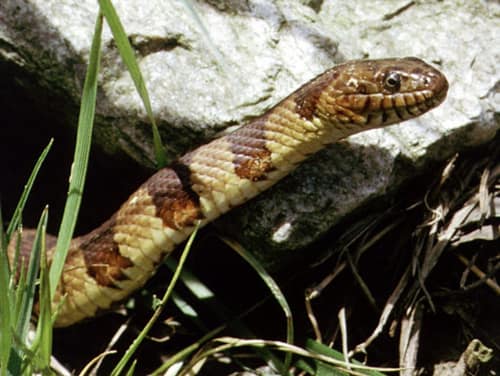
Predator Patrick Coin (Patrick Coin) / CC BY-SA 2.5 · cc-by-sa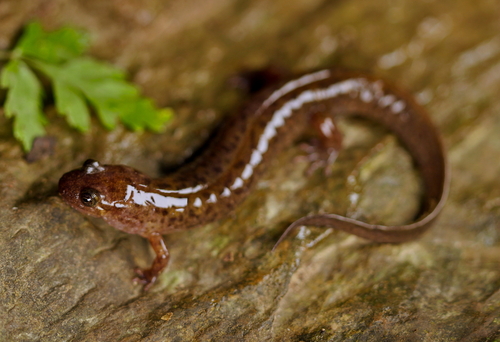
Close Relative (c) Peter Paplanus, some rights reserved (CC BY) · cc-by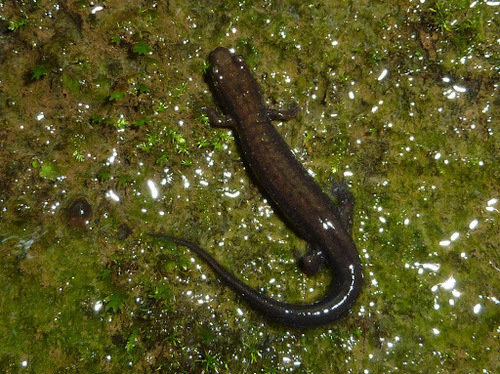
Close Relative (c) 116916927065934112165, some rights reserved (CC BY), uploaded by 116916927065934112165 · cc-by Image unavailable
Family Member
Help improve the field guideSomething wrong?
Checking your Fauna account…Report a name, category, or profile issue for review.