
Amphibian · GBIF taxon 2429964
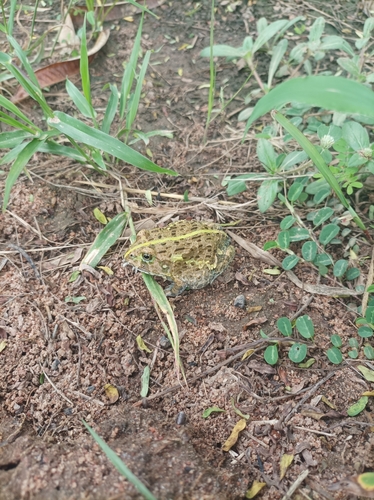
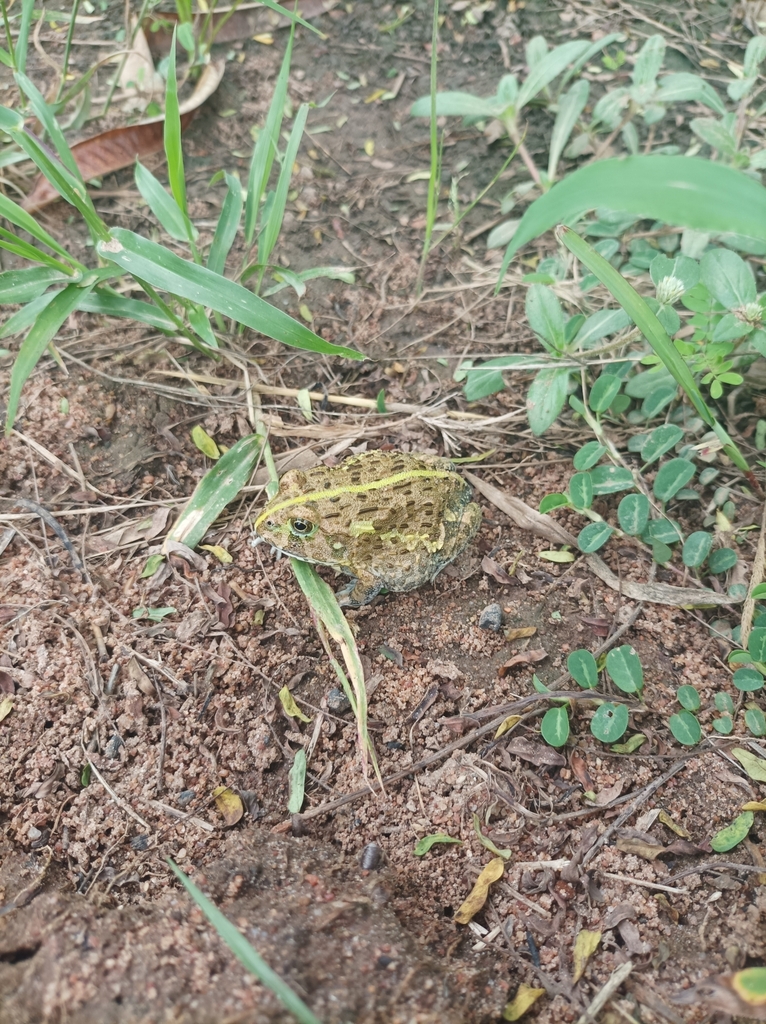
Edible Bullfrog
Pyxicephalus edulisAlso known as Lesser Bullfrog, Peter's Bullfrog, Lesser Pixie Frog
Edible bullfrogs spend long dry seasons buried underground in tough cocoon-like chambers, emerging en masse only after torrential rains flood temporary pans and savannah hollows. Males gather in shallow water to battle fiercely for breeding territory, driving off rivals with large tooth-like projections in their lower jaws. Their powerful hind legs and explosive strikes allow them to ambush insects, small rodents, and other amphibians with high speed.
AmphibianFossorialPredatory
—observations
—countries
—peak records
Least ConcernConservation statusIUCN Red List categoriesLCNTVUENCREWEXLeast ConcernRed List categories, explained →
Diet & prey
- Beetles
- Small Rodents
- Other Amphibians
Predators
- Storks
- Raptors
- Snakes
ThreatsHabitat conversion, agricultural expansion, local harvesting
HabitatsSavannah, grasslands, temporary floodplains, dry shrublands
Life span15–20 years in the wild
Size / weightNot available
Classification
- FamilyPyxicephalidae
- SpeciesPyxicephalus edulis
Range data is not available yet.
Interaction riskLow
- Low
- Moderate
- High
- Very high
- Why interaction risk is low
- Large jaw teeth can inflict a painful bite if handled; observe from a respectful distance.
- Why it is dangerous
- Possesses sharp odontoid projections on its lower jaw capable of inflicting painful, skin-breaking bites in self-defense.
- How to recognize a risky encounter
- Distinguished by its plump olive-green body, broad head, distinct back ridges, and yellowish throat in breeding males.
- What to do
- Do not handle or corner wild individuals; give them space to retreat undisturbed.
Responsible observation
- Seasonal Timing: Look for adult activity immediately following heavy summer rainstorms when breeding choruses begin.
- Handling Precaution: Avoid pick-up by hand as adults possess strong jaws and will bite aggressively to defend themselves.
- Habitat Protection: Walk carefully around temporary rain pools to prevent crushing emerging frogs and egg masses.
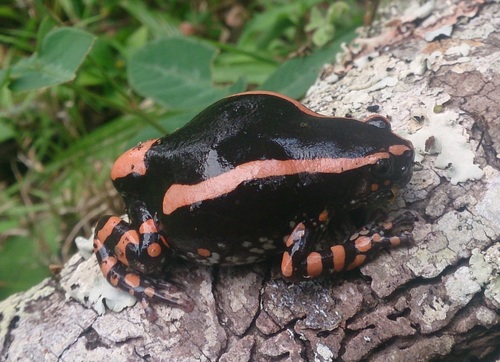
Habitat Companion (c) Nick Schaller, some rights reserved (CC BY), uploaded by Nick Schaller · cc-by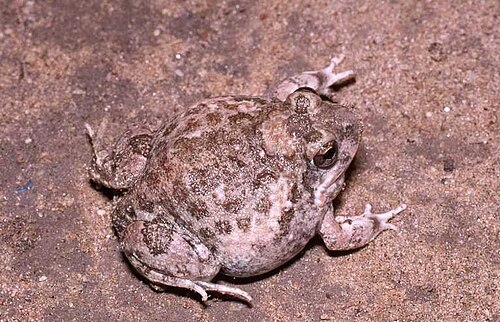
Competitor Simon J. Tonge / CC BY 3.0 · cc-by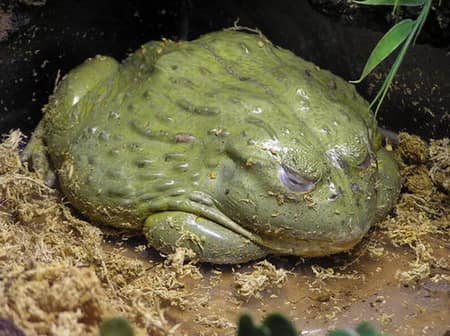
Close Relative Grzegorz Polak / CC BY-SA 3.0 · cc-by-sa
Help improve the field guideSomething wrong?
Checking your Fauna account…Report a name, category, or profile issue for review.