
Amphibian
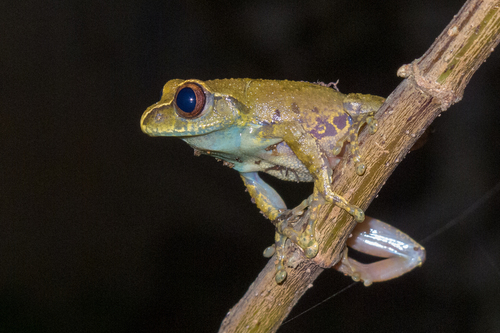
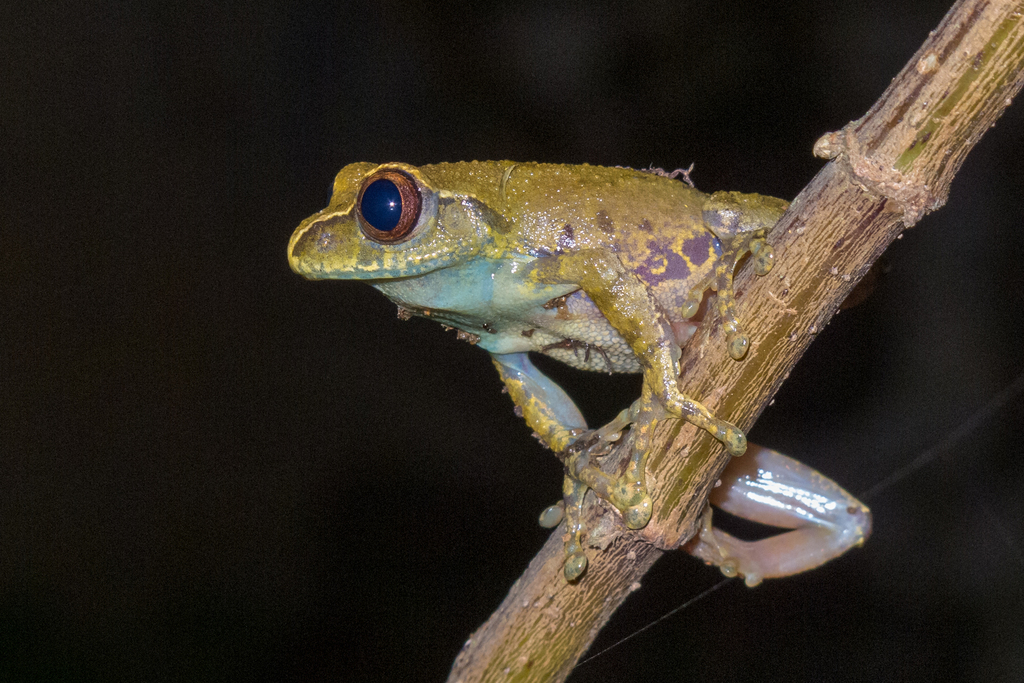
Dime Forest Tree Frog
Leptopelis vannutelliiAlso known as Vannutelli's Tree Frog
Dime forest tree frogs cling to wet foliage and mossy branches in the montane forests of southwestern Ethiopia, scanning for insect prey with oversized, vertical-pupiled eyes. Males gather near forest streams and swampy clearings after dusk to call from low shrubs during the rainy season. Females deposit large, yolk-rich eggs in damp soil near water, allowing newly hatched tadpoles to wriggle into nearby pools to develop.
NocturnalArborealEndemic
—observations
—countries
—peak records
VulnerableConservation statusIUCN Red List categoriesLCNTVUENCREWEXVulnerableRed List categories, explained →
Diet & preyMoths, Crickets, Spiders
Predators
- Forest snakes
- Owls
- Genets
ThreatsDeforestation, agricultural expansion, and degradation of montane forest streams
HabitatsMontane rainforests, bamboo thickets, and forested stream margins in southwestern Ethiopia
Life span4–7 years in the wild
Classification
- FamilyArthroleptidae
- SpeciesLeptopelis vannutellii
Range data is not available yet.
Interaction riskLow
- Low
- Moderate
- High
- Very high
- Why interaction risk is low
- Safe to observe at a normal distance; avoid handling to protect their delicate, permeable skin.
- What to notice
- Look for a medium-sized tree frog with large golden-brown eyes, vertical pupils, expanded toe pads, and smooth green or brown skin.
- Support conservation
- Observe quietly from a short distance without handling, and keep lights dim and brief so calling males are not disturbed.
Responsible observation
- Night Searches: Scan shrubs and low branches near forest streams with a soft headlamp after dusk.
- Keep Hands Off: Avoid touching the frog, as skin oils and sunscreen can harm amphibians.
- Listen First: Follow repeated evening calls during the rainy season to spot males perched above water.
 Image unavailable
Neighbor Neighbor Close Relative Close Relative
Help improve the field guideSomething wrong?
Checking your Fauna account…Report a name, category, or profile issue for review.