
Amphibian · GBIF taxon 2429585
Western Banjo Frog
Limnodynastes dorsalisAlso known as Pobblebonk, Sand Frog, Western Bullfrog
Western banjo frogs are robust, burrowing amphibians celebrated for their distinctive, resonant mating call that sounds like a single plucked banjo string. During hot or dry spells, adults retreat deep underground into damp sandy burrows, emerging in mass chorus following substantial autumn and winter rains. They are easily recognized by their stocky build, mottled brown or olive back, and a prominent cream-colored stripe running along the upper lip.
AmphibianBurrowingNocturnal
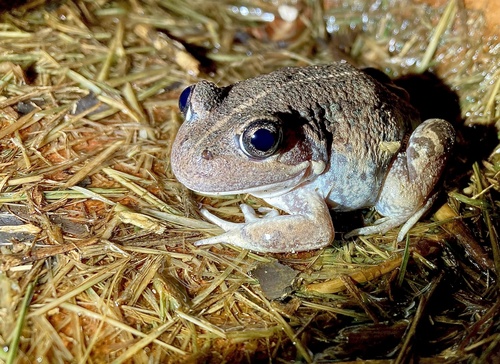
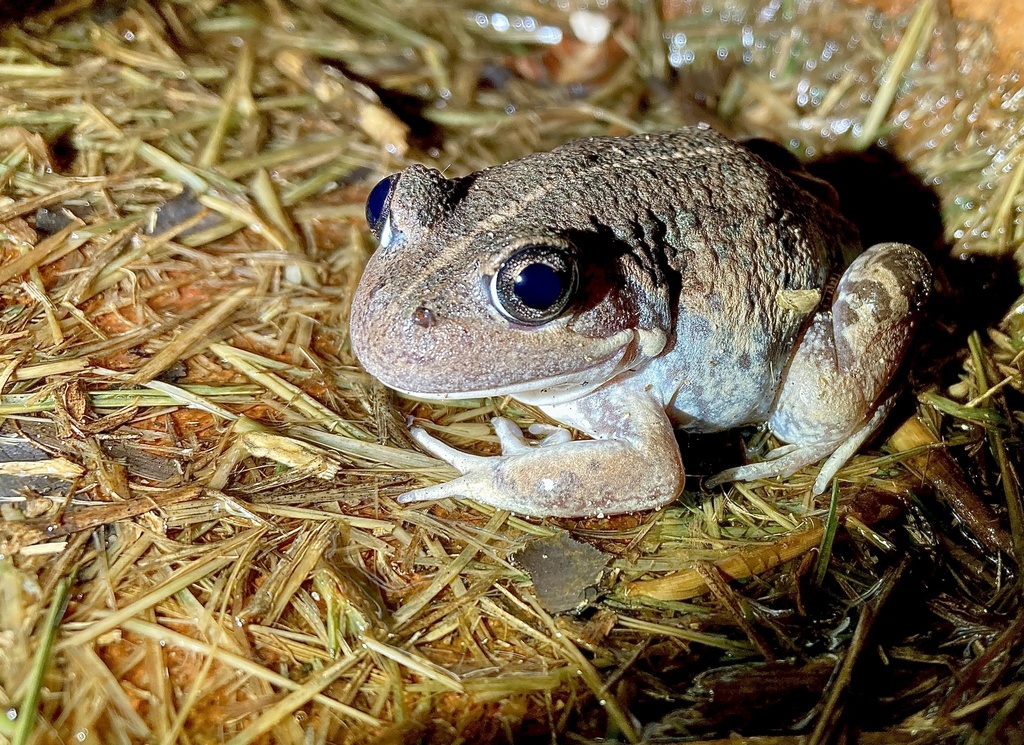
—observations
—countries
—peak records
Least ConcernConservation statusIUCN Red List categoriesLCNTVUENCREWEXLeast ConcernRed List categories, explained →
Diet & prey
- Beetles
- Ants
- Earthworms
Predators
- Herons
- Tiger Snakes
- Large Predatory Fish
ThreatsHabitat clearance, wetland drying, chytrid fungus, and water pollution
HabitatsWetlands, swamps, farm dams, woodlands, and sandy coastal plains
Life span5–10 years
Size / weightNot available
Classification
- FamilyLimnodynastidae
- SpeciesLimnodynastes dorsalis
Range data is not available yet.
Interaction riskLow
- Low
- Moderate
- High
- Very high
- Why interaction risk is low
- Harmless to humans; safe to observe from a respectful distance.
Responsible observation
- Listen for calls: Nighttime after rainy weather is the prime time to hear their resonant musical bonk.
- Watch wet roads: Drive carefully near wetlands after rain when adults frequently cross roads.
- Avoid handling: Keep hands clean and dry if moving a frog, as lotions and skin oils can harm amphibian skin.
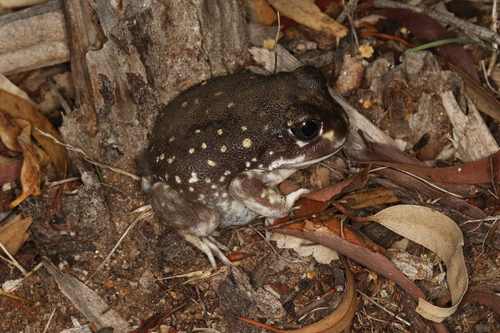
Burrowing Neighbor (c) Donald Hobern, some rights reserved (CC BY) · cc-by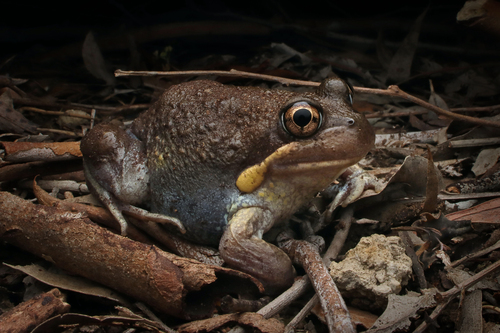
Close Relative no rights reserved, uploaded by Connor Margetts · cc0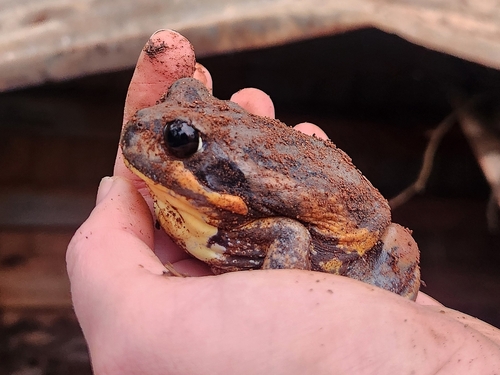
Close Relative (c) jaimshae, some rights reserved (CC BY) · cc-by
Help improve the field guideSomething wrong?
Checking your Fauna account…Report a name, category, or profile issue for review.