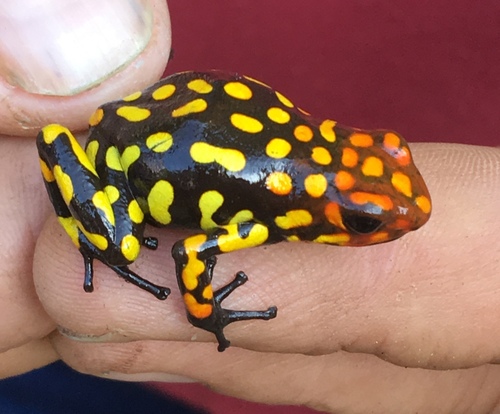
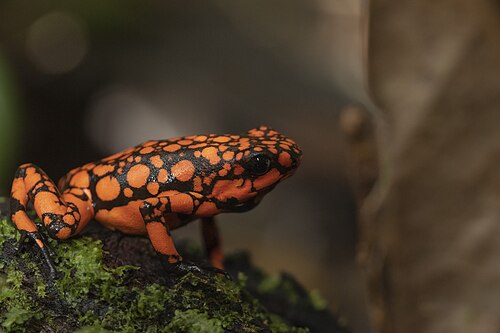
Also known as Harlequin Poison-dart Frog, Harlequin Frog
Harlequin poison frogs are celebrated for their dazzling color morphs and elaborate parental care, with devoted mothers transporting tadpoles up into water-filled bromeliad axils. Females return regularly to deposit unfertilized, nutrient-rich eggs that serve as the sole food source for their developing young. Highly territorial males broadcast raspy, buzzing trills from fallen logs to defend foraging perches and attract mates across the dense Chocó rainforest floor.
ThreatsHabitat destruction from agricultural expansion, logging, and illegal collection for the pet trade
HabitatsTropical lowland rainforest leaf litter and primary forest understory
Life span8–12 years
Classification
FamilyDendrobatidae
SpeciesOophaga histrionica
Range & activity
Range data is not available yet.
Safe observation
Interaction riskHigh
Low
Moderate
High
Very high
Why interaction risk is high
Skin secretes potent histrionicotoxins; do not touch or handle under any circumstances.
Why it is dangerous
Skin secretions contain histrionicotoxins, steroidal alkaloids that disrupt neuromuscular transmission and cause severe numbness or paralysis if absorbed through cuts or mucous membranes.
How to recognize a risky encounter
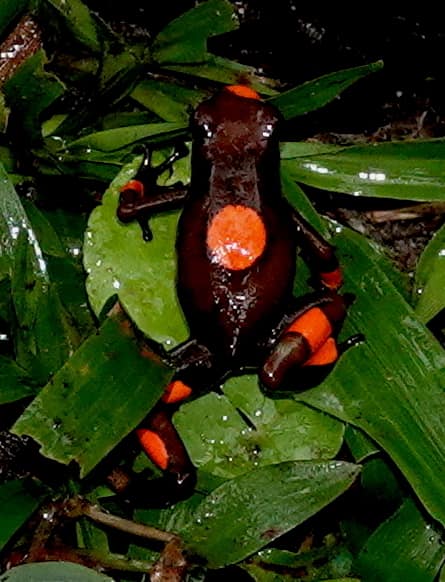
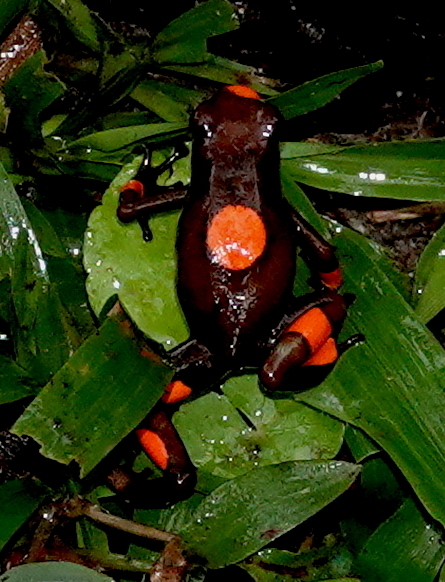
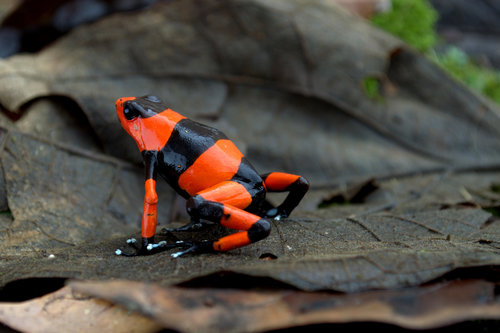
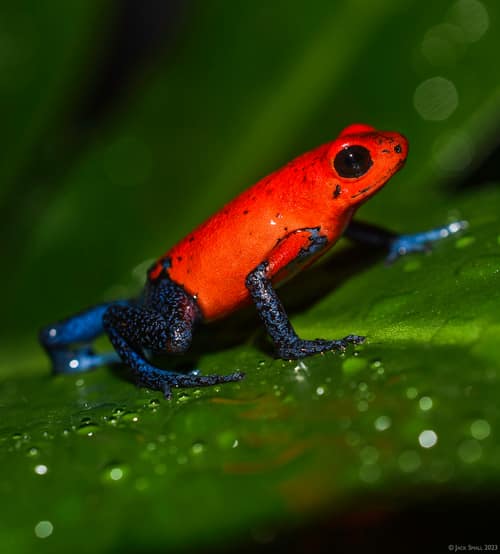
Recognizable by glossy black or dark brown bodies dramatically patterned with bright orange, red, yellow, or white splotches and spots.
What to do
Never touch or handle wild poison frogs; observe strictly from a respectful distance without disturbing leaf litter.
What to notice
Look for small, boldly patterned jewel-like frogs hopping along humid Colombian forest floors near epiphytic bromeliads.
Support conservation
Keep wild GPS locations confidential and avoid disturbing natural microhabitats or destroying bromeliads where tadpoles develop.
Responsible observation
Listen for Calls: Males announce territories with sharp, repetitive buzzing calls during peak humidity.
Search Low: Carefully scan damp leaf litter, mossy buttress roots, and decaying logs in deep shade.
Keep Distance: Observe visually without touching to prevent stress and protect against skin toxins.