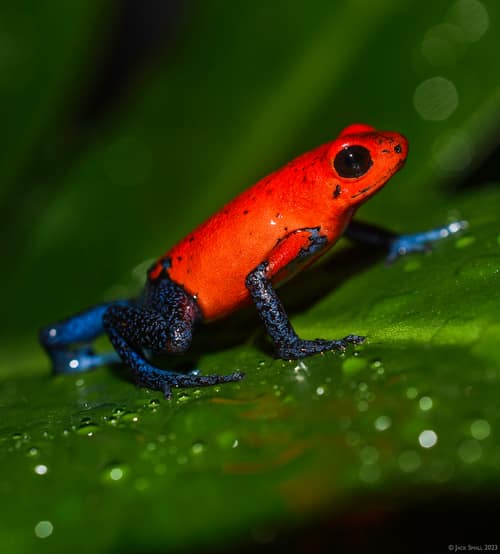
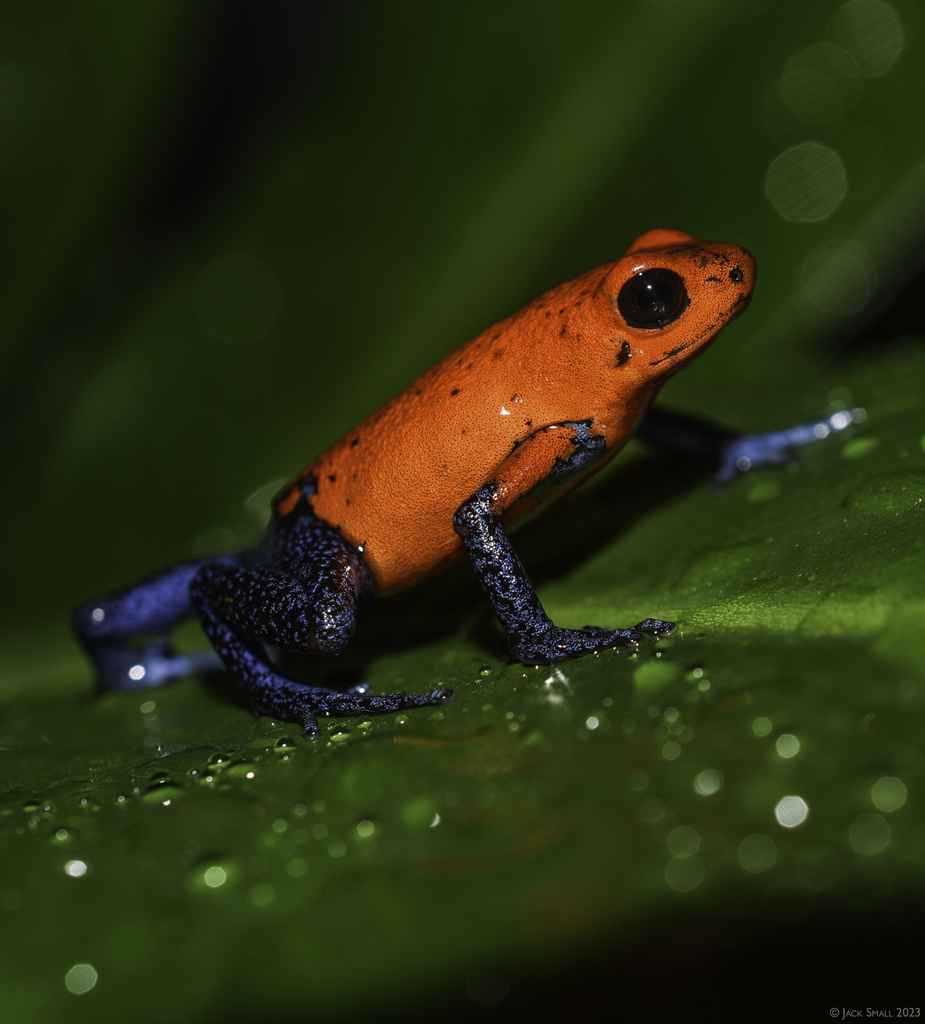
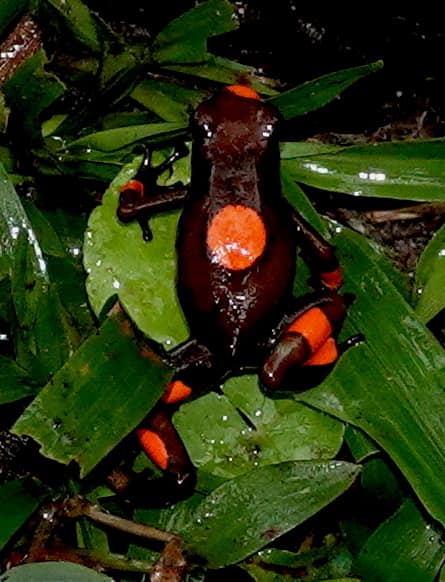
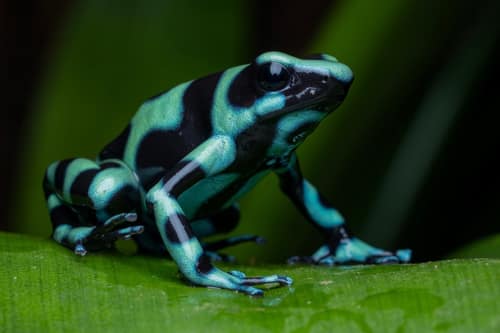
Also known as Strawberry Poison Frog, Blue Jeans Poison Frog, Blue-jeans Frog
Boldly active by day, males perch atop fallen logs and buttress roots to defend territory with rapid, buzzing chirps. After eggs hatch on land, females transport individual tadpoles on their backs into water-filled bromeliad leaf axils, returning periodically to nourish them with unfertilized, nutrient-packed eggs. Their skin sequesters pumiliotoxin alkaloids derived from a specialist diet of forest mites and ants, rendering them chemically protected against most predators.
Skin secretes potent alkaloid toxins; do not handle and keep away from eyes, mouth, and open wounds.
Why it is dangerous
Skin produces pumiliotoxins and related alkaloids that disrupt calcium channel function, causing muscle spasms, numbness, and nausea if ingested or rubbed into eyes.
How to recognize a risky encounter
Look for a tiny diurnal frog under an inch long, famously sporting a bright red torso with denim-blue legs or one of several vivid island morphs.
What to do
Enjoy observing and photographing from a short distance without physical contact, and wash hands promptly if accidental contact occurs.
Responsible observation
Listening for Calls: Tune your ear to steady, insect-like buzzing chirps coming from low vegetation on warm, humid mornings.
Checking Bromeliads: Search water-filled leaf axils of low epiphytes where attentive mothers stash and feed their larvae.
Hands-off Ethics: Refrain from handling; skin oils and sunscreen harm amphibians, while their defensive secretions burn mucous membranes.