
Amphibian · GBIF taxon 2429093
Amazonian Poison Dart Frog
Ranitomeya ventrimaculataAlso known as Amazonian Poison Frog, Variable Poison Frog
Amazonian poison dart frogs flash vivid golden-yellow stripes over dark bodies to signal their toxic skin secretions to forest predators. Males deposit individual tadpoles into tiny water pools trapped inside arboreal bromeliads, ensuring their offspring develop safely above the forest floor. These tiny amphibians spend their days foraging among moist leaf litter and low epiphytes for small invertebrate prey.
AmphibianPoisonousTropical
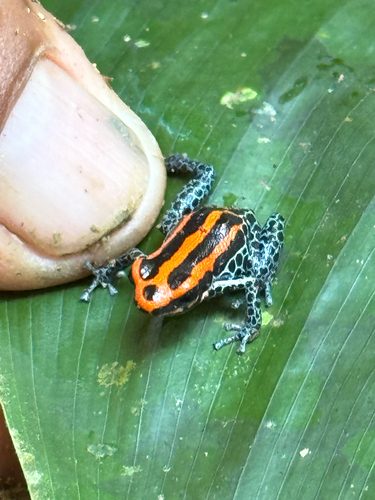
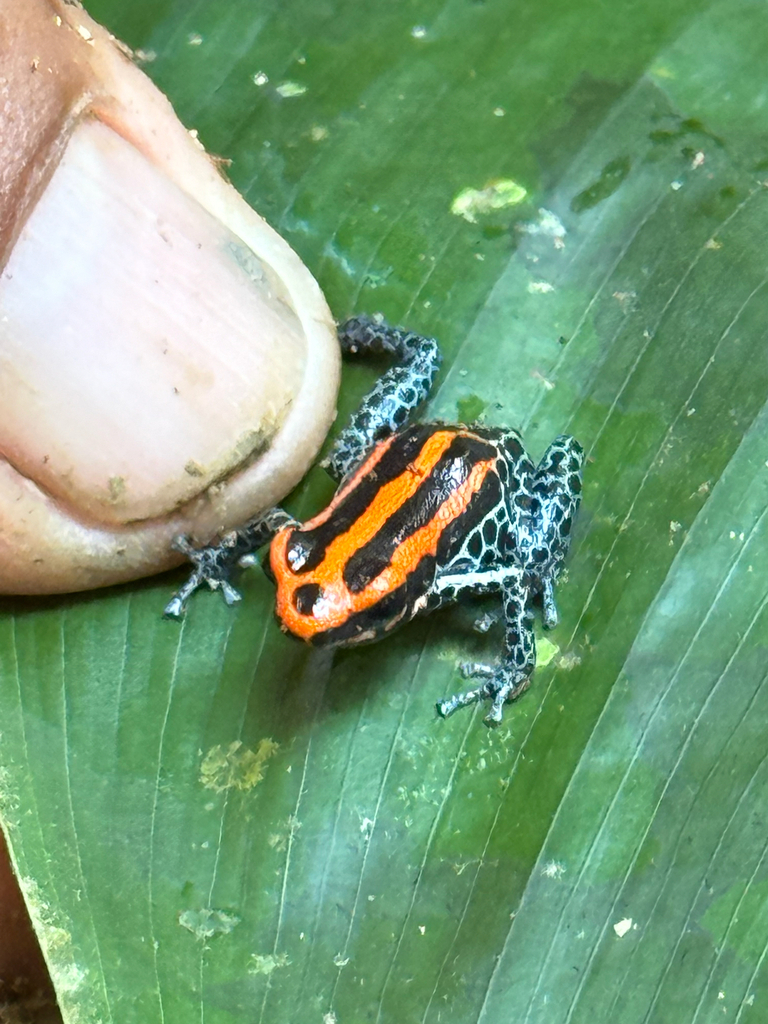
Licensed reference(c) Diego Rodriguez, some rights reserved (CC BY) · cc-by
—observations
—countries
—peak records
Least ConcernConservation statusIUCN Red List categoriesLCNTVUENCREWEXLeast ConcernRed List categories, explained →
Diet & prey
- Ants
- Mites
- Springtails
Predators
- Spiders
- Snakes
- Crabs
ThreatsDeforestation, habitat fragmentation, and collection for pet trade
HabitatsLowland rainforest, epiphytic bromeliads, forest understory
Life span5–10 years
Size / weightNot available
Classification
- FamilyDendrobatidae
- SpeciesRanitomeya ventrimaculata
Range data is not available yet.
Interaction riskHigh
- Low
- Moderate
- High
- Very high
- Why interaction risk is high
- Secretes toxic skin alkaloids; avoid handling with bare skin or touching eyes after contact.
- Why it is dangerous
- Secretes lipophilic skin alkaloids that can absorb through mucous membranes or cut skin to cause severe numbness and nausea.
- How to recognize a risky encounter
- Measures under two centimeters long with bright yellow or orange dorsal stripes and blue-grey reticulated belly markings.
- What to do
- Observe exclusively with eyes and camera, avoiding direct physical contact or handling with bare hands.
Responsible observation
- Vocalizations: Listen for soft, high-pitched trills coming from low foliage or bromeliad patches during humid morning hours.
- Observation: Look closely at water-filled bromeliad axils where adults frequently transport single tadpoles on their backs.
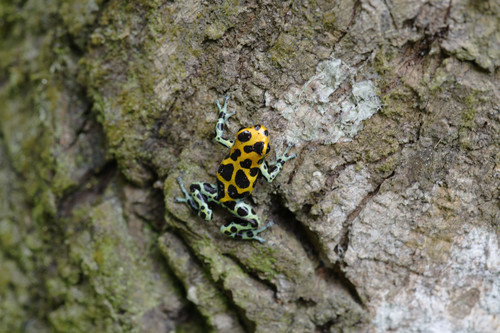
Mullerian Mimic (c) Matthew Runo, some rights reserved (CC BY) · cc-by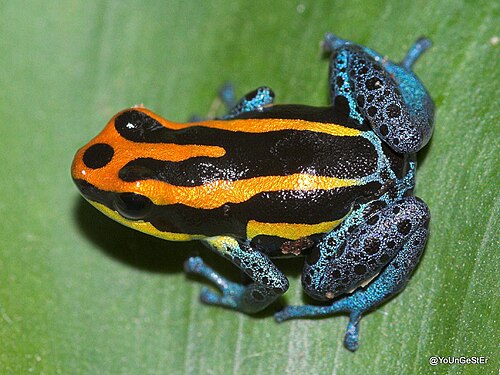
Close Relative V2, first published on his homepage youngester.com / CC BY-SA 3.0 · cc-by-sa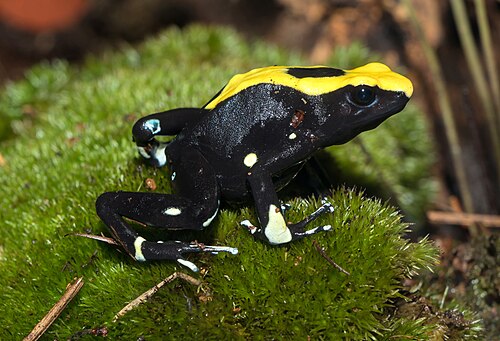
Family Member H. Zell / CC BY-SA 3.0 · cc-by-sa
Help improve the field guideSomething wrong?
Checking your Fauna account…Report a name, category, or profile issue for review.