
Amphibian · GBIF taxon 2429038
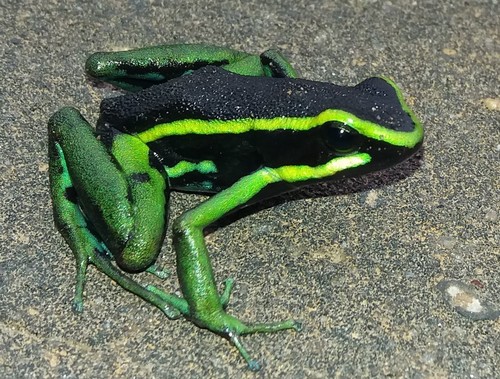
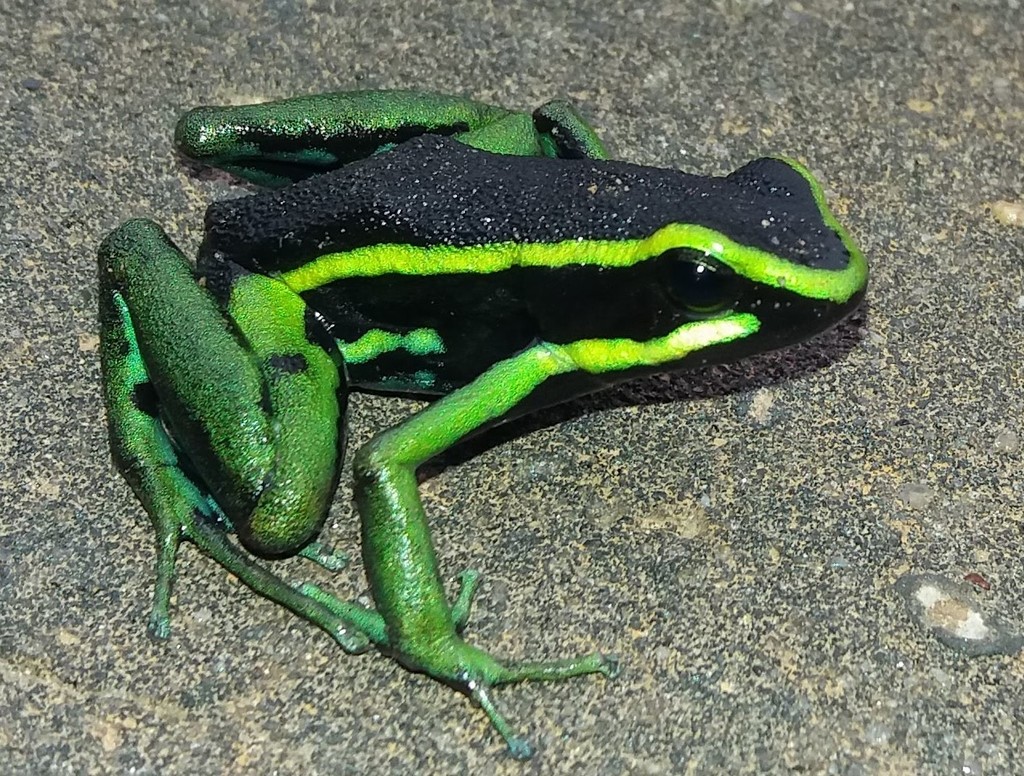
Three-striped Poison Frog
Ameerega trivittataAlso known as Three-striped Poison Dart Frog, Three-striped Dart Frog
Three-striped poison frogs forage across the dark leaf litter of Amazonian rain forests, searching for small invertebrates. Males defend small territories on the forest floor, using buzzing calls to attract females before brooding eggs on fallen leaves. Once hatched, the male carries his tadpoles on his back to nearby water-filled tree hollows or stream margins to complete their development.
DiurnalPoisonousAmphibian
 1 / 7
1 / 7—observations
—countries
—peak records
Least ConcernConservation statusIUCN Red List categoriesLCNTVUENCREWEXLeast ConcernRed List categories, explained →
Diet & prey
- Ants
- Termites
- Beetles
Predators
- Snakes
- Spiders
- Birds
ThreatsDeforestation, habitat fragmentation
HabitatsHumid lowland rainforest, leaf litter
Life span5–10 years
Size / weightNot available
Classification
- FamilyDendrobatidae
- SpeciesAmeerega trivittata
Range data is not available yet.
Interaction riskHigh
- Low
- Moderate
- High
- Very high
- Why interaction risk is high
- Secretes lipophilic alkaloid toxins through the skin; avoid handling with bare hands.
- Why it is dangerous
- Secretes toxic alkaloids through dermal glands that can cause irritation or illness if handled or ingested.
- How to recognize a risky encounter
- Recognizable by its dark body with three vivid yellow or green stripes down its back.
- What to do
- Observe from a respectful distance and never touch with unprotected hands.
Responsible observation
- Spotting: Search through humid leaf litter near streams during daylight hours.
- Listening: Listen for low-pitched buzzing calls echoing from the forest floor.
- Photography: Use a macro lens from a safe distance without disturbing leaf litter.
 Image unavailable
Close Relative 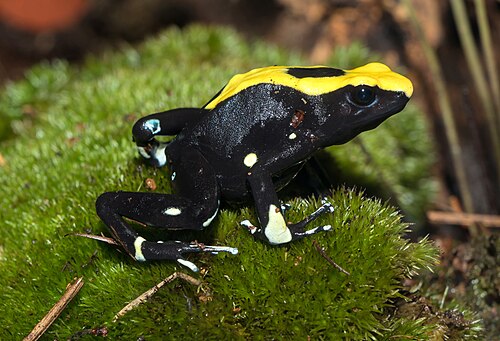
Family Member H. Zell / CC BY-SA 3.0 · cc-by-sa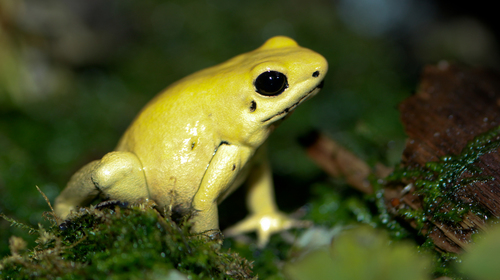
Family Member (c) Brian Gratwicke, some rights reserved (CC BY) · cc-by
Help improve the field guideSomething wrong?
Checking your Fauna account…Report a name, category, or profile issue for review.