
Amphibian
Black-eyed Tree Frog
Agalychnis moreletiiAlso known as Morelet's Tree Frog, Black-eyed Leaf Frog, Popeye Hyla
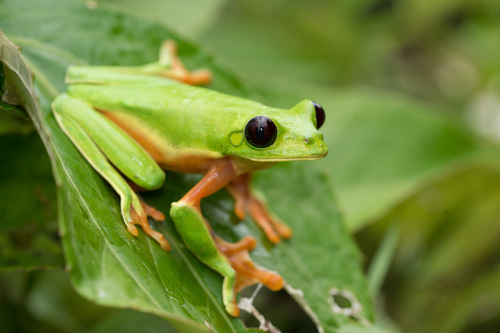
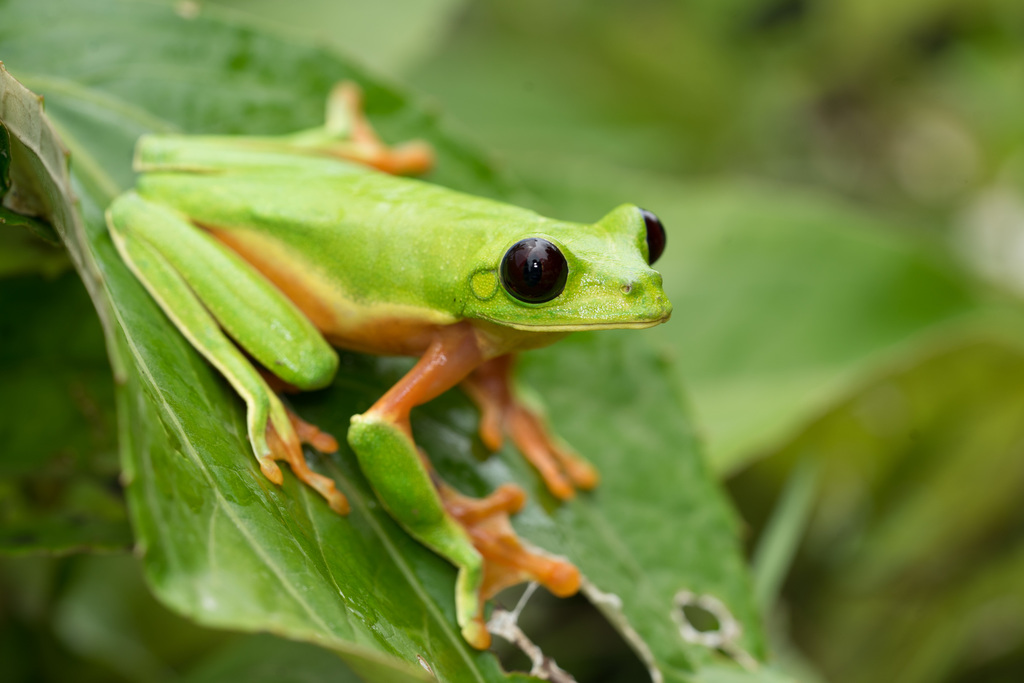
Black-eyed tree frogs spend the daylight hours glued motionless to broad leaves in the canopy, tucked so tightly their lime-green skin blends seamlessly into the foliage. At dusk, they awaken to reveal deep black irises lacking colored rings, along with vibrant pink, orange, or yellow flanks and thighs. Females deposit clutches of gelatinous eggs on leaves dangling directly over forest pools, allowing freshly hatched tadpoles to drop cleanly into the water below.
ArborealNocturnal
—observations
—countries
—peak records
VulnerableConservation statusIUCN Red List categoriesLCNTVUENCREWEXVulnerableRed List categories, explained →
Diet & preyMoths, Crickets, Beetles
Predators
- Cat-eyed snakes
- Arboreal birds
- Tarantulas
ThreatsChytridiomycosis fungal disease, habitat fragmentation, and agricultural clearing
HabitatsSubtropical and tropical moist montane and lowland cloud forests
Life span5–10 years
Classification
- FamilyPhyllomedusidae
- SpeciesAgalychnis moreletii
Range data is not available yet.
Interaction riskLow
- Low
- Moderate
- High
- Very high
- Why interaction risk is low
- Safe to observe at a normal distance.
- What to notice
- Look for uniform emerald-green upperparts, completely dark black eyes, and bright yellow-orange inner flanks.
- Support conservation
- Maintain a hands-off approach to prevent cross-contamination of pathogens between aquatic breeding sites.
Responsible observation
- Night Spotting: Scan vegetation near calm forest pools after dark with a dim or red headlamp.
- Hygiene Protocol: Never handle wild individuals, as skin contact can spread lethal amphibian pathogens.
- Listen for Calls: Locate breeding adults by listening for short, guttural clucking sounds on rainy nights.
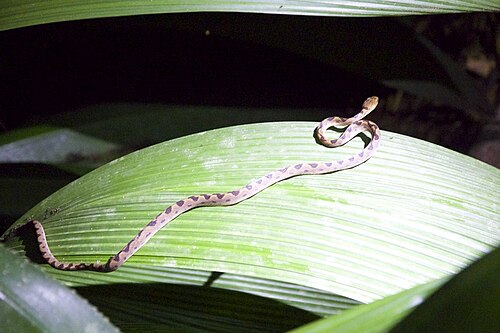
Predator Roxy334 / CC BY-SA 4.0 · cc-by-sa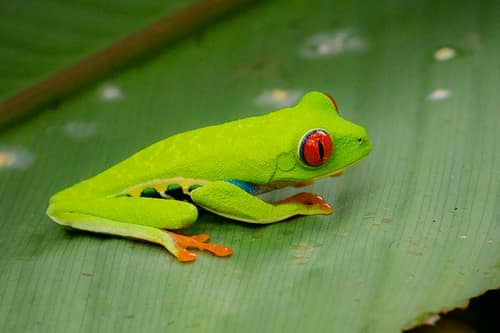
Close Relative "Red-Eyed Tree Frog" by Kurayba is licensed under CC BY-SA 2.0. To view a copy of this license, visit https://creativecommons.org/licenses/by-sa/2.0/. · cc-by-sa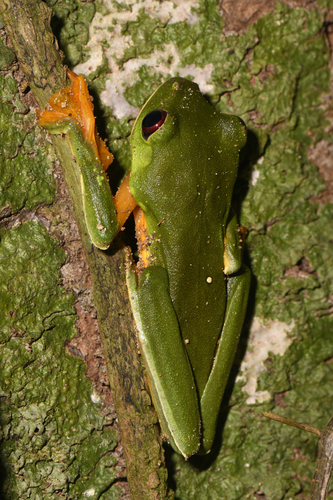
Close Relative (c) Trevor Van Loon, some rights reserved (CC BY) · cc-by
Help improve the field guideSomething wrong?
Checking your Fauna account…Report a name, category, or profile issue for review.