
Amphibian
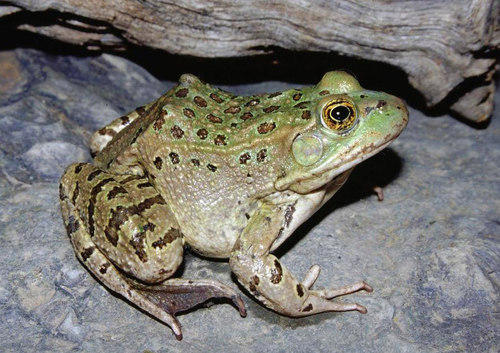
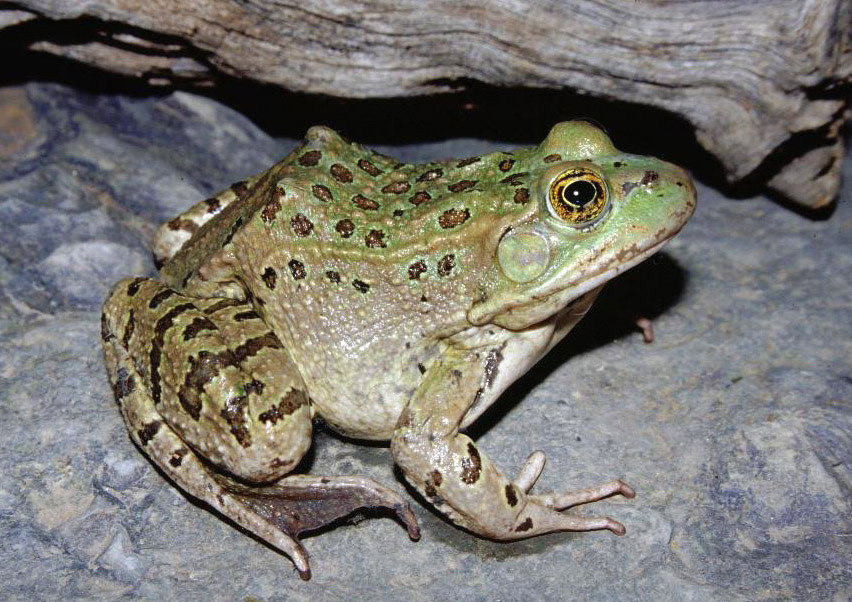
Chiricahua Leopard Frog
Lithobates chiricahuensisChiricahua leopard frogs inhabit montane streams, cienegas, springs, and cattle tanks across the American Southwest and northwestern Mexico. Adults emit a distinctive snoring call that lasts one to two seconds and can carry underwater, alerting rivals and attracting mates during spring breeding events. Dramatic declines from chytridiomycosis, habitat loss, and predation by invasive bullfrogs have spurred captive-breeding and reintroduction programs across sky-island waterways.
AmphibianAquatic
—observations
—countries
—peak records
VulnerableConservation statusIUCN Red List categoriesLCNTVUENCREWEXVulnerableRed List categories, explained →
Diet & preyWater Beetles, Dragonfly Nymphs, Terrestrial Spiders
Predators
- American Bullfrog
- Garter Snake
- Great Blue Heron
ThreatsChytridiomycosis infection, habitat drying from drought, invasive bullfrogs, and predatory non-native fish.
HabitatsMontane streams, cienegas, canyon pools, earthen stock tanks, and freshwater springs between 1,000 and 2,700 meters elevation.
Life span5–10 years in the wild.
Classification
- FamilyRanidae
- SpeciesLithobates chiricahuensis
Range data is not available yet.
Interaction riskLow
- Low
- Moderate
- High
- Very high
- Why interaction risk is low
- Harmless to humans; safe to observe from a respectful distance.
- What to notice
- Look for a stocky body with raised, broken dorsolateral folds and distinctive yellow or cream coloration on the groins and rear thighs.
- Support conservation
- Do not capture or touch wild individuals; report sightings to regional wildlife agencies to aid conservation tracking.
Responsible observation
- Keep Your Distance: Observe from the shoreline using binoculars to avoid alarming breeding frogs or disturbing delicate egg masses.
- Sanitize Gear: Disinfect boots and aquatic equipment between watersheds to prevent spreading lethal chytrid fungus.
- Preserve Water Quality: Never apply sunscreen or insect repellents immediately before wading into shallow desert waters.
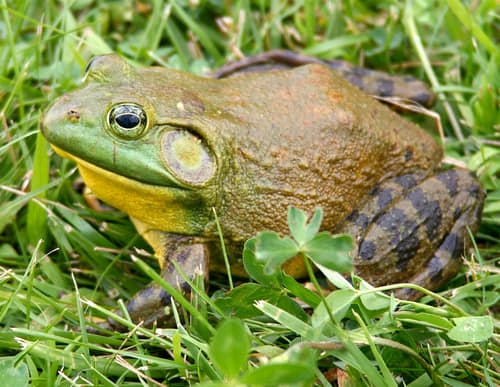
Competitor Carl D. Howe / CC BY-SA 2.5 · cc-by-sa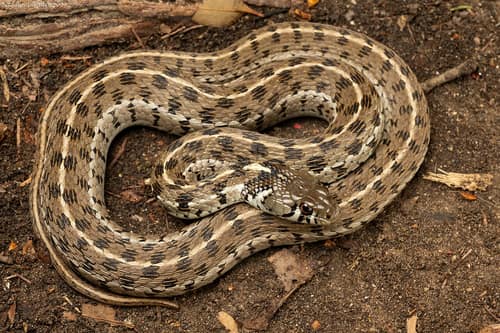
Predator Benjamin Genter / CC0 · cc0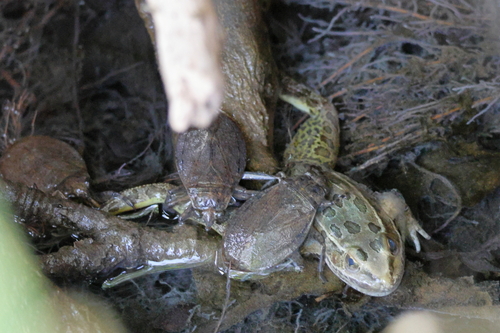
Close Relative (c) Isaac Ethington, some rights reserved (CC BY) · cc-by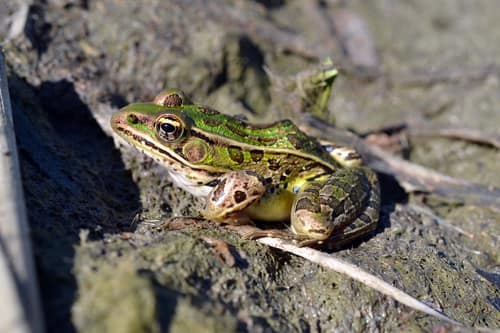
Close Relative "Northern Leopard Frog (Lithobates pipiens)" by acryptozoo is licensed under CC BY 2.0. To view a copy of this license, visit https://creativecommons.org/licenses/by/2.0/. · cc-by
Help improve the field guideSomething wrong?
Checking your Fauna account…Report a name, category, or profile issue for review.