
Amphibian · GBIF taxon 2426808
Red-legged Frog
Rana auroraAlso known as Northern Red-legged Frog, Western Red-legged Frog
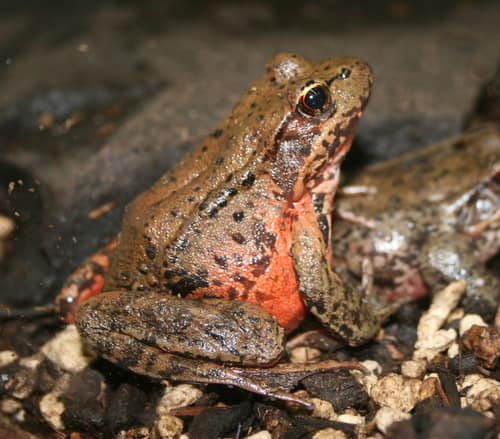
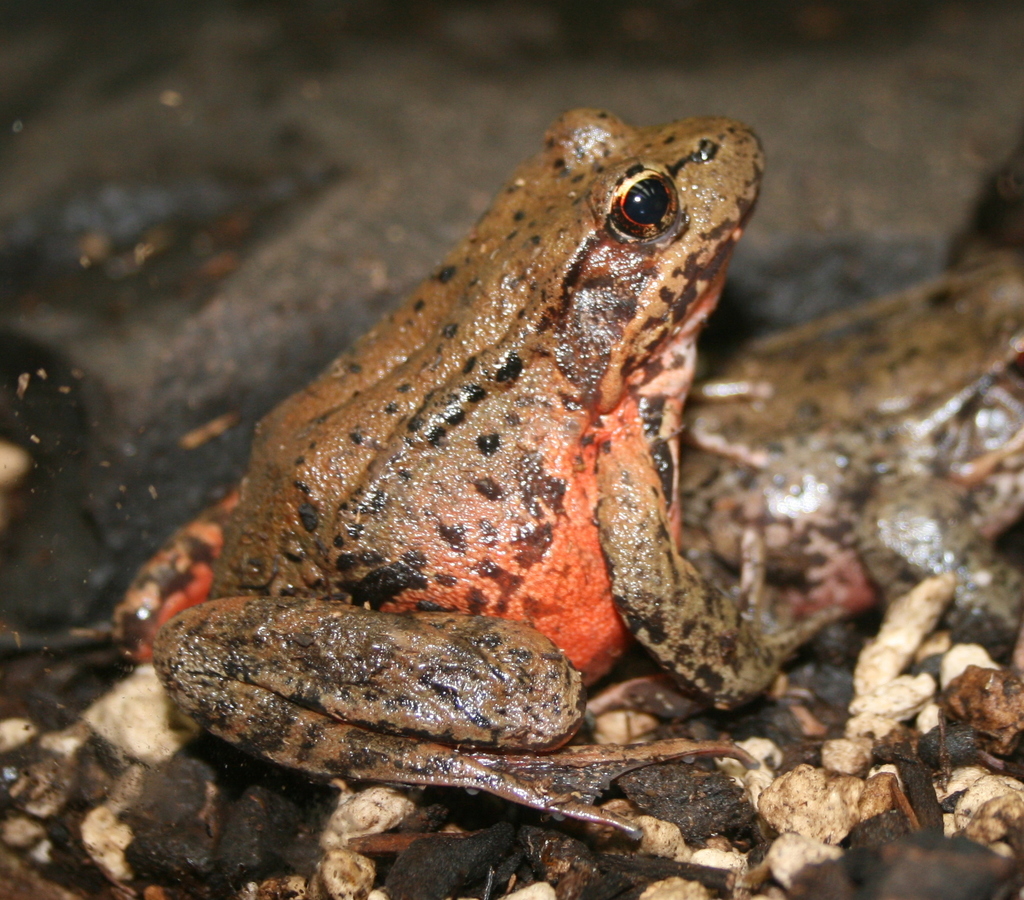
Northern red-legged frogs spend much of the year foraging deep within damp coastal forests, venturing back to still, vegetated ponds only for early winter breeding. Males utter soft, low clucking calls underwater to attract mates without drawing the attention of hungry nocturnal predators. Their translucent ruby-red hindleg wash and dark eye masks make them unmistakable inhabitants of Pacific Northwest wetlands.
AmphibianPacific NorthwestAquatic
—observations
—countries
—peak records
Least ConcernConservation statusIUCN Red List categoriesLCNTVUENCREWEXLeast ConcernRed List categories, explained →
Diet & prey
- Insects
- Spiders
- Snails
Predators
- American Bullfrog
- Garter Snakes
- Herons
ThreatsHabitat loss, invasive bullfrogs, introduced fish, aquatic pollution
HabitatsMoist temperate forests, streams, ponds, wetlands
Life span10–15 years
Size / weightNot available
Classification
- FamilyRanidae
- SpeciesRana aurora
Range data is not available yet.
Interaction riskLow
- Low
- Moderate
- High
- Very high
- Why interaction risk is low
- Safe to observe at a normal distance.
- What to notice
- Look for a dark mask over the eye, a light jaw stripe, and translucent red coloring under the hind legs.
- Support conservation
- Observe from pond edges without disturbing egg masses or handling wild frogs, which easily absorb chemicals through skin.
Responsible observation
- Listen for calls: Males produce quiet, low-pitched underwater clucking sounds during winter breeding.
- Watch the margins: Look for them crouching among damp forest leaf litter near shaded stream banks.
- Prevent pathogen spread: Clean boots and wet gear with alcohol or dilute bleach between water bodies to protect against chytrid fungus.
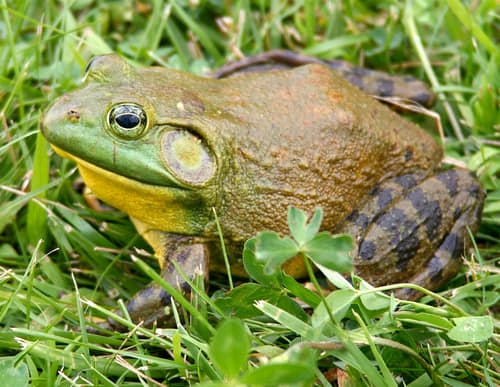
Predator Carl D. Howe / CC BY-SA 2.5 · cc-by-sa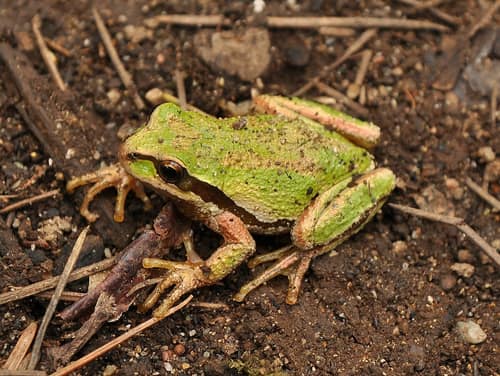
Frequent Companion The High Fin Sperm Whale / CC BY-SA 3.0 · cc-by-sa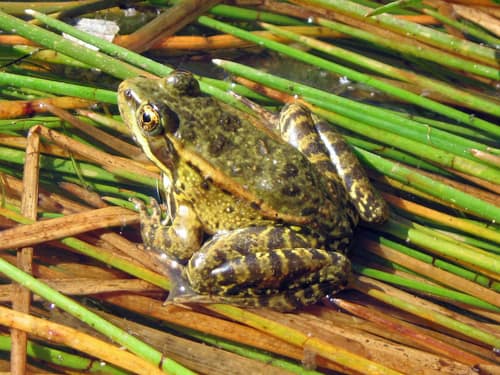
Close Relative (c) Greg Schechter, some rights reserved (CC BY) · cc-by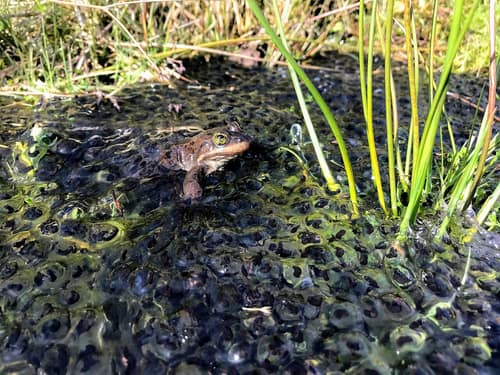
Close Relative Ryan Munes/USFWS Pacific / Public domain · cc0
Help improve the field guideSomething wrong?
Checking your Fauna account…Report a name, category, or profile issue for review.