
Amphibian
Great Barred Frog
Mixophyes fasciolatusAlso known as Eastern Great Barred Frog, Southern Barred Frog
Great barred frogs inhabit dark, damp leaf litter along forested streams in eastern Australia, where their dark brown body bars provide remarkable camouflage. Females build shallow depressions in stream banks, flicking fertilized eggs onto muddy overhangs so emerging tadpoles drop straight into the water below. Their loud, resonant wark call echoes through wet gullies on warm, rainy summer nights.
AmphibianNocturnalStream Dweller
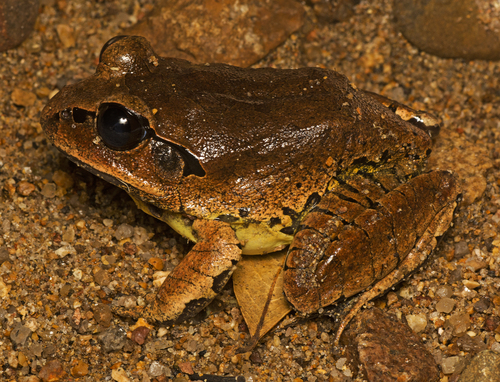
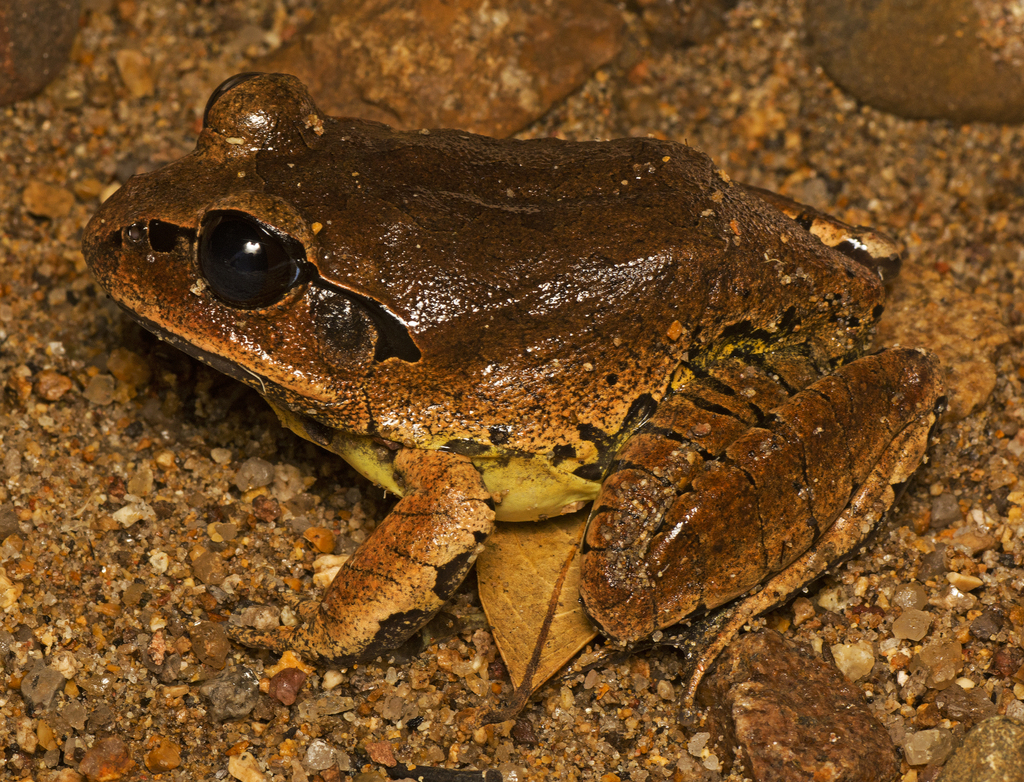
—observations
—countries
—peak records
Least ConcernConservation statusIUCN Red List categoriesLCNTVUENCREWEXLeast ConcernRed List categories, explained →
Diet & preyInsects, Spiders, Smaller frogs
Predators
- Freshwater eels
- Snakes
- Birds of prey
ThreatsChytrid fungus, water pollution, land clearing, and stream degradation
HabitatsSubtropical rainforests, wet sclerophyll forests, and mountain streams
Life span8–12 years
Classification
- OrderAnura
- FamilyMyobatrachidae
- GenusMixophyes
- SpeciesMixophyes fasciolatus
Range data is not available yet.
Interaction riskLow
- Low
- Moderate
- High
- Very high
- Why interaction risk is low
- Safe to observe at a normal distance; avoid handling to protect delicate amphibian skin.
Responsible observation
- Night walks: Search damp leaf litter near forest streams with a red light on rainy summer nights.
- Listen for calls: Identify them by their deep, booming wark sound near running water.
- Hands off: Avoid handling wild frogs to prevent spreading chytrid fungal infection.
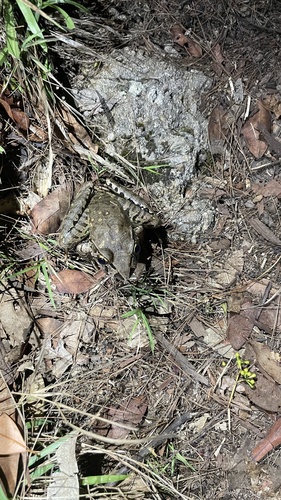
Close Relative (c) Sundar Lakshmanan, some rights reserved (CC BY) · cc-by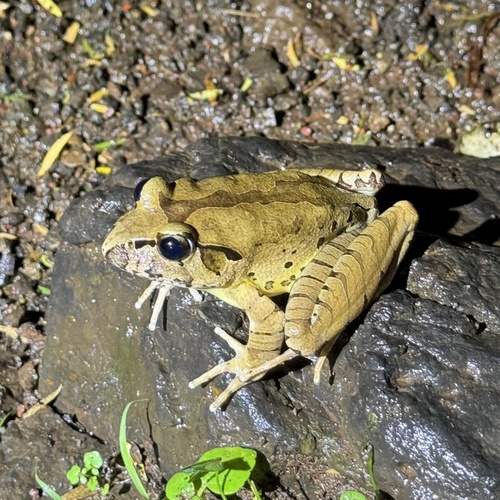
Close Relative (c) Sockrosma, some rights reserved (CC BY) · cc-by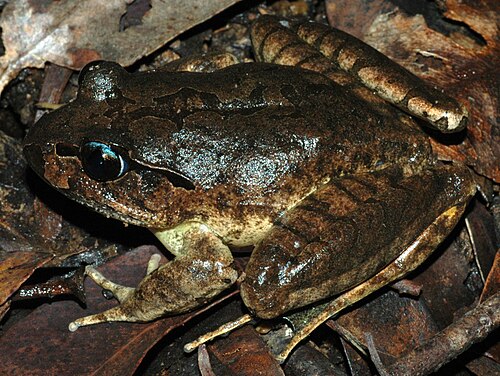
Close Relative Froggydarb at en.wikipedia / CC BY-SA 3.0 · cc-by-sa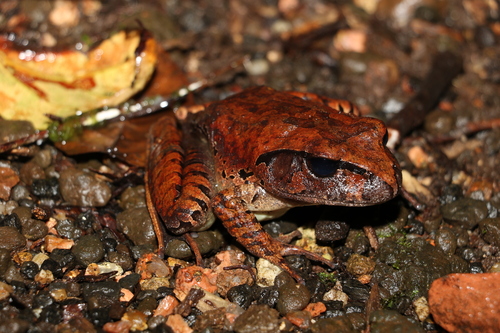
Close Relative (c) Greg Tasney, some rights reserved (CC BY-SA), uploaded by Greg Tasney · cc-by-sa
Help improve the field guideSomething wrong?
Checking your Fauna account…Report a name, category, or profile issue for review.